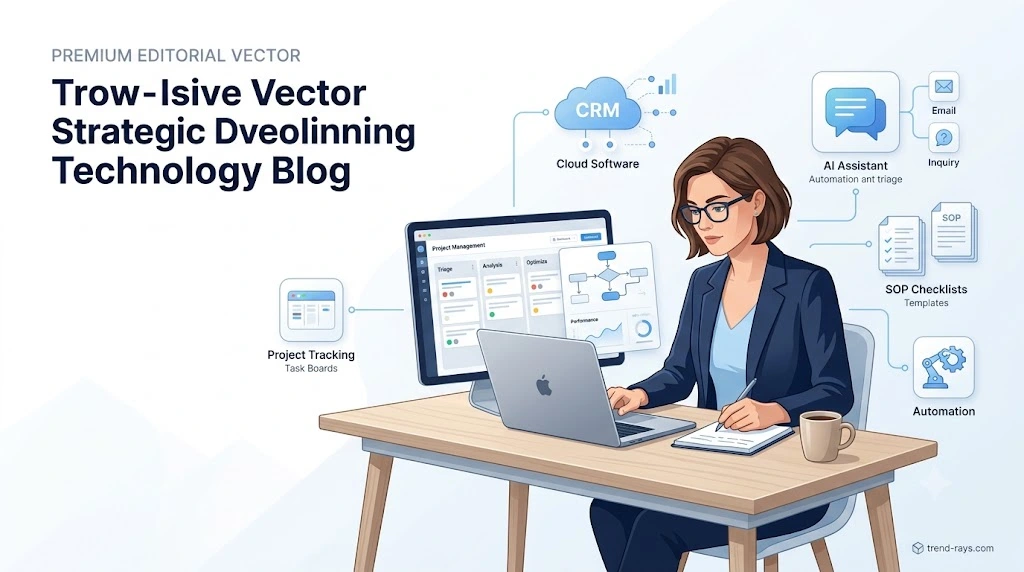
Why Most Freelancers Still Feel Busy Even After Using AI
If you ask ten freelancers why they started using AI, you’ll probably hear similar answers.
“I wanted to write faster.”
“I wanted to reduce repetitive work.”
“I wanted to spend less time on admin.”
“I wanted to serve more clients.”
Artificial intelligence has undoubtedly made many freelance tasks faster. Writers can generate first drafts in minutes. Designers can brainstorm concepts more quickly. Developers can debug code with AI assistance. SEO consultants can summarize research, while virtual assistants can draft professional emails in seconds.
On paper, freelancers should be saving hours every week.
Yet many don’t feel any less busy.
Instead of replacing manual work, AI often adds another layer to an already complicated business. Freelancers find themselves testing new tools, comparing subscriptions, experimenting with prompts, migrating information between platforms, and trying to decide which AI assistant works best for a particular task.
The result is a growing collection of software rather than a simpler way of working.
This happens because AI usually accelerates individual tasks—not entire workflows.
Imagine a freelance copywriter who uses ChatGPT to produce articles twice as fast. If client briefs are still incomplete, revisions remain unstructured, approvals arrive late, and invoices are delayed, the business hasn’t become significantly more efficient.
Only one step in the process has improved.
The same pattern appears across almost every freelance profession.
A web designer purchases an AI website builder but still spends hours collecting missing assets from clients.
An SEO consultant automates reporting but manually gathers data from multiple platforms every week.
A video editor speeds up editing with AI while continuing to chase clients for feedback through scattered email threads.
In each example, technology improves a task without addressing the workflow surrounding it.
That’s why some freelancers continue to feel overwhelmed despite investing in increasingly sophisticated AI tools.
The bottleneck simply moves somewhere else.
AI Doesn’t Fix Broken Systems—It Amplifies Them
One of the biggest misconceptions surrounding AI is that it automatically creates efficiency.
In reality, AI behaves more like an amplifier.
If your business already has well-documented workflows, reusable templates, organized files, and clear communication processes, AI can make those systems dramatically faster.
If your business relies on last-minute decisions, inconsistent onboarding, scattered documents, and repeated manual work, AI often accelerates the chaos instead.
Think of it like building a house.
Buying expensive power tools doesn’t guarantee a better home.
Without a blueprint, the tools simply allow you to make mistakes more quickly.
Freelance businesses work in much the same way.
Before introducing another AI application, it’s worth asking whether the underlying workflow is already designed to support automation.
The Productivity Trap Most Freelancers Don’t Notice
There’s another reason many freelancers struggle to see meaningful productivity gains.
They measure success by the number of AI tools they own instead of the business outcomes those tools create.
A typical freelancer might subscribe to:
- ChatGPT Plus
- Claude Pro
- Perplexity Pro
- Grammarly Premium
- Canva Pro
- Notion AI
- Fireflies AI
- Otter AI
- Gamma
- Midjourney
Each platform promises to save time.
Collectively, they can also introduce:
- Multiple dashboards
- Different prompt styles
- Separate billing cycles
- Learning curves
- Duplicate features
- Overlapping subscriptions
- Decision fatigue
At some point, managing the tools becomes another task on the to-do list.
This phenomenon is often called tool fatigue or software sprawl—a growing collection of applications that gradually increases complexity instead of reducing it.
Ironically, the search for greater productivity can become a source of distraction.
Productivity Isn’t About Doing More—It’s About Doing the Right Things Better
Freelancers often ask:
“Which AI tool should I buy next?”
A more valuable question is:
“Which part of my business creates the most unnecessary work?”
Those two questions lead to very different decisions.
The first encourages software purchases.
The second encourages operational improvements.
Sometimes the answer will be AI.
Sometimes it will be better templates.
Sometimes it will be a documented process.
Sometimes it will be eliminating a task completely.
The goal isn’t to own the latest AI software.
The goal is to build a freelance business that runs more efficiently, serves clients more consistently, and gives you more time to focus on meaningful work.
That’s exactly what a workflow audit helps you achieve.
The Five Types of Work Every Freelancer Does
One of the biggest mistakes freelancers make when introducing AI is treating every task as equally important.
In reality, not all work creates the same value.
Some activities generate revenue directly.
Others keep the business running behind the scenes.
Still others consume hours every week without contributing much to growth.
Before deciding where AI belongs, you first need to understand what kind of work fills your typical week.
Almost every freelance business—regardless of industry—can be divided into five categories.
This simple framework makes it much easier to identify where automation creates genuine value and where human expertise should remain at the center.
Revenue-Generating Work
This is the work your clients actually pay for.
Examples include:
- Writing articles
- Designing websites
- Editing videos
- Developing software
- SEO consulting
- Marketing campaigns
- Photography
- Copywriting
This work usually benefits from AI as a collaborative assistant rather than a replacement.
AI can accelerate research, generate first drafts, organize ideas, or help overcome creative blocks.
However, the final output still depends on your expertise, judgment, and understanding of the client’s goals.
Client Management
Every freelance project involves communication.
This includes:
- Discovery calls
- Proposal discussions
- Client emails
- Meeting notes
- Project updates
- Feedback management
- Follow-up messages
These tasks often repeat across every project, making them excellent candidates for AI-assisted templates and structured workflows.
Administration
Administrative work rarely generates revenue directly, but it keeps your business functioning.
Typical examples include:
- Creating invoices
- Managing contracts
- Scheduling meetings
- Organizing files
- Preparing reports
- Updating documents
- Expense tracking
Because these activities are repetitive and process-driven, they’re usually among the first areas where AI can deliver measurable time savings.
Marketing and Business Development
Finding future clients requires consistent marketing.
This category includes:
- Writing LinkedIn posts
- Publishing blog articles
- Updating your portfolio
- Creating newsletters
- Networking
- Responding to enquiries
- Building personal branding
AI can speed up content creation and planning, but your personal voice and professional experience remain what attracts clients.
Business Improvement
This is the category many freelancers neglect.
It includes:
- Documenting workflows
- Creating SOPs
- Reviewing finances
- Building knowledge bases
- Learning new skills
- Auditing subscriptions
- Improving internal systems
Ironically, this type of work often delivers the greatest long-term return because it reduces friction across every future project.
It’s also where a structured AI workflow can have the most significant impact.
A Better Way to Look at Your Business
Most freelancers divide their week into client work and everything else.
A more useful perspective is to ask:
- Which activities directly create value for clients?
- Which activities simply support those projects?
- Which activities are repetitive enough to improve?
- Which activities don’t need to exist at all?
Once you begin categorizing work this way, the decision to automate—or not automate—becomes much clearer.
Instead of chasing every new AI tool, you’ll start identifying the specific workflows where technology can genuinely improve the way your business operates.
The Difference Between a Tool Problem and a Workflow Problem
One of the biggest reasons freelancers overspend on software is that they mistake a workflow problem for a tool problem.
At first glance, the two can look almost identical.
You miss a deadline.
Client communication feels messy.
Projects take longer than expected.
Administrative work keeps piling up.
The immediate reaction is often:
“I need a better tool.”
Sometimes that’s true.
More often, it isn’t.
The challenge isn’t the software you’re using—it’s the way work moves through your business.
Understanding this distinction can save hundreds or even thousands of dollars every year while helping you build a more efficient freelance business.
What Is a Tool Problem?
A tool problem occurs when your existing software genuinely lacks the functionality needed to complete a task effectively.
For example:
- Your video editing software cannot handle the file formats your clients require.
- Your invoicing system doesn’t support recurring invoices.
- Your project management tool cannot accommodate multiple collaborators.
- Your cloud storage is running out of space.
- Your CRM no longer scales with your growing client base.
In these situations, investing in better software often makes sense because the limitation is technical rather than operational.
The tool itself has become the bottleneck.
What Is a Workflow Problem?
A workflow problem is different.
The software works perfectly well.
The process surrounding it doesn’t.
Consider a freelance SEO consultant who spends every Friday preparing client reports.
They decide to purchase an AI reporting platform because creating reports feels slow.
The new software automatically drafts summaries, but the consultant still needs to:
- Export data from Google Search Console.
- Gather analytics from multiple platforms.
- Verify every metric.
- Add client-specific recommendations.
- Format the final report.
- Email the document manually.
The report is created slightly faster, but the overall workflow remains largely unchanged.
The problem wasn’t writing the report.
The problem was that the reporting process had never been standardized.
The same pattern appears in almost every freelance profession.
A web designer buys another design tool instead of improving the client onboarding questionnaire.
A copywriter upgrades to a premium AI writing assistant while continuing to receive vague project briefs.
A virtual assistant automates email responses but still spends hours searching for scattered client information.
The software improves one step.
The workflow continues to waste time.
The Question That Changes Everything
Before subscribing to another AI platform, ask yourself one simple question:
If I bought no new software this month, how much of this problem could I solve by improving the way I work?
That question forces you to examine your processes before your purchases.
Sometimes the answer is surprising.
You may discover that:
- A reusable proposal template eliminates repetitive writing.
- A standardized onboarding form reduces revision requests.
- A shared client folder prevents endless email searches.
- A documented checklist improves consistency across every project.
None of those improvements require another subscription.
The Freelance Workflow Pyramid
One of the biggest misconceptions about AI is that automation should come first.
In reality, successful freelance businesses are built in layers.
Imagine your business as a pyramid.
                    AI
              Automation
         Standardized Templates
       Documented Workflows (SOPs)
      Clear Client Process & Systems
Every level depends on the one below it.
Let’s examine each layer.
Level 1: Clear Client Processes
This is the foundation of every successful freelance business.
Without clear processes, every project feels different.
Examples include:
- How enquiries are handled.
- How discovery calls are conducted.
- How proposals are created.
- How contracts are signed.
- How files are delivered.
- How revisions are requested.
- How projects are closed.
If these processes change every time, AI has very little structure to improve.
Level 2: Documented Workflows
Once your process is consistent, document it.
This doesn’t mean writing a 50-page operations manual.
It means creating simple instructions that explain:
- what happens,
- when it happens,
- who is responsible,
- and what information is required.
These documents become the foundation for future automation.
If your workflow only exists in your head, AI cannot reliably support it.
Level 3: Standardized Templates
Before introducing automation, ask another question:
Am I repeatedly creating the same document from scratch?
Examples include:
- Proposals
- Welcome emails
- Discovery questionnaires
- Project timelines
- Monthly reports
- Follow-up emails
- Invoice reminders
Templates reduce variation while improving quality and consistency.
AI becomes dramatically more effective when it starts with structured templates rather than blank pages.
Level 4: Automation
Only after your workflows become predictable should you automate them.
Automation works best when:
- the task happens frequently,
- follows consistent rules,
- requires little creative judgment,
- and has a predictable outcome.
Examples include:
- Sending onboarding emails.
- Scheduling meetings.
- Organizing files.
- Renaming documents.
- Creating recurring reminders.
- Preparing first drafts.
Automating inconsistent workflows usually creates inconsistent results.
Level 5: AI
Notice that AI sits at the very top of the pyramid—not the bottom.
That’s intentional.
AI performs best when it’s built on stable systems.
When your business already has:
- organized files,
- documented workflows,
- reusable templates,
- and clear client processes,
AI becomes a multiplier.
Instead of replacing your expertise, it removes repetitive friction.
That’s where the biggest productivity gains occur.
Why Most Freelancers Build the Pyramid Upside Down
Many freelancers unknowingly follow this sequence:
- Buy ChatGPT.
- Buy another AI tool.
- Buy another productivity app.
- Experiment with prompts.
- Hope productivity improves.
Only later do they realize they still haven’t:
- documented their onboarding process,
- standardized proposals,
- organized client files,
- or created reusable systems.
They’re trying to automate a business that isn’t yet structured for automation.
It’s similar to installing an expensive autopilot system in a car that hasn’t been serviced.
The technology is impressive.
The foundation still needs work.
The Best Freelancers Improve Systems Before Software
Experienced freelancers often appear more productive not because they own better software, but because they operate better systems.
They ask questions such as:
- Can this process be simplified?
- Can this step be removed entirely?
- Can I document this once instead of repeating it every week?
- Does this task actually require another application?
Only after answering those questions do they evaluate new technology.
That mindset leads to fewer subscriptions, more consistent client experiences, and workflows that scale without becoming increasingly complicated.
Key Takeaway
Software can improve a task.
A well-designed workflow improves the entire business.
Before buying another AI subscription, make sure you’re solving the right problem.
Sometimes the most valuable productivity upgrade isn’t a new tool.
It’s redesigning the way work flows from one step to the next.
Stop Measuring Hours—Measure Energy
When freelancers decide where AI can help, they usually ask one question:
“Which task takes the most time?”
It’s a reasonable question.
But it’s not always the right one.
Some of the biggest productivity improvements don’t come from automating your longest tasks.
They come from improving the tasks that drain your mental energy.
That’s because productivity isn’t just about time.
It’s also about attention, focus, and the ability to switch between different types of work without losing momentum.
A task that takes only 20 minutes but interrupts your concentration five times a day may be costing your business more than a two-hour project you genuinely enjoy.
If your goal is to build a sustainable freelance business, you need to measure both time and cognitive effort.
The Hidden Cost of Context Switching
Imagine this scenario.
You’re writing a client proposal when an email notification appears.
You stop writing to reply.
A few minutes later, you receive a Slack message.
Then a calendar reminder.
Then another client requests a revision.
Then you remember an unpaid invoice.
By lunchtime, you’ve touched six different projects without completing any of them.
Nothing feels particularly difficult.
But mentally, you’re exhausted.
This is called context switching—the constant movement between unrelated tasks that forces your brain to repeatedly refocus.
Freelancers experience context switching every day because they often perform multiple roles at once.
On any given day, you might be:
- A marketer promoting your services.
- A salesperson responding to enquiries.
- A project manager organizing deadlines.
- A customer support representative answering questions.
- A finance manager sending invoices.
- A content creator delivering client work.
Each switch requires your brain to load a different set of information.
While individual interruptions may seem small, their cumulative impact can significantly reduce productivity.
AI cannot eliminate every interruption, but it can reduce the amount of repetitive work that causes unnecessary switching in the first place.
Not All Two-Hour Tasks Are Equal
Consider these two activities.
Task A
Writing a long-form article for a client.
Time required:
Two hours
Energy required:
Low to Moderate
Why?
You’re doing focused, creative work with minimal interruptions.
You enjoy the process.
Task B
Preparing ten invoices, replying to repetitive emails, organizing files, checking payment statuses, updating spreadsheets, and scheduling meetings.
Time required:
Forty-five minutes
Energy required:
Very High
Even though Task B takes less time, it forces you to constantly change mental context.
By the time you finish, you may feel more exhausted than after writing an entire article.
That’s why measuring hours alone can produce misleading conclusions.
The Energy Audit Framework
Instead of asking:
“Which task takes the longest?”
Ask yourself three better questions.
How mentally repetitive is this task?
Examples include:
- Renaming files.
- Scheduling meetings.
- Sending reminder emails.
- Creating invoices.
- Copying information between documents.
These tasks usually require attention but very little creative thinking.
They’re excellent candidates for AI assistance or workflow automation.
How often do I repeat this task?
A five-minute task repeated twenty times every week is often a better automation candidate than a three-hour task completed once every quarter.
Frequency matters just as much as duration.
Look for activities you perform almost automatically because you’ve done them hundreds of times.
Examples include:
- Responding to project enquiries.
- Sending onboarding instructions.
- Preparing meeting agendas.
- Following up on unpaid invoices.
- Writing proposal introductions.
These recurring workflows often deliver the highest return when standardized.
Does This Task Actually Need Me?
This is perhaps the most important question in the entire audit.
Ask yourself:
“Would the quality of this work suffer if AI prepared the first draft?”
If the answer is no, AI may be able to handle the repetitive portion while you focus on reviewing and refining the result.
Examples include:
- Drafting routine emails.
- Summarizing meeting notes.
- Creating document outlines.
- Formatting reports.
- Generating project checklists.
On the other hand, activities such as pricing negotiations, strategic recommendations, final quality reviews, and client relationship building still depend heavily on human judgment.
The objective isn’t to remove yourself from your business.
It’s to remove yourself from work that doesn’t require your unique expertise.
The Energy vs. Time Matrix
During your audit, place every recurring task into one of these four categories.
| Time Required | Energy Required | Recommended Action |
|---|---|---|
| Low | Low | Leave it alone unless it happens very frequently. |
| High | Low | Standardize the workflow before considering AI. |
| Low | High | Prioritize for AI assistance or automation because these tasks create unnecessary mental fatigue. |
| High | High | Break the workflow into smaller stages, improve the process, and then decide whether AI, automation, or better documentation can help. |
This simple exercise often reveals opportunities that traditional time tracking completely misses.
Protect Your Highest-Energy Work
One mistake many freelancers make is trying to automate the very work that differentiates them.
Creative thinking.
Strategic consulting.
Problem-solving.
Building client relationships.
Developing original ideas.
These activities may consume significant time, but they’re also what clients are paying for.
Replacing them with AI often reduces the value you bring to a project.
Instead, use AI to protect these activities by reducing the repetitive work surrounding them.
For example:
- Let AI prepare a meeting summary so you can focus on the conversation.
- Let AI draft a proposal so you can spend more time tailoring your recommendations.
- Let AI organize research so you can concentrate on analysis and decision-making.
In other words, AI should create more space for your expertise—not replace it.
A Simple Exercise You Can Do Today
Open your calendar from the past two weeks.
List every recurring task you’ve completed.
For each one, give it two scores:
- Time Score (1–5): How long does it typically take?
- Energy Score (1–5): How mentally draining is it?
Tasks that score high for energy and repeat frequently are often the first workflows you should improve.
You may discover that your biggest productivity gains have nothing to do with buying another AI subscription.
They come from redesigning the way your work flows throughout the day.
Key Takeaway
The goal of a workflow audit isn’t to automate everything.
It’s to identify the work that quietly consumes your attention without creating proportional value.
When you stop measuring productivity solely in hours and start measuring mental energy, you make better decisions about where AI belongs—and where your own expertise matters most.
Step 1: Audit Where Your Time Actually Goes
Most freelancers have a rough idea of how they spend their week.
They know client work takes up the majority of their schedule. They know administration feels like a constant interruption. They know marketing often gets pushed to the weekend.
But “having an idea” isn’t the same as having data.
One of the biggest reasons freelancers buy software that doesn’t solve their problems is that they make decisions based on assumptions rather than evidence.
A workflow audit should always begin with observation—not optimization.
Before you automate anything, improve anything, or subscribe to another AI tool, you first need to understand how your business actually operates.
You can’t improve what you haven’t measured.
Why Most Freelancers Misjudge Their Time
Ask a freelancer:
“How much time do you spend on client work every week?”
Most will answer confidently.
Now ask:
“How much time did you spend last week searching for files, replying to repetitive emails, following up on unpaid invoices, scheduling meetings, switching between apps, or waiting for client responses?”
The answer usually becomes much less certain.
That’s because small tasks rarely feel significant on their own.
Five minutes here.
Ten minutes there.
A quick email.
A file search.
A calendar update.
A revision request.
Individually, they’re insignificant.
Collectively, they can consume 10 to 20 hours every week without freelancers realizing it.
This is known as hidden work—the collection of small administrative activities that support client projects but don’t directly generate revenue.
Ironically, hidden work is often where AI provides the greatest return.
Spend One Week Observing—Don’t Change Anything
One of the biggest mistakes people make during a workflow audit is trying to improve their systems while they’re still gathering information.
Resist that temptation.
For one week, simply observe.
Work exactly as you normally would.
Don’t introduce new software.
Don’t change your routine.
Don’t test new prompts.
Your only goal is to collect honest data.
Think of yourself as a researcher studying your own business.
The more accurate your observations, the better your future decisions will be.
Create a Simple Activity Log
You don’t need expensive time-tracking software to perform an effective audit.
A notebook, spreadsheet, or notes app is perfectly adequate.
Every time you switch to a different task, record:
| Record | Example |
|---|---|
| Time Started | 9:00 AM |
| Time Finished | 9:35 AM |
| Activity | Responded to client emails |
| Category | Client Management |
| Repetitive? | Yes |
| Energy Level | Medium |
| Could AI Help? | Yes |
The objective isn’t perfect accuracy.
It’s pattern recognition.
After several days, you’ll begin noticing recurring activities that consume far more time than you expected.
Categorize Every Task
Using the five work categories introduced earlier, assign every activity to one of the following:
Revenue Work
Examples:
- Writing
- Design
- Development
- Consulting
- SEO implementation
These are the activities clients directly pay for.
Client Management
Examples:
- Discovery calls
- Follow-up emails
- Meeting preparation
- Feedback reviews
- Project updates
Administration
Examples:
- Invoices
- Contracts
- Scheduling
- File management
- Documentation
- Expense tracking
Marketing
Examples:
- Portfolio updates
- LinkedIn posts
- Blog writing
- Email newsletters
- Networking
Business Improvement
Examples:
- SOP creation
- Learning
- Workflow documentation
- AI experimentation
- Subscription reviews
This simple categorization often reveals an uncomfortable truth.
Many freelancers spend surprisingly little time on the work that actually generates income.
Look for Repetition Instead of Duration
One of the biggest mistakes in productivity audits is focusing only on long tasks.
Instead, identify tasks that repeat over and over.
For example:
Writing invoices:
10 minutes × 20 clients = 200 minutes
Searching for files:
5 minutes × 30 times = 150 minutes
Scheduling meetings:
8 minutes × 15 meetings = 120 minutes
Replying to routine enquiries:
7 minutes × 25 emails = 175 minutes
None of these tasks appears significant in isolation.
Combined, they represent nearly 11 hours of work.
This is exactly the type of repetitive workload where templates, documented workflows, and AI assistance can produce measurable improvements.
Measure Interruptions, Not Just Tasks
Time tracking only tells part of the story.
You should also record interruptions.
Examples include:
- Waiting for client feedback.
- Looking for missing documents.
- Searching old email conversations.
- Clarifying incomplete project briefs.
- Recovering forgotten information.
- Switching between multiple software platforms.
These interruptions often indicate weaknesses in your systems rather than shortcomings in your software.
For example:
If you’re constantly asking clients for missing files, the problem probably isn’t your cloud storage.
It’s your onboarding process.
If you’re repeatedly searching through email threads, the issue may be poor document organization rather than a lack of AI.
This distinction becomes increasingly important as your freelance business grows.
Calculate Your Revenue-to-Administration Ratio
At the end of the week, estimate how your working hours were distributed.
For example:
| Category | Hours |
|---|---|
| Revenue Work | 24 |
| Client Management | 8 |
| Administration | 7 |
| Marketing | 4 |
| Business Improvement | 2 |
Now ask yourself:
Would I still organize my week this way if I were starting my freelance business today?
If the answer is no, you’ve already discovered valuable opportunities for improvement.
Many freelancers are surprised to learn they spend more time maintaining their business than growing it.
Questions to Ask Before Moving to Step Two
Before changing anything, answer these questions honestly.
Which three activities consumed the most time?
These may become candidates for workflow improvement.
Which repetitive task frustrated you the most?
Emotional frustration often highlights inefficient processes that deserve attention.
Which activities created the least value for your clients?
Not every task deserves optimization.
Some deserve elimination.
Which activities happened so frequently that you stopped noticing them?
Invisible habits often hide the greatest productivity opportunities.
Which tasks could someone else understand if you documented them?
If a workflow cannot be explained clearly, it will be difficult to automate successfully.
Documentation almost always comes before automation.
Don’t Jump to Solutions Yet
At this stage of the audit, you may already have ideas for:
- New AI tools
- Better software
- Automation platforms
- Prompt libraries
Write those ideas down.
Then ignore them—for now.
You’re still gathering evidence.
The next step is understanding how work moves through your business from the moment a potential client contacts you until the final invoice is paid.
Only after mapping those workflows will you know where technology can genuinely improve the process.
Key Takeaway
Most freelancers don’t need to work harder.
They need a clearer picture of how they already work.
By spending just one week observing your business without trying to fix it, you’ll uncover repetitive tasks, hidden administrative work, and workflow bottlenecks that no software comparison or AI tool list can reveal.
Those insights become the foundation for every improvement that follows.
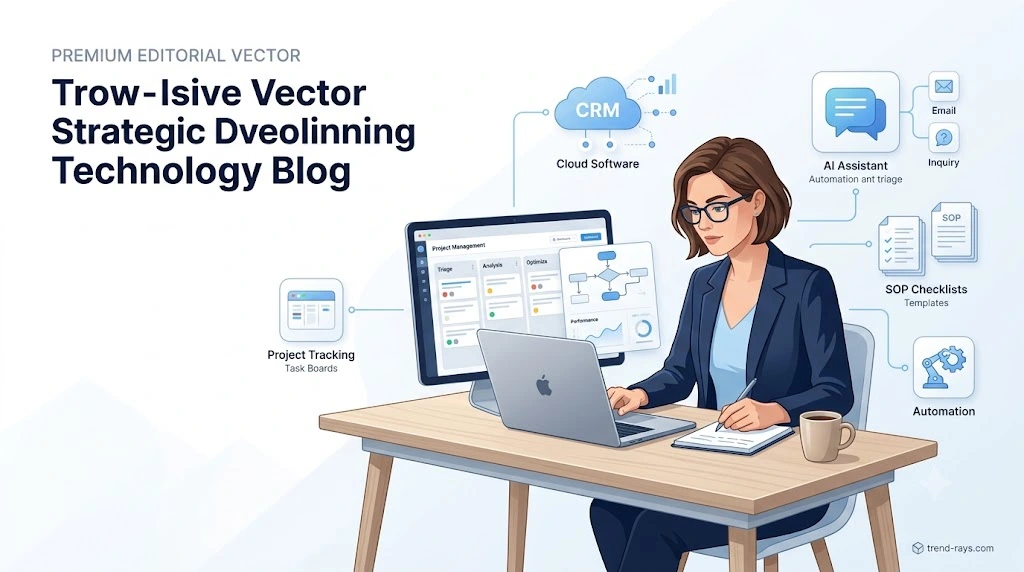
Step 2: Map Every Client Workflow From First Enquiry to Final Payment
By this point, you’ve collected something far more valuable than a list of AI tools.
You now have real data about how your freelance business operates.
The next step is understanding how work flows through your business.
Many freelancers think in terms of individual tasks.
“I need to send an email.”
“I need to write a proposal.”
“I need to create an invoice.”
Successful freelancers think differently.
They think in terms of systems.
Instead of asking:
“How do I complete this task?”
They ask:
“What happens before this task, what happens after it, and how can the entire process become smoother?”
That’s the difference between working in your business and improving the way your business works.
What Is a Workflow?
A workflow is simply a sequence of connected steps that move work from a starting point to a completed outcome.
For freelancers, almost every client project follows a predictable pattern.
It may vary slightly depending on your profession, but the overall journey remains remarkably similar.
A typical freelance workflow looks like this:
Client Enquiry
        ↓
Discovery Call
        ↓
Proposal
        ↓
Contract & Deposit
        ↓
Client Onboarding
        ↓
Research & Planning
        ↓
Project Execution
        ↓
Client Review
        ↓
Revisions
        ↓
Final Delivery
        ↓
Invoice
        ↓
Payment
        ↓
Follow-up & Testimonial
When you look at your business this way, an important realization usually follows.
Very few problems exist in isolation.
Most are connected to the steps before or after them.
Why Freelancers Focus on the Wrong Bottlenecks
Suppose you regularly spend three hours revising client work.
Your first instinct might be:
“I need a better AI writing tool.”
But after mapping the workflow, you discover something unexpected.
The real problem started much earlier.
The client onboarding questionnaire never collected enough information.
Project expectations weren’t clearly defined.
Success criteria weren’t discussed during the discovery call.
Because the project began with incomplete information, revisions became inevitable.
The AI tool wasn’t the problem.
The workflow was.
This is why workflow mapping is so powerful.
It helps you solve problems at their source instead of treating the symptoms.
Map Your Last Five Client Projects
Rather than designing the perfect workflow from memory, start with reality.
Look at your five most recent completed projects.
For each one, write down every major step from the first enquiry to the final payment.
Don’t worry about making it look professional.
The objective is simply to understand what actually happened.
You may notice that some projects followed a consistent process, while others were handled differently depending on the client.
Those inconsistencies are valuable clues.
Every time you reinvent a process, you create more opportunities for delays, mistakes, and unnecessary work.
Ask These Questions at Every Stage
Once you’ve mapped the workflow, examine each step carefully.
What information do I need before this step can begin?
For example:
Before writing a proposal, do you already know:
- The client’s objectives?
- Their budget?
- Their timeline?
- The project scope?
- The expected deliverables?
If not, you’re likely spending unnecessary time sending follow-up emails.
What slows this step down?
Common bottlenecks include:
- Waiting for client responses.
- Missing project files.
- Unclear feedback.
- Manual data entry.
- Searching through old email threads.
- Switching between multiple applications.
These delays often indicate process issues rather than software limitations.
Is This Step Repeated for Every Client?
If the answer is yes, ask yourself another question.
“Why am I recreating this from scratch?”
Repeated work is often a sign that you need:
- Better templates.
- Standard operating procedures (SOPs).
- Checklists.
- AI-assisted first drafts.
- Automation.
Does This Step Actually Need Human Expertise?
Not every activity deserves your personal attention.
For example:
Preparing a meeting agenda.
Formatting a report.
Creating a checklist.
Drafting a routine follow-up email.
Organizing meeting notes.
These tasks often benefit from AI because they follow predictable patterns.
Compare that with activities such as:
- Strategic consulting.
- Pricing negotiations.
- Creative direction.
- Final editing.
- Building client relationships.
Those remain competitive advantages that shouldn’t be completely delegated.
The goal isn’t to remove yourself from your business.
It’s to remove yourself from unnecessary repetition.
The Freelancer Client Workflow Audit
As you review each stage, assign one of the following labels.
| Status | Meaning | Action |
|---|---|---|
| ✅ Efficient | The workflow runs consistently with minimal effort. | Keep it as it is. |
| ⚠ Needs Improvement | The workflow works but frequently causes delays or confusion. | Improve the process before adding new software. |
| 🤖 AI Opportunity | The task is repetitive, predictable, and low-risk. | Consider AI assistance or automation. |
| ❌ Eliminate | The task creates little value or duplicates other work. | Remove it completely if possible. |
This simple exercise helps you see your business as a collection of systems rather than isolated tasks.
Example: An SEO Consultant’s Workflow Audit
Let’s look at an illustrative example.
A freelance SEO consultant maps their reporting process.
Current workflow:
- Export Search Console data.
- Download Google Analytics reports.
- Copy metrics into a spreadsheet.
- Create charts manually.
- Write performance summaries.
- Format the report.
- Email the PDF to the client.
At first glance, the report appears to be the problem.
But after reviewing the workflow, they discover:
- Exporting data is repetitive.
- Formatting never changes.
- Charts follow the same layout every month.
- Performance summaries share a similar structure.
Only the recommendations require human expertise.
Instead of replacing the entire workflow with AI, they improve it strategically.
- Standardized report template.
- AI-generated first draft of performance summaries.
- Automated chart creation.
- Manual review before delivery.
The result isn’t just a faster report.
It’s a better workflow.
Look for Bottlenecks, Not Busyness
During your audit, avoid asking:
“Which step takes the longest?”
Instead ask:
- Which step creates the most delays?
- Which step causes the most frustration?
- Which step requires the most follow-up?
- Which step repeats unnecessarily?
- Which step depends on information that should have been collected earlier?
Those questions usually reveal opportunities that software comparisons never uncover.
A Good Workflow Removes Decisions
One characteristic of an efficient workflow is that it reduces the number of decisions you need to make.
For example, imagine starting every new client project.
Do you have to decide:
- Which onboarding email to send?
- Where to save project files?
- Which folders to create?
- What proposal format to use?
- What information to collect?
- Which tasks should happen first?
If you’re making these decisions repeatedly, your workflow depends on memory instead of systems.
Every repeated decision consumes mental energy.
A well-designed workflow eliminates unnecessary decisions through documented processes, templates, and checklists.
AI then becomes much more effective because it’s working within a consistent structure rather than unpredictable routines.
Key Takeaway
Freelancers often think their business is slowed down by individual tasks.
More often, it’s slowed down by the way those tasks connect together.
By mapping your complete client journey—from the first enquiry to the final payment—you’ll discover hidden bottlenecks, repeated decisions, and opportunities for improvement that no AI tool can identify automatically.
Only after understanding your workflows should you begin evaluating whether your existing software is helping—or simply adding more complexity.
Step 3: Audit Your Current AI Stack Before Paying for Another Subscription
By now, you’ve identified where your time goes and mapped the workflows that keep your freelance business running.
Only now is it time to evaluate your AI tools.
Notice the order.
Most freelancers do this backwards.
They discover a new AI application on YouTube, watch a few productivity videos, sign up for a free trial, and eventually add another monthly subscription.
Only later do they ask whether the tool actually solved a meaningful problem.
A workflow audit reverses that process.
Instead of asking:
“Which AI tool should I buy next?”
You ask:
“Which tools are already helping my business, and which ones are simply adding another monthly bill?”
This shift in thinking can save hundreds—or even thousands—of dollars over the course of a year.
More importantly, it prevents your business from becoming dependent on an ever-growing collection of overlapping software.
What Is an AI Stack?
Your AI stack is the collection of AI-powered applications you use to run your freelance business.
For many freelancers, it grows gradually.
You subscribe to ChatGPT because everyone recommends it.
A few weeks later, you try Claude because you hear it writes better.
Then you add Perplexity for research.
Next comes Grammarly Premium for editing.
A client introduces you to Notion AI.
Someone on LinkedIn recommends Fireflies AI.
Before long, you’re paying for multiple tools that solve similar problems.
Individually, each subscription feels reasonable.
Together, they can become one of the largest recurring expenses in your business.
The Hidden Problem: Feature Overlap
One of the biggest reasons freelancers overspend on software is feature overlap.
Different AI tools often provide remarkably similar capabilities.
For example:
- ChatGPT can brainstorm ideas, summarize documents, draft emails, and analyze text.
- Claude can also summarize documents, improve writing, generate code, and answer questions.
- Gemini can perform many of those same tasks while integrating with Google’s ecosystem.
- Notion AI includes writing assistance directly inside your workspace.
- Grammarly now offers AI-powered rewriting, tone adjustments, and content generation.
The question isn’t whether these tools are good.
Many of them are excellent.
The question is whether you need all of them.
Owning five applications that perform 80% of the same work rarely produces five times the productivity.
In many cases, it simply creates more decisions.
Which AI should I use for this task?
Which conversation contains the latest version?
Where did I save that prompt?
Which subscription am I actually using the most?
Decision fatigue is a hidden cost that rarely appears on your credit card statement.
Create an AI Inventory
Before evaluating ROI, list every AI-powered application you currently pay for.
Your inventory might include:
| Tool | Monthly Cost | Primary Purpose |
|---|---|---|
| ChatGPT Plus | $20 | Writing, brainstorming, research |
| Claude Pro | $20 | Long-form writing and document analysis |
| Grammarly Premium | Varies | Editing and grammar |
| Canva Pro | Varies | Design and AI image tools |
| Notion AI | Varies | Notes and documentation |
| Fireflies AI | Varies | Meeting transcription |
| Perplexity Pro | Varies | Research |
| Midjourney | Varies | Image generation |
Don’t worry about whether the list looks long.
The goal isn’t to judge your software choices.
It’s to understand them.
Many freelancers are surprised to discover they’re paying for tools they haven’t opened in weeks.
The AI Subscription Scorecard
Now evaluate each tool objectively.
Instead of asking whether you like the software, score it using the following criteria.
| Question | Score (1–5) |
|---|---|
| Do I use this every week? | |
| Does it save measurable time? | |
| Does it improve the quality of my work? | |
| Does it replace another paid tool? | |
| Would I notice if I cancelled it tomorrow? |
After scoring each application, calculate the total.
21–25 Points
This tool clearly earns its place in your business.
Keep it.
15–20 Points
The software provides value, but there may be opportunities to optimize how you use it.
Review whether you’re taking advantage of its full capabilities before purchasing anything new.
Below 15 Points
Ask yourself an uncomfortable question.
Am I paying for this tool because I use it—or because I might use it someday?
Hope is not a business strategy.
If a subscription consistently scores poorly, it may be time to cancel it.
The $100 Rule
One of the simplest ways to evaluate software is to estimate its return on investment.
Ask yourself:
“Does this subscription save me at least $100 worth of productive time every month?”
The exact amount will vary depending on your hourly rate, but the principle remains the same.
For example, imagine you charge $50 per hour.
If an AI tool saves you only 30 minutes each month, you’re recovering about $25 worth of time.
If the subscription costs $20 per month, the financial return is minimal—and that’s assuming you actually use the time productively.
Now compare that to another tool that saves five hours every month.
At the same hourly rate, that’s approximately $250 worth of productive time.
Even if the subscription costs more, the return is significantly greater.
The goal isn’t to buy the cheapest software.
It’s to invest in the software that creates the greatest business value.
Beware of Subscription Creep
Subscription creep happens gradually.
One month:
“Let’s try this free trial.”
The next month:
“It’s only $10.”
A few weeks later:
“This AI image tool looks useful.”
Then:
“This meeting assistant might save time.”
Before long, your business may be paying for:
- Multiple writing assistants.
- Multiple research platforms.
- Multiple design applications.
- Multiple meeting transcription services.
- Multiple productivity tools.
Individually, each purchase feels justified.
Collectively, they create unnecessary complexity.
Just as importantly, they compete for your attention.
Every new application requires:
- Learning a new interface.
- Managing another account.
- Remembering another workflow.
- Keeping another subscription active.
Sometimes, simplifying your software stack creates more productivity than adding another application.
Ask These Five Questions Before Buying Any New AI Tool
Before clicking the “Subscribe” button, pause for a moment and answer these questions honestly.
1. Which specific workflow problem will this tool solve?
Avoid vague answers like:
“It might help.”
Instead, identify the exact task.
2. Can one of my existing tools already do this?
Many freelancers underestimate the capabilities of software they already own.
Spend time learning your current tools before replacing them.
3. Will this reduce work—or simply move it somewhere else?
If a tool still requires extensive manual review, exporting, formatting, or reorganization, the workflow may not improve significantly.
4. How often will I realistically use it?
Daily?
Weekly?
Monthly?
Occasionally?
Frequency matters when calculating value.
5. What will I stop doing because of this purchase?
Every new subscription should replace something.
If it doesn’t, you’re probably adding complexity instead of reducing it.
Less Software Can Create Better Systems
Many successful freelancers don’t have the largest software stack.
They have the most intentional one.
They know exactly:
- why each tool exists,
- which workflow it supports,
- how often it’s used,
- and when it’s no longer delivering value.
Their productivity doesn’t come from owning every new AI application.
It comes from using a small number of tools exceptionally well within clearly documented workflows.
That’s a much more sustainable approach than chasing every product launch.
Key Takeaway
An AI subscription is only valuable if it solves a real business problem.
Before investing in another application, evaluate the software you already have.
You may discover that your next productivity gain doesn’t require a new tool at all—it requires making better use of the ones you’ve already paid for.
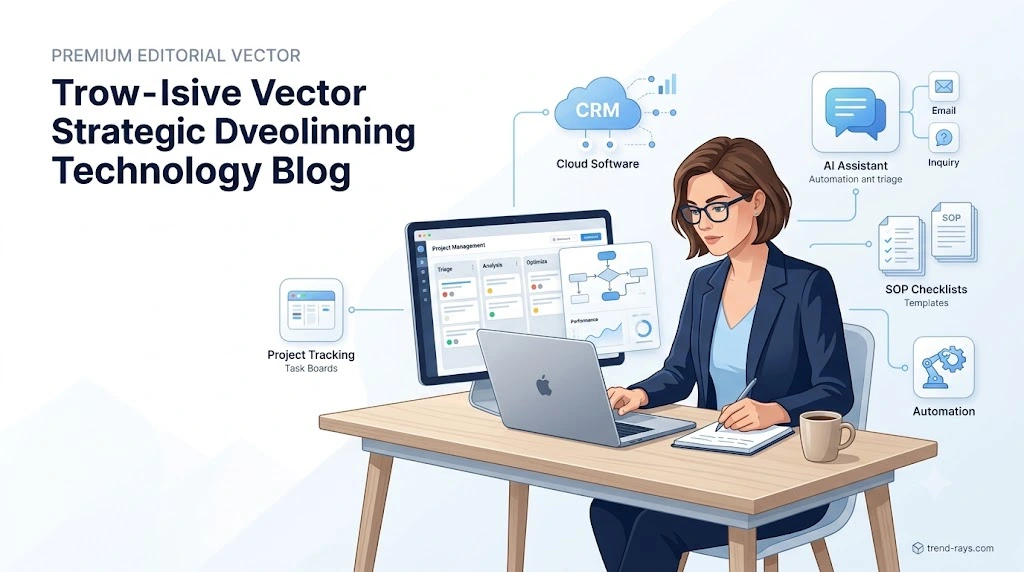
The Hidden Cost of Subscription Creep: Why More AI Tools Don’t Always Mean More Productivity
Imagine opening your browser on a typical Monday morning.
You need to prepare a client proposal.
You open ChatGPT for brainstorming.
Then Claude to compare writing quality.
Next, you check Perplexity for additional research.
You switch to Notion AI to organize your notes.
Later, you use Grammarly to polish the final draft.
Finally, you move everything into Canva to create a presentation.
Every tool performed its job well.
Yet by the end of the project, you’ve spent a surprising amount of time simply moving information from one application to another.
This is one of the least discussed productivity problems in modern freelancing.
It’s not a lack of AI.
It’s an excess of it.
The more AI tools you accumulate, the more time you spend managing software instead of managing your business.
The Psychology Behind Subscription Creep
Subscription creep rarely begins with poor financial decisions.
In fact, it usually starts with optimism.
A freelancer watches a YouTube video.
Someone demonstrates a new AI application that promises to:
- write faster,
- automate research,
- organize projects,
- generate invoices,
- create presentations,
- or replace multiple hours of manual work every week.
The monthly subscription seems affordable.
“It’s only $20.”
The purchase feels justified.
A month later, another creator recommends a different AI platform that claims to produce even better results.
Again, the cost appears reasonable.
Before long, several subscriptions have quietly become part of the business.
None of them feels particularly expensive on its own.
The problem is that freelancers rarely stop to evaluate whether each new tool has actually replaced an existing workflow—or simply become another layer on top of it.
This is how software stacks become increasingly complex without delivering proportional improvements in productivity.
More Tools Often Create More Decisions
People usually think software saves time.
Sometimes it does.
But software also creates decisions.
Every additional application introduces new questions:
- Which AI should I use for this task?
- Which version of the document is the latest?
- Where did I save that prompt?
- Which workspace contains my notes?
- Which subscription includes this feature?
- Do I already have another tool that can do the same thing?
These decisions may seem insignificant.
But over the course of a week, they contribute to decision fatigue—the gradual mental exhaustion that comes from making hundreds of small choices.
Unlike obvious distractions, decision fatigue is difficult to notice.
You simply feel less focused.
You procrastinate more.
Simple tasks begin taking longer than they should.
Ironically, the very software purchased to increase productivity can become another source of cognitive load.
The Software Gravity Effect
One pattern I’ve observed across many freelance businesses is what I call the Software Gravity Effect.
Every new application pulls additional work toward itself.
For example:
You subscribe to a new AI note-taking platform.
Now you need to:
- learn the interface,
- migrate existing notes,
- reorganize folders,
- rebuild templates,
- update bookmarks,
- adjust workflows,
- and remember to use it consistently.
The subscription isn’t just another monthly expense.
It’s another system competing for your attention.
Over time, each new application increases the amount of maintenance your business requires.
Instead of simplifying operations, the software ecosystem becomes increasingly difficult to manage.
Like gravity, the effect is gradual.
You barely notice it until the weight becomes significant.
The Productivity Paradox
Freelancers often believe that more software automatically leads to more productivity.
The opposite is frequently true.
Imagine two freelance copywriters.
Freelancer A
Uses:
- ChatGPT
- Claude
- Perplexity
- Grammarly
- Jasper
- Notion AI
- Fireflies
- Gamma
- Canva AI
Every project involves deciding which tool to use, comparing outputs, exporting content, and moving information between platforms.
Freelancer B
Uses:
- ChatGPT
- Google Workspace
- Canva
They’ve documented their workflows.
They use templates.
Their prompts are organized.
Their client onboarding process is standardized.
Although Freelancer B owns fewer tools, they often complete projects more efficiently because their systems are simpler.
This illustrates an important principle:
Productivity is determined less by the number of tools you own and more by how well those tools fit into your workflows.
The One-In, One-Out Rule
One habit shared by experienced business owners is surprisingly simple.
Every time they subscribe to a new application, they ask:
“Which existing tool will this replace?”
If the answer is:
“Nothing.”
They usually don’t subscribe.
This prevents software stacks from growing without purpose.
Before purchasing another AI tool, ask yourself:
- Will this replace another subscription?
- Will it eliminate a manual workflow?
- Will it reduce repetitive work?
- Will it improve the quality of my client experience?
- Will I realistically use it every week?
If the answer to most of these questions is no, the software probably isn’t solving a meaningful business problem.
The Three-Layer AI Stack
Instead of accumulating dozens of specialized applications, aim to build a focused AI stack with three complementary layers.
Layer 1: Your Core AI Assistant
Choose one primary assistant for daily work.
For many freelancers, this may be ChatGPT, Claude, or Gemini.
This becomes the place where you:
- brainstorm ideas,
- draft content,
- analyze documents,
- summarize information,
- and solve everyday problems.
The key isn’t choosing the “best” model.
It’s becoming exceptionally skilled at using one consistently.
Layer 2: Your Workflow Platform
This is where work is organized.
Examples include:
- Notion
- ClickUp
- Trello
- Asana
- Google Workspace
The purpose isn’t AI.
The purpose is maintaining structured workflows.
Without organization, even the best AI assistant becomes less effective.
Layer 3: Specialized Tools
Only after the first two layers are working well should you consider specialized software.
Examples include:
- transcription,
- image generation,
- accounting,
- video editing,
- SEO,
- or automation platforms.
These tools should solve clearly identified workflow problems—not satisfy curiosity about the latest AI release.
Simplicity Scales Better Than Complexity
One lesson repeatedly emerges when studying successful freelance businesses.
As their businesses grow, they don’t necessarily use more software.
They build better systems.
They simplify processes.
They document workflows.
They remove unnecessary decisions.
They eliminate duplicate work.
AI then enhances those systems rather than compensating for their absence.
That’s why the goal of this audit isn’t to build the biggest AI stack.
It’s to build the simplest system capable of delivering exceptional client results.
Key Takeaway
Every AI subscription introduces more than a monthly payment.
It introduces another workflow, another interface, another set of decisions, and another demand on your attention.
Before buying another tool, ask yourself whether you’re expanding your capabilities—or simply expanding your software collection.
In many cases, the fastest route to higher productivity isn’t adding another AI platform.
It’s simplifying the systems you already have.
Step 4: Identify the Workflow Bottlenecks That AI Can Actually Solve
By now, you’ve completed four important exercises.
You know where your time goes.
You’ve mapped your client workflows.
You’ve evaluated your current AI subscriptions.
You’ve identified unnecessary software complexity.
Now comes the most important question in the entire audit.
Where should AI actually be introduced?
This is where many freelancers make an expensive mistake.
They assume every repetitive task should be automated.
In reality, not every bottleneck deserves an AI solution.
Some problems require better communication.
Some require clearer documentation.
Some require removing unnecessary steps altogether.
And some are perfect candidates for AI.
The challenge is knowing the difference.
Not Every Bottleneck Is an AI Opportunity
Suppose a client constantly requests revisions because they never provide complete project requirements.
Is that an AI problem?
Probably not.
The solution is a better onboarding questionnaire.
Now consider another scenario.
Every week, you manually summarize meeting notes before sending them to clients.
The structure is almost always the same.
Only the project details change.
That is an excellent AI opportunity.
The difference isn’t the amount of work.
It’s the nature of the work.
AI performs best when tasks are:
- repetitive,
- predictable,
- structured,
- low-risk,
- and follow a consistent pattern.
If a task depends heavily on human judgment, negotiation, creativity, or relationship building, AI should assist—not replace—you.
The Workflow Bottleneck Matrix
Instead of asking,
“Can AI do this?”
Ask four better questions.
| Question | If the answer is “Yes” |
|---|---|
| Does this task happen frequently? | AI may save significant time over the long term. |
| Does the process follow the same steps each time? | AI can often assist reliably. |
| Does it require little strategic thinking? | Automation becomes much safer. |
| Can I review the output before it reaches the client? | The workflow becomes lower risk. |
If you answer “yes” to all four questions, you’ve likely found a workflow where AI can deliver meaningful value.
Four Types of Workflow Bottlenecks
After auditing hundreds of recurring freelance tasks, most bottlenecks fall into one of four categories.
Understanding these categories helps you choose the right solution instead of automatically buying another tool.
Type 1: Information Bottlenecks
These occur when work slows down because information is missing.
Examples include:
- Incomplete client briefs.
- Missing project files.
- Unclear deadlines.
- Undefined project scope.
- Waiting for client approvals.
Many freelancers assume AI can compensate for missing information.
It can’t.
No AI assistant can generate details the client never provided.
The solution is improving your intake process.
Consider creating:
- detailed onboarding questionnaires,
- standardized discovery calls,
- project checklists,
- and clear documentation requirements.
Fix the information flow first.
Type 2: Decision Bottlenecks
Some workflows stall because too many decisions must be made repeatedly.
Examples include:
- Which proposal template should I use?
- Which folder should this project go into?
- Which pricing structure fits this client?
- Which email should I send first?
Repeated decision-making quietly consumes mental energy.
Often, the solution isn’t AI.
It’s standardization.
Document your preferred process once.
Create templates.
Develop checklists.
Then allow AI to help execute those standardized workflows.
Type 3: Administrative Bottlenecks
This is where AI usually delivers the fastest return.
Administrative work often follows predictable patterns.
Examples include:
- Writing follow-up emails.
- Formatting reports.
- Summarizing meetings.
- Creating recurring documents.
- Preparing invoices.
- Organizing notes.
- Drafting client updates.
These tasks rarely differentiate your business.
They simply keep it running.
AI can reduce the time spent on these activities while allowing you to focus on work that creates greater value.
Type 4: Creative Bottlenecks
Creative work is different.
Examples include:
- Brand strategy.
- UX decisions.
- Original writing.
- Marketing campaigns.
- Consulting recommendations.
- Visual storytelling.
These activities benefit from AI as a thinking partner—not as a replacement.
Use AI to:
- generate ideas,
- explore alternatives,
- summarize research,
- organize thoughts,
- and create first drafts.
But keep the strategic decisions in your hands.
Your expertise remains your competitive advantage.
The KEEP • IMPROVE • AUTOMATE • ELIMINATE Framework
Once you’ve identified your bottlenecks, every workflow should pass through this four-step decision framework.
This simple model prevents one of the biggest mistakes freelancers make—automating broken processes.
KEEP
Some workflows already work well.
They’re efficient.
Clients understand them.
They require minimal effort.
Don’t automate simply because AI makes it possible.
If a system consistently delivers excellent results, leave it alone.
Automation should solve problems—not create unnecessary complexity.
IMPROVE
Some workflows are fundamentally good but need refinement.
Examples include:
- documenting recurring steps,
- improving client questionnaires,
- creating reusable templates,
- building SOPs,
- simplifying approval processes.
Notice that none of these improvements require buying new software.
Small operational improvements often produce larger gains than expensive subscriptions.
AUTOMATE
Only after a workflow is clear, repeatable, and documented should automation become the next step.
Good automation candidates include:
- onboarding emails,
- proposal first drafts,
- recurring reports,
- meeting summaries,
- content outlines,
- document formatting,
- internal checklists.
Even then, maintain a human review process before information reaches clients.
Automation should increase consistency—not eliminate accountability.
ELIMINATE
This is the category most freelancers overlook.
Not every task deserves improvement.
Some tasks shouldn’t exist at all.
Ask yourself:
- Does this create value for the client?
- Would anyone notice if this disappeared?
- Am I doing this simply because I’ve always done it?
Examples might include:
- duplicate spreadsheets,
- unnecessary status emails,
- excessive manual formatting,
- repeated data entry,
- maintaining documents nobody reads.
Removing unnecessary work often creates greater productivity gains than automating it.
A Practical Example
Imagine you’re a freelance content writer.
After auditing your workflow, you discover:
Writing first drafts takes time but directly creates value.
Searching for client information wastes time because every project is stored differently.
Formatting documents follows the same process every time.
Responding to common client questions involves repeating nearly identical emails.
Applying the framework:
- KEEP: Final editing and client interviews.
- IMPROVE: Organize client folders and standardize project briefs.
- AUTOMATE: Meeting summaries, proposal drafts, document formatting, follow-up emails.
- ELIMINATE: Duplicate file storage and unnecessary manual formatting.
Notice something important.
Only two of those improvements actually involve AI.
The others improve the business itself.
That’s exactly what a workflow audit is designed to reveal.
AI Should Remove Friction, Not Responsibility
One of the healthiest ways to think about AI is this:
AI should remove repetitive friction so you can spend more time applying professional judgment.
Clients don’t hire freelancers because they can type quickly.
They hire freelancers because they can:
- solve problems,
- make informed decisions,
- think creatively,
- communicate clearly,
- and deliver reliable results.
Those qualities remain fundamentally human.
The role of AI is to support them—not replace them.
Key Takeaway
The purpose of a workflow audit isn’t to discover where AI can do more work.
It’s to discover where you no longer need to do repetitive work.
The best AI implementations don’t transform every part of a freelance business.
They quietly remove friction from the right places while allowing your expertise to remain at the center of every client relationship.
Step 5: Decide Whether You Need AI, Better Processes, or New Software
After completing your workflow audit, it’s tempting to start implementing AI immediately.
You’ve identified repetitive tasks.
You’ve mapped your workflows.
You’ve discovered bottlenecks.
You’ve even found subscriptions you could probably cancel.
Now the obvious question becomes:
“Which AI tool should I use to fix these problems?”
Sometimes that’s the right question.
Often, it isn’t.
One of the biggest lessons from this entire guide is that every business problem does not require an AI solution.
Some require better documentation.
Some require simpler workflows.
Some require replacing outdated software.
Some require eliminating unnecessary work altogether.
And only some require AI.
The ability to distinguish between these options is what separates strategic freelancers from software collectors.
The Four-Path Decision Framework
Whenever you discover a workflow problem, don’t immediately search for a new tool.
Instead, evaluate it using this simple framework.
             Workflow Problem
                    │
     ┌──────────────┼──────────────┐
     │              │              │
 Better Process   Better Tool      AI
     │              │              │
     └──────────────┼──────────────┘
                    │
             Eliminate It?
Notice something important.
AI is only one possible outcome.
Path One: Improve the Process
Many workflow problems exist because there isn’t a consistent process.
For example:
A client repeatedly submits incomplete project requirements.
Your first instinct might be:
“I’ll use AI to organize the information.”
But the real solution is simpler.
Improve the onboarding process.
Create:
- a better discovery questionnaire,
- a structured project brief,
- a client checklist,
- or mandatory onboarding forms.
Once the information becomes consistent, AI becomes much more effective.
Without consistency, AI simply works with incomplete information.
Example
Problem
Every proposal takes two hours to write.
Wrong solution
Buy another AI writing tool.
Better solution
Create a standardized proposal structure first.
Then use AI to draft sections within that structure.
The workflow improves before the software changes.
Path Two: Replace the Software
Sometimes the process is perfectly designed.
The software simply can’t support it anymore.
Examples include:
- project management software that doesn’t scale,
- invoicing systems without automation,
- cloud storage with poor collaboration,
- outdated accounting software,
- file management systems that slow down your work.
In these cases, replacing the software may genuinely improve productivity.
Notice that this decision isn’t driven by AI.
It’s driven by operational requirements.
Technology should support the workflow—not dictate it.
Path Three: Introduce AI
AI becomes the best solution when three conditions exist.
The workflow is already consistent.
The same steps happen every time.
The task is repetitive.
Examples include:
- summarizing meetings,
- writing first drafts,
- categorizing documents,
- formatting reports,
- preparing email responses,
- creating outlines,
- extracting action items.
Human review remains part of the process.
AI should accelerate the work—not remove accountability.
That final review protects quality while maintaining client trust.
Path Four: Eliminate the Task
This is the option freelancers overlook most often.
Not every recurring activity deserves optimization.
Ask yourself:
“If I stopped doing this tomorrow, what would happen?”
Sometimes the honest answer is:
“Nothing.”
Many freelance businesses continue performing tasks simply because they’ve always done them.
Examples include:
- manually creating reports clients rarely read,
- maintaining duplicate spreadsheets,
- sending unnecessary status updates,
- excessive formatting,
- copying data between multiple systems,
- documenting information that already exists elsewhere.
If a task adds little value, removing it entirely often creates greater efficiency than automating it.
A Decision Tree You Can Use for Every Workflow
Whenever you encounter a repetitive task, ask these questions in order.
Question 1
Does this task create value for the client?
If not:
Consider eliminating it.
Question 2
Does the process work consistently?
If not:
Improve the workflow first.
Question 3
Is my current software limiting the workflow?
If yes:
Evaluate better software.
Question 4
Is the remaining work repetitive and predictable?
If yes:
Introduce AI.
Following this sequence prevents one of the biggest productivity mistakes freelancers make:
Automating inefficient systems.
Real-World Examples
Let’s compare a few common situations.
Scenario 1: Freelance Graphic Designer
Problem:
Clients constantly request revisions.
AI Solution?
No.
Better Process?
Yes.
A more detailed design brief, mood board approval, and structured feedback process will usually reduce revisions more effectively than AI image generation.
Scenario 2: Freelance Writer
Problem:
Every blog article starts with a blank page.
AI Solution?
Yes.
Generating outlines, researching topics, and creating first drafts are excellent AI-assisted workflows.
The writer still provides expertise, editing, and originality.
Scenario 3: SEO Consultant
Problem:
Monthly reports require repetitive formatting.
AI Solution?
Yes.
Formatting, summarization, and chart preparation follow predictable patterns.
AI can significantly reduce administrative effort.
Strategic recommendations should remain human-led.
Scenario 4: Web Developer
Problem:
Client requirements change halfway through every project.
AI Solution?
No.
The issue isn’t coding.
The issue is project scoping.
A stronger discovery process solves the real problem.
The Most Expensive Mistake Freelancers Make
Many freelancers buy software to compensate for unclear business processes.
The result usually looks like this:
Poor workflow
↓
New software
↓
Temporary improvement
↓
Same workflow problems
↓
Another subscription
↓
More complexity
↓
More frustration
The cycle repeats.
The software changes.
The underlying system doesn’t.
Breaking this cycle requires changing how you think about business improvements.
Every software purchase should support a documented workflow—not replace one.
Build Systems First. Add AI Second.
Think of AI as hiring an exceptionally fast assistant.
Would you hire someone before explaining:
- how your business operates,
- where documents are stored,
- how clients are onboarded,
- how projects are delivered,
- and what quality standards you expect?
Probably not.
The same principle applies to AI.
The clearer your systems become, the more valuable AI becomes.
Key Takeaway
Every workflow problem has four possible solutions:
- Improve the process.
- Replace the software.
- Introduce AI.
- Eliminate the task.
The smartest freelancers don’t automatically choose AI.
They choose the solution that creates the simplest, most reliable, and most scalable business.
Ironically, that often means buying fewer tools—not more.
Step 6: Build Standard Operating Procedures (SOPs) Before You Automate Anything
One of the biggest misconceptions about AI is that it can organize chaos.
It can’t.
AI is exceptionally good at following patterns.
It struggles when every project is handled differently.
That’s why experienced freelancers rarely automate a workflow before they standardize it.
They first create a repeatable process.
Only then do they introduce AI.
Think of AI as hiring a highly capable assistant.
Before asking that assistant to complete work independently, you would first explain:
- how projects begin,
- where files are stored,
- how clients communicate,
- what quality standards must be met,
- and what the finished work should look like.
An SOP does exactly that.
It defines the process before AI becomes part of it.
Without one, automation simply makes inconsistency happen faster.
What Is a Standard Operating Procedure (SOP)?
A Standard Operating Procedure (SOP) is a documented set of instructions describing how a recurring task should be completed.
That sounds formal.
In reality, most freelance SOPs fit on one page.
For example:
Client Onboarding SOP
- Send welcome email.
- Share onboarding questionnaire.
- Receive project files.
- Create project folder.
- Schedule kickoff meeting.
- Confirm timeline.
- Begin work.
That’s an SOP.
It doesn’t need diagrams.
It doesn’t need corporate language.
It simply needs to describe the workflow clearly enough that you—or someone else—could repeat it consistently.
Why AI Performs Better With SOPs
Imagine asking ChatGPT:
“Help me onboard my next client.”
The quality of the response depends almost entirely on the information you provide.
Now compare that with:
“Follow my seven-step onboarding process. Draft the welcome email, summarize the completed questionnaire, generate a kickoff meeting agenda, and create a checklist for the remaining onboarding tasks.”
The second prompt produces better results because the workflow already exists.
AI isn’t inventing your process.
It’s executing your process.
That’s an important distinction.
The better your systems become, the better your AI outputs become.
Document Before You Automate
Many freelancers automate first.
That usually creates new problems.
Instead, follow this sequence:
Step 1: Complete the task manually.
Perform the workflow normally.
Observe every step.
Step 2: Write down each action.
Don’t optimize anything yet.
Simply record what actually happens.
For example:
- Open project folder.
- Download client files.
- Rename documents.
- Save files.
- Send confirmation email.
- Create project timeline.
The goal is accuracy, not perfection.
Step 3: Remove unnecessary steps.
Ask yourself:
- Does this step create value?
- Is it duplicated elsewhere?
- Can it be combined with another step?
- Is anyone actually using this output?
Many workflows become noticeably faster before AI is introduced simply because unnecessary actions are removed.
Step 4: Standardize the remaining process.
Now decide:
- Which folder structure will you always use?
- Which naming convention will you follow?
- Which template becomes the default?
- Which documents are mandatory?
- Which approvals are required?
Once these decisions are documented, every future project becomes easier to manage.
Step 5: Introduce AI Carefully
Only now should AI become part of the workflow.
For example:
AI can:
- draft emails,
- summarize forms,
- prepare meeting agendas,
- generate first drafts,
- organize notes,
- create checklists,
- format reports.
You still review everything before it reaches the client.
AI accelerates execution.
The SOP protects consistency.
The SOP Maturity Model
Not every workflow is ready for automation.
Think of SOPs as progressing through five stages.
| Stage | Characteristics | Ready for AI? |
|---|---|---|
| Level 1: Unstructured | Every project is handled differently. | ❌ No |
| Level 2: Repeatable | You generally follow the same process, but nothing is documented. | ⚠ Partially |
| Level 3: Documented | Every major step is written down. | ✅ Yes |
| Level 4: Standardized | Templates, checklists, and naming conventions exist. | ✅ Excellent |
| Level 5: Optimized | AI and automation support a stable, well-documented workflow. | ✅ Ideal |
One of the biggest mistakes freelancers make is trying to jump directly from Level 1 to Level 5.
Skipping the middle stages usually creates inconsistent results because AI has no stable process to follow.
Five Freelance SOPs Worth Creating First
If you’re just getting started, these workflows typically deliver the highest return.
Client Onboarding
Document:
- welcome email,
- questionnaire,
- folder creation,
- kickoff process,
- communication expectations.
Proposal Creation
Document:
- discovery questions,
- pricing framework,
- proposal structure,
- approval process.
AI can then prepare first drafts within a proven structure.
Content Production
For writers, marketers, and SEO professionals:
- research,
- outline,
- draft,
- editing,
- proofreading,
- client review,
- publication.
This workflow becomes significantly easier to scale.
Monthly Reporting
Document:
- where metrics come from,
- report structure,
- recurring insights,
- client recommendations,
- delivery process.
AI is particularly effective when reporting follows a predictable format.
Project Closing
Include:
- final delivery,
- invoice,
- testimonial request,
- portfolio permission,
- follow-up email,
- referral request.
Many freelancers focus heavily on winning projects but overlook creating a consistent closing process.
Don’t Write SOPs for Rare Tasks
Another common mistake is documenting everything.
You don’t need an SOP for work you perform once a year.
Prioritize workflows that are:
- repeated frequently,
- business-critical,
- time-consuming,
- or prone to mistakes.
Start small.
One documented workflow each month is enough to transform your business over time.
AI Doesn’t Replace SOPs—It Follows Them
This is perhaps the most important lesson in this article.
Many people expect AI to become the system.
It won’t.
AI performs best when it operates inside a system you’ve already designed.
Think of it this way.
Your SOP answers:
“How should this work be done?”
AI answers:
“How can this work be completed faster?”
Those are two different questions.
One defines the process.
The other accelerates it.
Successful freelancers understand that difference.
Key Takeaway
If your workflows only exist in your head, AI will produce inconsistent results because every project starts from a different place.
By documenting your recurring processes first, you create a stable foundation that allows AI to work more effectively, your quality to remain consistent, and your business to become easier to scale.
The strongest freelance businesses aren’t built on the newest AI tools.
They’re built on clear systems that AI helps execute.
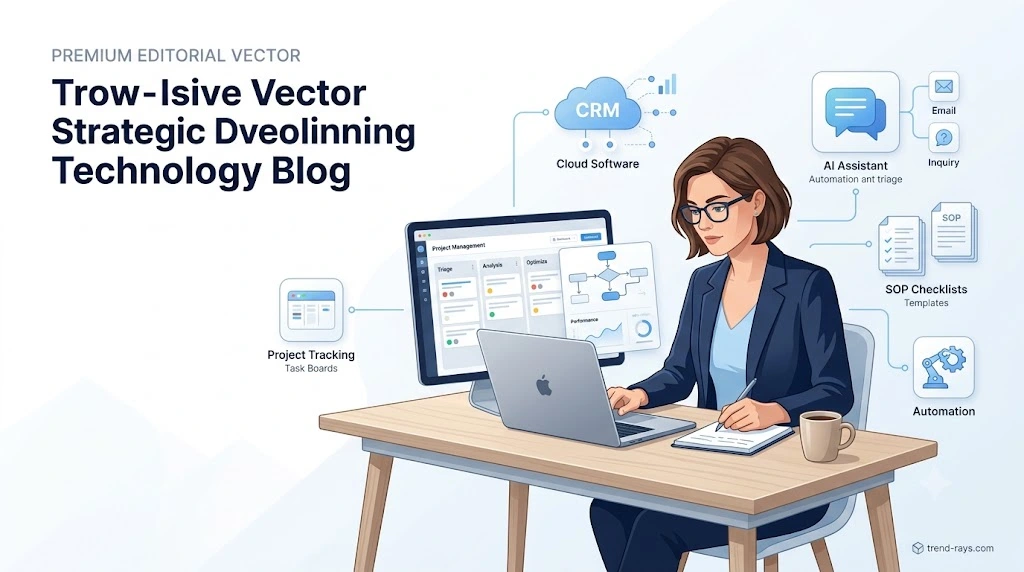
Step 7: Build Your Personal AI Operating System (AIOS)
By this stage, you’ve done something most freelancers never do.
You’ve measured where your time goes.
You’ve mapped your workflows.
You’ve identified bottlenecks.
You’ve reviewed your software subscriptions.
You’ve standardized recurring processes.
Only now are you ready to build something that actually scales.
Not another prompt library.
Not another collection of AI tools.
A personal operating system.
Think about your computer for a moment.
The applications installed on your computer aren’t what make it work.
The operating system is.
It decides:
- how applications interact,
- where files are stored,
- how information flows,
- what happens when you click a button,
- and how everything works together.
Your freelance business needs the same thing.
Instead of treating AI as a collection of disconnected tools, create a simple operating system that defines how work moves from idea to delivery.
That’s what we call an AI Operating System (AIOS).
What Is an AI Operating System?
An AI Operating System isn’t software you can buy.
It’s a framework that combines:
- your workflows,
- your templates,
- your prompts,
- your documentation,
- your AI tools,
- and your quality standards into one consistent system.
Rather than asking:
“Which AI should I use today?”
You already know.
Because each stage of your workflow has a defined process.
AI becomes predictable instead of experimental.
The Five Layers of an AI Operating System
Think of your AIOS as five connected layers.
Each layer supports the one above it.
Layer 1: Business Rules
Everything begins here.
These are the principles that never change.
Examples include:
- Brand voice.
- Pricing philosophy.
- Client communication standards.
- Quality expectations.
- Privacy requirements.
- NDA compliance.
- File organization rules.
AI should never override these rules.
Instead, it should operate within them.
Layer 2: Standard Operating Procedures
This is where your documented workflows live.
Examples:
- Client onboarding.
- Proposal writing.
- Blog publishing.
- SEO audits.
- Monthly reporting.
- Invoice creation.
- Project closing.
Every recurring process should have a documented path.
Without SOPs, AI has nothing consistent to follow.
Layer 3: Templates
Templates reduce repeated decision-making.
Instead of creating everything from scratch, maintain reusable assets such as:
- proposal templates,
- email templates,
- onboarding documents,
- report layouts,
- content briefs,
- editorial checklists,
- client questionnaires.
Templates improve consistency.
AI simply fills in the appropriate details.
Layer 4: AI Assistance
Only now does AI enter the system.
Examples include:
- generating first drafts,
- summarizing research,
- organizing notes,
- improving readability,
- extracting action items,
- creating checklists,
- brainstorming ideas,
- drafting routine communication.
Notice that AI doesn’t replace the earlier layers.
It enhances them.
Layer 5: Human Review
Every professional workflow should end here.
Before work reaches a client, ask:
- Is this accurate?
- Is it complete?
- Does it reflect my expertise?
- Does it match my brand voice?
- Does it contain confidential information that shouldn’t be shared?
- Would I confidently attach my name to this work?
This final review is what separates professional AI use from blind automation.
Clients hire freelancers for judgment—not just output.
Visualizing Your AI Operating System
A simple way to think about AIOS is like this:
Business Rules
       ↓
Documented SOPs
       ↓
Reusable Templates
       ↓
AI Execution
       ↓
Human Review
       ↓
Client Delivery
Every project moves through the same system.
The process remains stable.
Only the project details change.
Why This System Scales Better Than More Software
Many freelancers attempt to grow by adding more applications.
An AI Operating System scales differently.
Instead of increasing complexity, it increases consistency.
Imagine onboarding a new freelance collaborator.
Without AIOS, you would need to explain every workflow from scratch.
With AIOS, you simply provide:
- your SOPs,
- your templates,
- your quality standards,
- your preferred prompts,
- and your review process.
The system already exists.
Whether the work is completed by you, a teammate, or an AI assistant, the workflow remains the same.
That’s how scalable businesses operate.
Your AI Stack Should Support Your AIOS—Not Replace It
One mistake many freelancers make is allowing software to dictate how they work.
For example:
“I have to organize projects this way because that’s how the app works.”
Instead, reverse the relationship.
Design your ideal workflow first.
Then choose software that supports it.
Your operating system should remain stable even if you replace:
- ChatGPT with another AI model,
- one project management platform with another,
- or one cloud storage service with a different provider.
Good systems survive software changes.
Poor systems depend on them.
An Example AI Operating System for a Freelance SEO Consultant
Let’s see how this works in practice.
Business Rules
- Never promise rankings.
- Maintain client confidentiality.
- Use consistent reporting standards.
- Follow documented SEO processes.
SOPs
- Discovery call.
- Website audit.
- Keyword research.
- Strategy creation.
- Monthly reporting.
- Client communication.
Templates
- Audit report.
- Proposal.
- Keyword brief.
- Monthly report.
- Follow-up email.
- Meeting agenda.
AI Tasks
- Summarize Search Console data.
- Draft report introductions.
- Brainstorm content ideas.
- Organize keyword clusters.
- Create article outlines.
- Prepare client meeting notes.
Human Review
Review every recommendation.
Verify SEO data.
Check factual accuracy.
Ensure recommendations align with the client’s business objectives.
Only then deliver the report.
Notice something important.
AI supports the consultant.
It doesn’t become the consultant.
AIOS Is Never Finished
One advantage of building an operating system instead of relying on software is flexibility.
As your business grows:
- new services are added,
- workflows improve,
- AI capabilities evolve,
- client expectations change.
Your operating system should evolve too.
Schedule a quarterly review.
Ask yourself:
- Which SOPs are outdated?
- Which templates need updating?
- Which prompts consistently produce the best results?
- Which AI tools are no longer necessary?
- Which workflows still create unnecessary friction?
Continuous improvement is what keeps your AIOS valuable.
The Biggest Difference Between Beginners and Experienced Freelancers
Beginners often ask:
“Which AI tool should I learn next?”
Experienced freelancers ask:
“How does this tool improve my operating system?”
That single shift in thinking changes everything.
Instead of chasing trends, you strengthen systems.
Instead of accumulating software, you improve workflows.
Instead of depending on AI, you direct it.
Key Takeaway
AI tools come and go.
Subscription prices change.
New models are released every few months.
But a well-designed operating system continues creating value regardless of which software you use.
Build your systems first.
Let AI strengthen those systems.
Review the results with your professional judgment.
That’s how freelancers create businesses that are not only more productive—but also more resilient, more consistent, and easier to scale.
Step 8: A 30-Day AI Workflow Audit Action Plan
Reading about workflow optimization is useful.
Putting it into practice is what changes your business.
The good news is that you don’t need to redesign your entire freelance operation in a single weekend.
In fact, trying to automate everything at once usually creates confusion rather than productivity.
A better approach is to improve one system at a time.
The following 30-day action plan breaks the audit into manageable weekly milestones.
By the end of the month, you’ll have a clearer understanding of your business, better documented workflows, and a more intentional approach to using AI.
Week 1: Observe Before You Optimize
During the first week, resist the urge to change anything.
Your only objective is to understand how your business currently operates.
Track your daily work honestly.
Record:
- how long each task takes,
- which activities repeat frequently,
- where interruptions occur,
- which software you use,
- and how often you switch between applications.
Don’t judge your workflow.
Simply observe it.
At the end of the week, review your notes and identify recurring patterns.
Ask yourself:
- Which activities consume the most time?
- Which tasks generate the least value?
- Which interruptions happen repeatedly?
- Which work could potentially be standardized?
This information becomes the foundation for every improvement that follows.
Week 2: Document Your Core Workflows
Now that you’ve identified recurring activities, begin documenting them.
Focus on the workflows you perform most often.
Examples include:
- client onboarding,
- proposal creation,
- project setup,
- content production,
- reporting,
- invoicing,
- project delivery.
Keep each SOP simple.
Document:
- where the workflow begins,
- each major step,
- who is responsible,
- what information is required,
- and what successful completion looks like.
Don’t worry about automation yet.
Your goal is consistency.
Week 3: Introduce AI Selectively
With documented workflows in place, identify one or two areas where AI can genuinely help.
Good starting points include:
- drafting routine emails,
- summarizing meeting notes,
- generating first drafts,
- organizing research,
- formatting reports,
- creating content outlines,
- extracting action items from documents.
Avoid introducing AI into every workflow simultaneously.
Implement one improvement.
Use it consistently for several days.
Evaluate the results.
Then decide whether it genuinely saves time without reducing quality.
Small improvements are easier to measure than large-scale changes.
Week 4: Review, Refine, and Simplify
The final week isn’t about adding more software.
It’s about evaluating what you’ve already implemented.
Ask yourself:
Did AI reduce repetitive work?
If not, determine why.
Perhaps the workflow wasn’t standardized.
Perhaps the prompts need improvement.
Perhaps the task wasn’t suitable for AI in the first place.
Did you remove unnecessary work?
Automation isn’t the only measure of success.
Eliminating unnecessary tasks often creates even greater efficiency.
Are your subscriptions still justified?
Review every paid AI application.
Does it support a documented workflow?
Does it save measurable time?
Does it replace another tool?
If not, consider whether the subscription still deserves a place in your business.
Which workflow improved the most?
Celebrate measurable progress.
You don’t need to optimize everything.
Improving one high-impact workflow each month creates meaningful long-term results.
Your Monthly AI Workflow Review Checklist
At the end of every month, perform a quick review.
Workflow Review
- □ Which workflows caused the most delays?
- □ Which workflows became faster?
- □ Which recurring tasks still feel repetitive?
- □ Have any new bottlenecks appeared?
AI Review
- □ Which AI tools saved the most time?
- □ Which prompts consistently produced useful results?
- □ Which outputs required extensive rewriting?
- □ Which tasks still require full human control?
Software Review
- □ Am I paying for duplicate functionality?
- □ Have I fully learned the tools I already own?
- □ Can any subscriptions be cancelled?
- □ Is my software supporting my workflow—or shaping it?
Business Review
- □ Did client satisfaction improve?
- □ Did project delivery become more consistent?
- □ Did administrative work decrease?
- □ Did I spend more time on high-value work this month?
These questions take less than thirty minutes to answer but can reveal opportunities that would otherwise remain hidden.
Continuous Improvement Beats One-Time Optimization
Your workflow audit isn’t something you complete once and forget.
Your business changes.
Clients change.
AI tools evolve.
Your services expand.
The systems supporting your business should evolve too.
Instead of treating workflow optimization as a one-time project, think of it as a monthly habit.
One documented workflow.
One unnecessary task eliminated.
One improved prompt.
One subscription reviewed.
Over the course of a year, these small improvements compound into a business that operates with greater consistency, lower administrative overhead, and more time for meaningful client work.
Progress Is Better Than Perfection
Many freelancers delay optimization because they want to build the perfect system.
That day rarely comes.
Instead, focus on progress.
Document one workflow.
Improve one recurring task.
Test one AI-assisted process.
Measure the results.
Then repeat.
Simple, consistent improvements almost always outperform dramatic overhauls that never get finished.
Key Takeaway
The purpose of an AI workflow audit isn’t to automate everything within 30 days.
It’s to create a sustainable process for continuously improving how your business operates.
By reviewing your workflows each month, documenting recurring tasks, evaluating AI objectively, and removing unnecessary complexity, you’ll build a freelance business that becomes more efficient over time—without becoming dependent on every new AI trend.
Common Mistakes Freelancers Make During an AI Workflow Audit
An AI workflow audit isn’t about building the most automated freelance business.
It’s about building the most effective one.
After reviewing dozens of workflow optimization strategies and observing how freelancers adopt AI, one pattern becomes clear.
The biggest productivity gains rarely come from discovering a new AI tool.
They come from avoiding a handful of common mistakes.
Fortunately, most of these mistakes are easy to correct once you recognize them.
Mistake 1: Buying AI Tools Before Understanding the Problem
Many freelancers begin their AI journey by searching for software.
A better starting point is identifying the problem.
Imagine purchasing a project management platform before documenting how your projects actually move from enquiry to delivery.
Or subscribing to an AI writing assistant before understanding why content production takes longer than expected.
In both cases, software becomes a substitute for strategy.
Technology works best when it solves a clearly defined problem.
Before paying for another subscription, ask yourself:
“Which workflow issue am I trying to solve?”
If you can’t answer that question in one sentence, you probably aren’t ready to buy another tool.
Mistake 2: Automating a Broken Workflow
Automation doesn’t fix inefficient systems.
It simply helps them run faster.
Consider a client onboarding process that frequently results in missing information.
Using AI to summarize incomplete project briefs won’t eliminate the underlying issue.
The real solution is redesigning the onboarding process so that the necessary information is collected before work begins.
This principle applies to almost every freelance workflow.
Standardize first.
Automate second.
Mistake 3: Expecting AI to Replace Professional Judgment
AI can draft.
Summarize.
Organize.
Brainstorm.
Translate.
Format.
What it can’t reliably replace is professional accountability.
Clients hire freelancers because they trust their experience, decision-making, and ability to apply context.
An AI-generated recommendation still needs someone to verify that it’s accurate, appropriate, and aligned with the client’s goals.
Human review isn’t an optional step.
It’s part of delivering professional work.
Mistake 4: Ignoring Privacy and Confidentiality
AI can only work with the information you provide.
That doesn’t mean every piece of client information should be shared.
One of the safest habits you can develop is asking:
“Does the AI actually need this information to complete the task?”
Often, the answer is no.
Replacing names with placeholders, removing sensitive financial details, or summarizing documents instead of uploading them in full are simple practices that reduce unnecessary exposure.
Responsible AI use isn’t only about productivity.
It’s also about protecting client trust.
Mistake 5: Measuring Success by Time Saved Alone
Saving time is valuable.
But it’s not the only measure of success.
Suppose AI helps you complete a task thirty minutes faster.
If the output requires extensive editing or introduces costly mistakes, the apparent time savings disappear.
Instead of focusing exclusively on speed, evaluate improvements using several criteria:
- consistency,
- quality,
- client satisfaction,
- reduced stress,
- fewer errors,
- and better use of your expertise.
A slower workflow that consistently delivers outstanding results is often more valuable than a faster workflow that creates rework.
Mistake 6: Chasing Every New AI Tool
The AI industry evolves rapidly.
Every month introduces new models, assistants, and productivity platforms.
Trying to evaluate every release can become a full-time job.
Instead of asking:
“What’s the newest AI tool?”
Ask:
“Does this improve a documented workflow in my business?”
If the answer is no, you probably don’t need it.
Curiosity is valuable.
Constant software switching is not.
Mistake 7: Forgetting to Review Existing Systems
Many freelancers audit their workflows once and never revisit them.
Businesses don’t remain static.
Services change.
Clients change.
Pricing changes.
AI capabilities improve.
The systems supporting your business should evolve as well.
Scheduling a quarterly workflow review helps ensure that your SOPs, templates, prompts, and software continue supporting your current way of working rather than the way you worked a year ago.
Mistake 8: Treating AI as the Strategy
Perhaps the biggest mistake of all is believing that AI itself creates a competitive advantage.
It doesn’t.
Every freelancer has access to increasingly capable AI tools.
What differentiates successful businesses is how those tools are integrated into thoughtful systems.
Clients remember:
- reliable communication,
- consistent delivery,
- practical advice,
- creative problem-solving,
- and professional judgment.
AI can help you provide those qualities more efficiently.
It cannot replace them.
A Better Way to Measure AI Success
Instead of asking:
“How much work did AI do for me today?”
Ask questions like:
- Did I spend more time solving meaningful client problems?
- Were repetitive administrative tasks reduced?
- Did my workflow become easier to follow?
- Did my work become more consistent?
- Would I confidently repeat this process next month?
Those answers reveal whether AI is genuinely improving your business.
The Goal Isn’t Maximum Automation
It’s easy to become fascinated by automation.
Entire businesses are built around showing what’s possible.
But professional freelancing isn’t about demonstrating technology.
It’s about delivering dependable results.
Sometimes the best workflow includes AI.
Sometimes it includes a template.
Sometimes it requires a conversation with a client.
And sometimes the simplest solution is eliminating an unnecessary task altogether.
The most effective freelancers don’t automate everything.
They automate thoughtfully.
Key Takeaway
The success of an AI workflow audit isn’t measured by the number of tools you adopt or the number of tasks you automate.
It’s measured by how well your business operates after the audit is complete.
If your workflows become clearer, your systems become simpler, your clients receive consistent results, and your expertise becomes more valuable, then the audit has achieved its purpose.
That’s a far more meaningful outcome than simply adding another AI subscription.
Conclusion: AI Is a Multiplier—Not a Business Strategy
Artificial intelligence has become one of the most significant productivity tools available to freelancers.
It can help you draft documents, summarize meetings, organize information, generate ideas, automate repetitive tasks, and reduce hours of administrative work.
Those are meaningful advantages.
But after completing this workflow audit, one thing should be clear:
The value of AI depends far more on your business systems than on the AI itself.
A poorly organized workflow doesn’t become efficient simply because an AI assistant is added to it.
Likewise, subscribing to more software won’t automatically create a better freelance business.
Strong systems still matter.
Clear client communication still matters.
Thoughtful decision-making still matters.
Professional expertise still matters.
AI amplifies those strengths—but it doesn’t replace them.
The Best Freelancers Use AI Intentionally
One of the biggest differences between experienced freelancers and those constantly chasing the latest AI trends is how they approach technology.
Experienced professionals rarely ask:
“What’s the newest AI tool?”
Instead, they ask:
- Does this improve an existing workflow?
- Does it reduce repetitive work?
- Does it help me deliver better results?
- Does it save enough time to justify its cost?
- Does it support the way I already work?
These questions keep technology aligned with business goals instead of becoming a distraction.
Productivity Comes From Better Decisions, Not More Automation
Throughout this guide, we’ve returned to the same principle repeatedly:
Workflow before software.
That idea may seem simple, but it has important implications.
Before introducing AI, understand how your work moves from the first client enquiry to the final delivery.
Before automating a task, standardize it.
Before buying another subscription, make sure your current tools are being used effectively.
And before trusting AI with professional work, review every output with the same care you would if you had created it yourself.
These habits require a little more effort upfront.
In return, they create systems that are easier to maintain, easier to scale, and less dependent on any single AI platform.
AI Will Continue to Change—Your Principles Shouldn’t
The AI landscape changes remarkably quickly.
New language models are released.
Existing tools gain new capabilities.
Pricing changes.
Features appear and disappear.
If your productivity depends on one specific platform, every change becomes disruptive.
If your productivity depends on well-designed workflows, those changes become much easier to adapt to.
That’s why this guide has focused on principles rather than products.
Clear workflows, documented processes, reusable templates, thoughtful software choices, and professional oversight remain valuable regardless of which AI assistant you use next year.
Technology evolves.
Good operating practices endure.
A Simple Habit That Pays Long-Term
You don’t need to perform a full workflow audit every month.
But setting aside even 30 minutes once a quarter to review your systems can reveal opportunities that are easy to miss during day-to-day work.
Ask yourself:
- Which recurring tasks still consume unnecessary time?
- Which workflows have become more complicated?
- Which subscriptions are no longer delivering value?
- Which SOPs need updating?
- Where has AI genuinely improved my work—and where hasn’t it?
Small improvements made consistently often produce far greater results than occasional large-scale overhauls.
Over time, those incremental changes compound into a business that is more efficient, more consistent, and better prepared to adapt as technology evolves.
The Goal Isn’t to Use More AI
The goal is to build a freelance business that runs more smoothly.
Sometimes AI will be the right solution.
Sometimes a checklist, a template, or a better conversation with a client will solve the problem more effectively.
Knowing the difference is what makes AI a professional tool rather than just another trend.
Use AI where it genuinely creates value.
Keep your expertise at the center of every client relationship.
Continue refining your systems as your business grows.
That balanced approach is far more sustainable than trying to automate everything simply because the technology exists.
Final Thoughts
If there’s one idea worth remembering from this guide, it’s this:
Don’t build your business around AI. Build your business around strong workflows—and let AI strengthen those workflows where it genuinely helps.
Freelancers who adopt this mindset are less likely to accumulate unnecessary software, more likely to protect client trust, and better positioned to benefit from future advances in AI without constantly rebuilding the way they work.
In the end, your competitive advantage won’t come from having access to the latest AI model.
It will come from combining the efficiency of AI with the judgment, creativity, and professionalism that only you can provide.