If you have spent any time on TikTok, YouTube Shorts, or Instagram recently, you have likely seen the ads: a frantic player tapping their screen while hundred-dollar bills fly into their digital wallet, accompanied by a promise that you can “cash out $300 today” just by playing a simple matching game.
The harsh reality of the 2026 mobile app ecosystem is that 95% of these high-payout games are mathematically designed scams.
Google Play and the Apple App Store are flooded with “hyper-casual” games that use psychological tricks to harvest your ad-viewing time without ever intending to pay you. If an app promises a massive payout for zero effort, you are the product.
The Quick Fix: Don’t fall for the $100 promise. If you want to make a realistic (but small) side income, stick to the low-paying, but verified apps on our master guide: 8 Legit Game Apps That Pay Real Cash in 2026.
Here is the exact anatomy of the “$100 Minimum” scam, how developers rig the math against you, and the red flags you must look for before you hit download.
The “Diminishing Returns” Trick (The Core Scam)
The most common scam in mobile gaming relies on a psychological trap called “diminishing returns.” The developers know that to keep you watching ads, they have to make you feel like you are winning early on.
Here is exactly how the mathematical trap works:
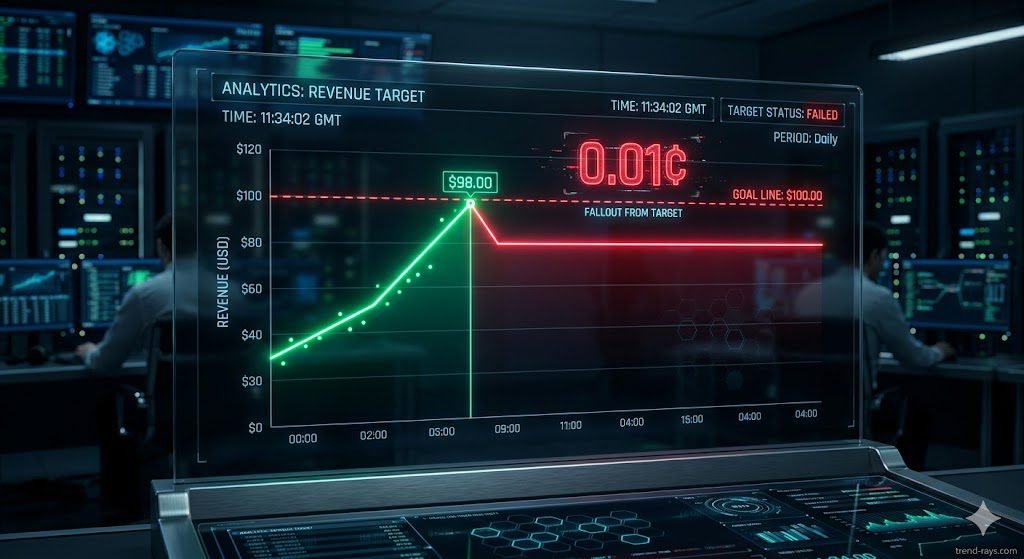
- The Fast Start: You download a game with a $100 minimum withdrawal threshold. In your first 10 minutes of play, you rapidly earn $40. Your brain releases dopamine; you think you will reach $100 by the end of the day.
- The Slowdown: As your balance crosses $75, the payouts per level drop from $5.00 to $0.50.
- The Wall: When your balance reaches $98.50, the algorithm fundamentally changes. Now, passing a level pays you $0.01. Sometimes, the levels become impossible to beat, or the app stops dispensing cash rewards entirely, replacing them with useless “virtual coins.”
Why they do this: The developer makes money every time you watch a mandatory 30-second ad between levels. By trapping you at $99.50, they ensure you will watch hundreds of ads in a desperate attempt to cross the finish line. You will never reach $100. It is hardcoded into the app’s source code not to let you.
The “Verification Fee” Trap (Outright Theft)
While the diminishing returns trick steals your time, the “Verification Fee” trap steals your actual money.
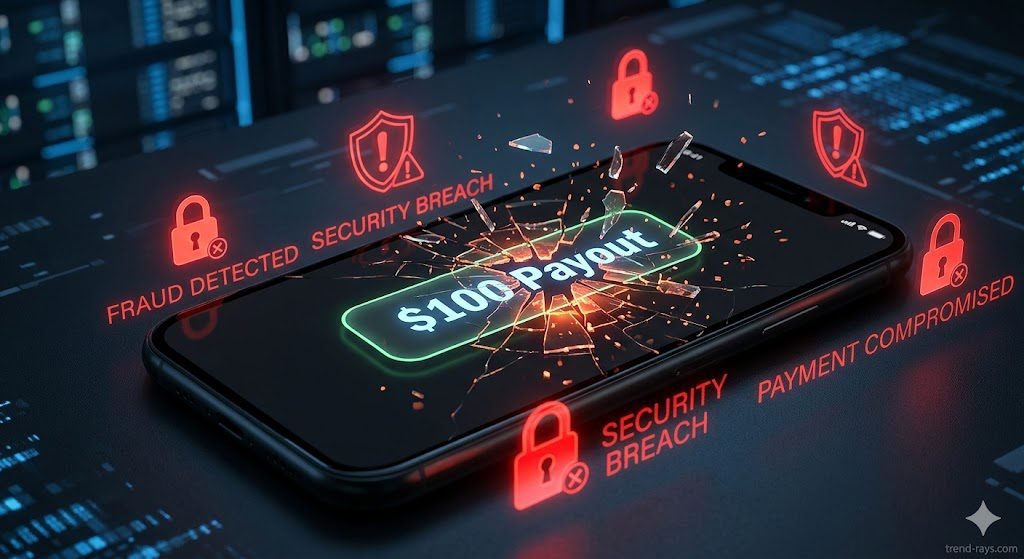
In this variant of the scam, the app actually lets you reach the $100 withdrawal threshold. You enter your PayPal email, click “Withdraw,” and are met with a pop-up that looks like this:
“To prevent bot abuse and verify your account, please pay a $3.99 processing fee to release your $100 funds. This fee will be refunded with your payout.”
This is a 100% confirmed scam. Legitimate platforms (like Skillz or Papaya Gaming) deduct processing fees from your winnings. A real company will never ask you to input your credit card or send a Cash App transfer to “unlock” money you have already earned. If an app asks for money to release money, delete it immediately.
The “Bot Matchmaking” Fraud (The 2026 Legal Reality)
You aren’t just fighting bad withdrawal rules; you are often fighting rigged code. Many developers advertise their apps as “games of skill” where you compete against other human players for a cash prize. In reality, you are frequently playing against AI bots programmed to beat your score.
This isn’t a conspiracy theory—it is currently playing out in the U.S. federal court system.
In May 2026, the U.S. Supreme Court denied an appeal by AviaGames (the developer behind massively popular titles like Pocket7Games and Bingo Clash), allowing a massive consumer class-action lawsuit to proceed. The litigation alleges that corporate documents prove the company secretly matched human players against computer bots. Because the bots were programmed to win, the human players lost their entry fees, funneling millions of dollars directly back to the developer.
The “Sweepstakes” Loophole
Additionally, a massive wave of 2026 mass arbitrations is currently targeting apps like Card Crush, SpinBlitz, and Fortune Wheelz. These apps claim to be “free social casinos,” but they force players to buy virtual currency packages to participate in “sweepstakes” that pay real cash.
Consumer protection attorneys argue this is a loophole used to disguise unlicensed, illegal online gambling. Why this matters to you: If you play an unlicensed gambling app and they refuse to pay out your $100 balance, you have zero legal recourse. You cannot complain to the Better Business Bureau or the FTC because you were participating in an unregulated market.
The Actionable Takeaway: If an app claims to match you against other players for money, check if they are part of a regulated network (like Skillz). If it is a standalone app with no public matchmaking data, assume you are paying an entry fee to play against a bot designed to take your money.
Missing Terms & RTP (The Developer Audit)
Before you download any app promising cash, you must perform a 60-second developer audit. Genuine cash games are heavily regulated because they straddle the line of digital gambling and sweepstakes law.
Here are the legal markers scammers fail to include:
- The RTP (Return to Player) Data: If a game involves wagering real money (even pennies), legitimate developers publish their matchmaking algorithms and RTP percentages in their Terms of Service. Scams have no Terms of Service link in their app store bio.
- The “Early Access” Cloak: Scammers frequently launch their apps under “Early Access” or “Beta” tags on the Google Play Store. Why? Because the Play Store disables public reviews for Early Access apps. This prevents scammed users from warning others in the comment section.
- Suspicious App Permissions: A simple solitaire or bingo game does not need access to your contact list, SMS logs, or device microphone. If a cash game asks for these permissions upon installation, it is likely harvesting and selling your personal data to third-party data brokers.
How to Verify Reviews in 2026
Do not trust a 4.5-star rating. Scam developers purchase bot farms to flood their app pages with glowing, 5-star reviews that simply say, “Great game!” or “Paid me instantly!”
The Verification Workflow:
- Go to the App Store or Google Play review section.
- Filter the reviews by “1 Star”.
- Sort by “Most Recent”.
If the game is a scam, the 1-star section will be a graveyard of furious users all telling the exact same story: “Got to $99 and it stopped paying,” or “They asked for a $5 fee and then blocked my account.” Trust the angry, highly specific 1-star reviews over the generic 5-star bots.
The Safe Alternative: Earning Pocket Money with “Real” Games

If you want to earn a little extra cash while gaming, you do not need to risk your money on rigged Bingo tournaments or watch hundreds of ads on a fake puzzle game. The safest way to earn in 2026 is by playing actual video games through established reward ecosystems.
These methods won’t pay your rent, but they offer a legitimate, scam-free way to earn $15 to $50 a month in “pocket money” just for enjoying real gaming titles.
1. Passive “Playtime” Reward Apps
Instead of playing a poorly designed mini-game built specifically to show you ads, you can use passive reward aggregators like Mistplay (Android only) or Cash Giraffe.
- How it works: These platforms partner with major mobile game studios (the creators of massive titles like Raid: Shadow Legends, Coin Master, or Genshin Impact). You download the aggregator app, and it tracks your screen time while you play these high-quality, mainstream games.
- The Reality Check: You earn points per minute of gameplay, which you can redeem for $5 or $10 PayPal transfers or Amazon gift cards. It is slow, but it is guaranteed, and you get to play actual, fun games rather than ad-farm scams.
2. Web3 and Play-to-Earn (P2E) Card Games
If you are a competitive gamer who likes trading card games (TCGs) or strategy titles, the Web3 gaming space has matured significantly in 2026.
- How it works: Games like Splinterlands (built on the Hive blockchain) or Gods Unchained (Ethereum) are real, skill-based tactical games. As you win matches and climb the ranked ladder, you earn digital cards and crypto tokens that you actually own.
- The Reality Check: You can sell these digital cards on open marketplaces for real crypto, which can then be converted to USD. While the massive “crypto gaming gold rush” of 2021 is over, a skilled player dedicating a few hours a week to these games can reliably earn enough for their monthly coffee budget, completely free from the “$100 minimum” scam mechanics.
The Golden Rule for 2026: If an app asks you for money to play, it’s gambling. If an app promises you $100 to tap bubbles, it’s a scam. But if a platform rewards you with micro-payouts for playing high-quality, recognizable video games, it is likely a legitimate pocket-money generator.
The Bottom Line
If a mobile game is free to download, doesn’t require any real skill, and promises you the equivalent of a full-time salary, it is lying to you.
Real cash gaming apps operate on razor-thin margins. They pay out in pennies, not hundreds of dollars. Protect your time, protect your data, and delete any app that forces you to chase an impossible $100 minimum.