
Executing LegalTech SaaS procurement requires a stringent Vendor Risk Management (VRM) audit, particularly when evaluating AI-driven Contract Lifecycle Management (CLM) platforms. Because enterprise contracts contain highly sensitive M&A data, pricing matrices, and Personally Identifiable Information (PII), CISOs must ensure the vendor guarantees Zero Data Retention (ZDR) at the API layer, preventing corporate data from training foundational Large Language Models (LLMs). Secure procurement mandates single-tenant data isolation, AES-256 encryption at rest, strict Role-Based Access Control (RBAC) integrated via SAML SSO, and immutable SOC 2 Type II compliance audit trails.
When enterprise IT buyers and Chief Information Security Officers (CISOs) evaluate LegalTech software, the stakes are exponentially higher than standard SaaS procurement. Contract Lifecycle Management (CLM) platforms hold the most sensitive data in your organization: pre-merger NDAs, enterprise pricing matrices, vendor SLAs, and employee PII.
The integration of Generative AI into modern CLM tools—enabling automated redlining, obligation tracking, and instant contract summarization—introduces a critical new attack vector. If your LegalTech vendor routes your sensitive MSAs through public foundational models without strict data boundaries, your proprietary legal strategies could be inadvertently memorized and regurgitated to competitors.
To safely procure an AI-powered CLM, your architecture and compliance reviews must demand absolute data sovereignty.
The Zero Data Retention (ZDR) Mandate
The most dangerous assumption a procurement team can make is trusting a “Privacy Policy” over an explicit Data Processing Agreement (DPA).
Many tier-two legal AI tools utilize standard OpenAI, Anthropic, or Google APIs to process text. By default, some commercial AI endpoints log prompt history for 30 days to monitor for abuse, and worse, may use data to train future models.
When auditing a CLM vendor, you must verify they operate under a Zero Data Retention (ZDR) API agreement. This guarantees that once the LLM processes your 150-page vendor agreement to extract the indemnity clauses, the data is instantly wiped from the GPU memory. It must never touch persistent storage on the model provider’s servers.
Red Flag: If a vendor claims “we do not sell your data,” that is not enough. The SLA must explicitly state: “Customer payload data is strictly isolated and never utilized for the training, fine-tuning, or reinforcement learning of foundational AI models.”
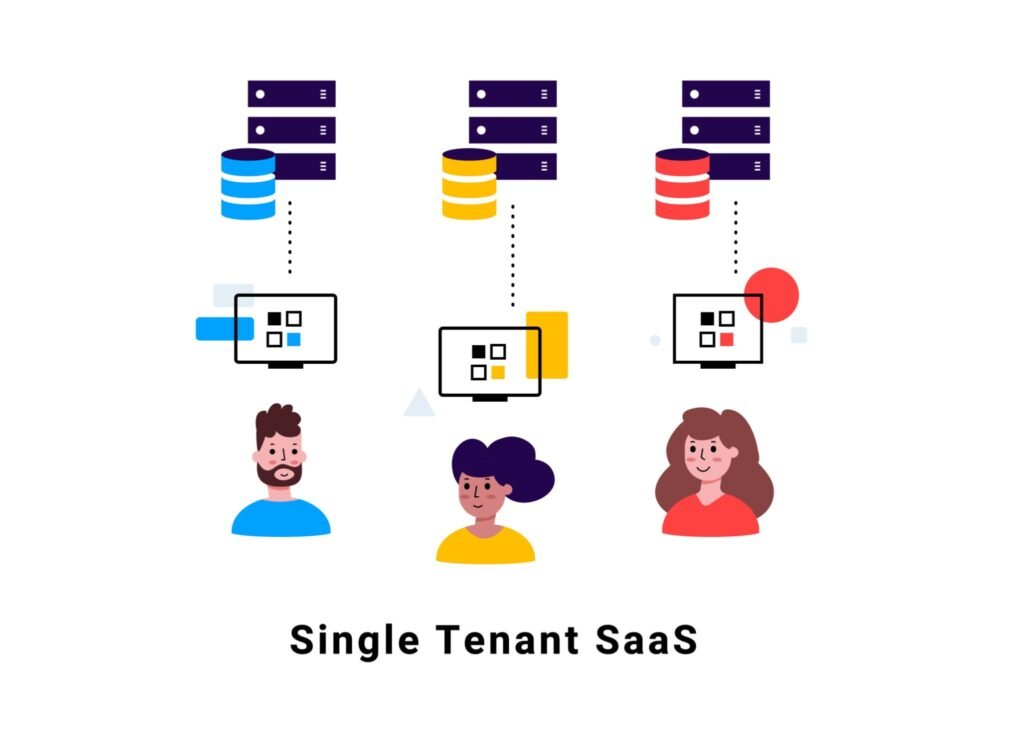
Multi-Tenant vs. Single-Tenant Database Isolation: The Vector Bleed Threat
SaaS platforms traditionally rely on multi-tenant architectures, where multiple customers share the same physical database instance to reduce cloud hosting costs. In legacy text-based repositories, this risk was mitigated through standard Row-Level Security (RLS) policies. However, in the era of Generative AI and Retrieval-Augmented Generation (RAG), multi-tenancy introduces a catastrophic vulnerability: Cross-Tenant Vector Bleed.
The Anatomy of a Vector Bleed
When an AI CLM ingests a contract, it does not store it as standard text. It chunks the document and converts it into high-dimensional floating-point numbers (embeddings) stored in a vector database like Pinecone, Weaviate, or pgvector.
In a multi-tenant vector database, embeddings from Company A and Company B exist in the same mathematical space, separated only by logical metadata tags (e.g., namespace = 'tenant_A').
If the application’s API gateway suffers a “Confused Deputy” authorization failure, or if a developer pushes a flawed semantic search query that drops the namespace parameter, the LLM will retrieve the nearest mathematical matches regardless of ownership. An analyst at Company A could prompt, “What are the standard SLA penalties for our enterprise clients?” and accidentally retrieve the vector embeddings of Company B’s confidential pricing matrices.
The RLS Single Point of Failure
Multi-tenant systems rely entirely on logical application-layer filtering to prevent data mixing. If the code fails, the data leaks.
SQL
-- The Vulnerability of Multi-Tenant RLS
-- If the application fails to inject the exact tenant_id during the API call,
-- the query executes globally across all corporate data.
CREATE POLICY tenant_isolation_policy ON contract_embeddings
    USING (tenant_id = current_setting('app.current_tenant_id'));
Procurement Requirement: Dedicated Tenancy & BYOK
To eliminate vector bleed risk, enterprise IT buyers must mandate Single-Tenant Architecture (Dedicated Tenancy) for their CLM implementations.
In a single-tenant environment, your legal data is stored in an isolated Virtual Private Cloud (VPC) with dedicated compute instances and separate storage buckets. The tenant_id filter becomes irrelevant because it is physically impossible for an external network to query your vector index.
Furthermore, isolated tenancy allows your enterprise to implement Bring Your Own Key (BYOK) envelope encryption. By holding the master cryptographic keys via AWS KMS or Azure Key Vault, your security team retains the ultimate kill switch. If anomalous activity is detected, you can instantly revoke the key, crypto-shredding the vendor’s access to your contracts without relying on their internal support teams.
Legacy vs. AI-Native CLM Security Architecture
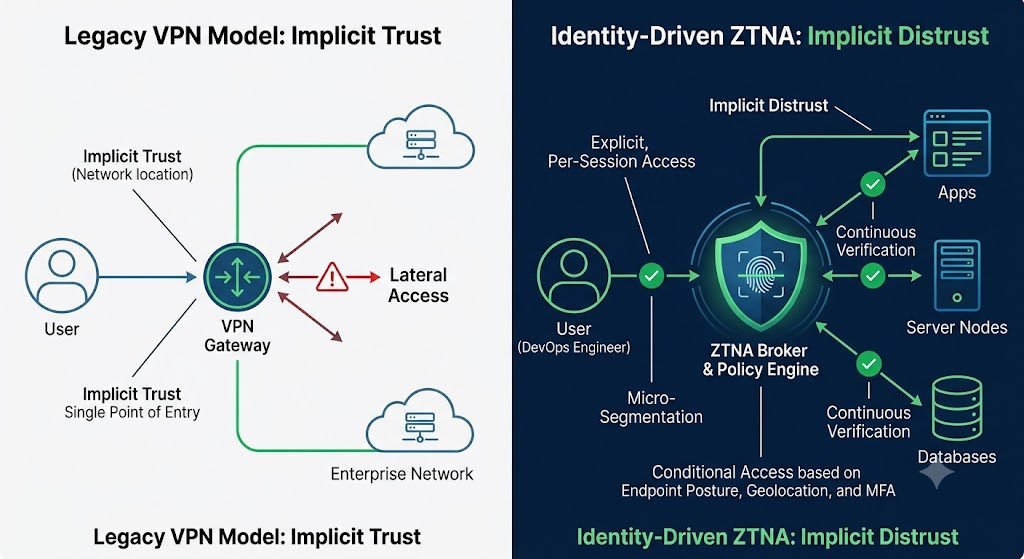
The fundamental flaw in legacy contract repositories is that they treat legal documents as inert files. Their security model is based on Static Access Control—locking a digital filing cabinet and placing a guard at the door.
When you introduce an AI agent capable of reading, summarizing, and cross-referencing thousands of documents simultaneously, the data is no longer inert; it is highly active. Therefore, AI-native CLM platforms must abandon perimeter-based defenses and adopt a Zero Trust Network Access (ZTNA) and Semantic Security posture.
Semantic Data Loss Prevention (DLP) vs. Keyword Regex
Legacy systems rely on standard regex rules (e.g., searching for the format of a Social Security Number or a credit card) to block unauthorized downloads.
An AI-native CLM utilizes Semantic Data Loss Prevention. Because the AI understands the context of the text, it can dynamically redact unformatted sensitive information—such as a proprietary M&A negotiation strategy or an unannounced product launch—before the data is even processed by the user’s screen or the LLM’s summarization engine.
Context-Aware RBAC at the Prompt Layer
In an outdated repository, if a junior paralegal has read-access to a folder, they can open any PDF inside it.
In a modern enterprise AI environment, security is enforced at the prompt layer. Using Context-Aware Role-Based Access Control (RBAC) mapped via SAML/SCIM to your enterprise Identity Provider (IdP), the system evaluates the user’s query in real-time. If a junior employee prompts the AI with, “Summarize the penalty clauses in the Microsoft MSA,” the AI firewall verifies their exact clearance level for that specific data type before executing the retrieval augmented generation (RAG) loop.
The Enterprise Security Comparison Matrix
To secure internal stakeholder buy-in, present this architectural comparison to your DevOps and Compliance teams during the vendor vetting process:
| Security Domain | Legacy Contract Repositories | AI-Native Enterprise CLM |
| Data Architecture | Monolithic shared file stores | Containerized microservices with dedicated vector indexes |
| Data Loss Prevention | Static regex and keyword blocking | Semantic PII redaction and dynamic data masking |
| Authorization Model | Static Active Directory (AD) folder permissions | Zero Trust, prompt-level RBAC via SAML/SCIM |
| Threat Detection | Reactive review of access logs | Real-time anomaly detection for high-velocity API scraping |
| Audit & Compliance | Point-in-time manual spreadsheet tracking | Immutable cryptographic ledgers mapping queries to IdP identities |
| Security Feature | Legacy Contract Repositories | Modern Enterprise AI CLM |
| Data Residency | Shared public cloud buckets | Geographically fenced, sovereign cloud instances |
| Access Control | Basic password / Department-level folders | Granular RBAC, SCIM provisioning, and Identity Provider (IdP) mapping |
| Obligation Tracking | Manual spreadsheet data entry | Automated AI extraction mapped to immutable SOC 2 audit logs |
| Data Ingestion | Untethered uploads (High malware risk) | Automated parsing sandboxes that sanitize files before vector indexing |
Modeling the Total Cost of Ownership (TCO) for LegalTech
When presenting the business case to the CFO, you must quantify risk mitigation. The Total Cost of Ownership (TCO) for a secure CLM is not just the software license; it must account for the mathematical reduction in compliance breach probability.
We calculate the true enterprise TCO using the following risk-adjusted formula:
$$ \text{TCO}{\text{CLM}} = C{\text{licensing}} + C_{\text{implementation}} + \left( P_{\text{breach}} \times C_{\text{breach}} \right) – \Delta_{\text{efficiency}} $$
Where:
- $C_{\text{licensing}}$ = Annual Contract Value (ACV) of the SaaS platform.
- $C_{\text{implementation}}$ = Cost of data migration, RBAC mapping, and API integration.
- $P_{\text{breach}}$ = The probability of a data leak (drastically reduced by BYOK and ZDR policies).
- $C_{\text{breach}}$ = The financial penalty of a GDPR/HIPAA violation.
- $\Delta_{\text{efficiency}}$ = The measurable capital saved by AI reducing manual legal review hours by 40-60%.
When $P_{\text{breach}}$ is minimized through rigorous procurement, the $\Delta_{\text{efficiency}}$ ensures the platform achieves positive ROI within the first 12 months.
Interactive CLM Vendor Risk Evaluator
Use this interactive tool during your next vendor demonstration. Input the software’s architectural capabilities to instantly generate a Procurement Risk Score and identify critical compliance gaps.
CLM Vendor Security Assessor
Generate an executive compliance audit report.
FAQ
What is Zero Data Retention (ZDR) in AI CLM?
Zero Data Retention (ZDR) is a security guarantee mandated by enterprise cloud providers stating that customer payloads (such as contract text submitted to an LLM for analysis) are processed entirely in-memory and immediately discarded. The data is never written to disk, stored for abuse monitoring, or used to train future generative AI models.
Why is BYOK important for LegalTech procurement?
Bring Your Own Key (BYOK) allows enterprise IT departments to generate and control the encryption keys used to secure their data inside a vendor’s SaaS platform. If the CLM vendor suffers a data breach, the enterprise can immediately revoke the encryption key from their own AWS or Azure dashboard, instantly rendering the stolen contract data cryptographically unreadable.
How does AI automate third-party paper securely?
When ingesting third-party paper (contracts written on an external vendor’s template), an enterprise CLM uses isolated semantic parsing sandboxes. This prevents malicious text or hidden instructions inside the external document from executing an indirect prompt injection attack against your internal corporate vector database.
What is the difference between a legacy contract repository and an AI-native CLM?
Legacy repositories are static, keyword-based cloud drives that require manual data entry and obligation tracking. AI-native CLMs utilize semantic vector search to instantly extract metadata, mapping specific indemnity and pricing obligations directly to immutable SOC 2 audit logs and automated alert sequences.

![One of the most dangerous blind spots in modern enterprise security does not come from sophisticated nation-state hackers—it comes from your own employees trying to bypass IT restrictions. Whether it is a remote worker downloading a cracked version of Adobe Premiere, or an employee installing a pirated "repack" of a video game (like a FitGirl or Dodi repack) onto their corporate laptop, the threat vector is the same. Threat actors are now heavily relying on repackaged "flat-pack" malware—inexpensive, off-the-shelf malicious components bundled inside seemingly legitimate software installers. These "piggyback" attacks are designed to silently execute InfoStealers, ransomware, or Remote Access Trojans (RATs) while the user is distracted by the installation of the main program. Because the malware is heavily compressed and obfuscated, traditional signature-based Antivirus (AV) completely fails to detect it. In this guide, we break down exactly how modern Security Operations Center (SOC) teams use Endpoint Detection and Response (EDR) platforms to hunt, isolate, and neutralize repackaged malware before it can compromise the corporate network. The Corporate Threat of "Repacks" (Why Antivirus Fails) To understand how to defeat flat-pack malware, you must understand why legacy security tools fail to see it. Traditional Antivirus relies on Static Properties Analysis. It scans a file's code on the hard drive and checks if its digital "signature" matches a known database of bad files. Malware authors easily bypass this by "packing" or compressing the malicious payload inside a custom wrapper. Because the wrapper's code is mathematically unique, the AV scans it, finds no matching signature, and allows the file to execute. Furthermore, attackers are utilizing "vibe-hacking" and social engineering to distribute these files. They buy sponsored search engine ads for "Microsoft Teams Installer" or "Free PDF Editor," which redirect employees to cloned websites serving the repackaged malware. The legitimate application actually installs and functions perfectly, but a secondary, invisible child process unpacks the malicious payload directly into the computer's volatile memory (RAM), bypassing the hard drive entirely. (Image Prompt 1 - Featured Hero) Prompt: A highly photorealistic, 16:9 cinematic image of a modern Security Operations Center (SOC). In the foreground, a dark-mode glowing computer monitor displays a complex cybersecurity threat-hunting dashboard. A red warning alert reads "Obfuscated Payload Detected." In the background, out-of-focus IT analysts monitor large digital wall screens. Cool blue and aggressive red cyber lighting. A clear, semi-transparent watermark reading "trend-rays.com" sits neatly in the bottom right corner. Step 1: Hunting for Indicators of Compromise (IoCs) If your organization does not yet have an enterprise EDR solution deployed, your IT administrators must actively hunt for the behavioral footprints—known as Indicators of Compromise (IoCs)—left behind by repackaged software. When analyzing an endpoint suspected of a shadow IT infection, look for these specific anomalies: Suspicious Child Processes: Legitimate software installers rarely need to invoke command-line tools. If a setup file (e.g., setup_v2.exe) suddenly spawns cmd.exe, PowerShell.exe, or WMI Provider Host in the background, it is a massive red flag that a flat-pack script is attempting to alter registry keys or disable local Windows Defender settings. Abnormal Memory Allocation: Packed malware must eventually unpack itself in memory to execute. Look for processes that allocate highly unusual amounts of memory relative to their size on the disk. Unrecognized Outbound Beacons: InfoStealers bundled in repacks will immediately attempt to exfiltrate browser passwords and session cookies. Monitor your network firewall logs for endpoints making sudden, persistent outbound connections to unknown IP addresses or unregistered domains (often using Telegram bots or Discord webhooks as Command and Control servers). Step 2: Deploying EDR to Catch "Unpacking" in Memory While manual threat hunting is possible, it does not scale. To protect a fleet of 5,000 corporate laptops, you need Endpoint Detection and Response (EDR). Unlike legacy AV, EDR focuses on Behavioral Analysis and continuous telemetry. It does not care what a file looks like; it cares what the file does. When an employee runs a repackaged installer, the EDR agent monitors the execution in real-time. The moment the hidden malware attempts to unpack itself and inject code into a legitimate process (like explorer.exe), the EDR’s machine learning algorithms flag the behavior as hostile. Top 3 Enterprise EDR Solutions for Repack Detection If you are upgrading your endpoint security stack in 2026, these three platforms provide the most robust defense against obfuscated, flat-pack payloads: CrowdStrike Falcon (Best for Memory Scanning): CrowdStrike’s lightweight agent is peerless at detecting fileless malware and in-memory unpacking. Its AI models instantly recognize the behavioral signatures of InfoStealers attempting to scrape credential vaults, killing the process in milliseconds before data exfiltration can occur. SentinelOne Singularity (Best for Automated Rollback): SentinelOne operates entirely autonomously on the endpoint, meaning it does not need a cloud connection to stop a threat. If a repackaged ransomware payload manages to execute, SentinelOne's "Storyline" technology can track every single file the malware altered and execute a 1-click automated rollback, restoring the PC to its pre-infected state instantly. Microsoft Defender XDR (Best for Windows-Native Environments): For organizations heavily invested in the Microsoft 365 ecosystem, Defender XDR provides incredible native telemetry. It correlates data not just from the endpoint, but from Office 365 emails and Azure Active Directory, allowing SOC analysts to see if the repackaged malware was initially delivered via a phishing link. (Image Prompt 2 - Threat Isolation) Prompt: A photorealistic 16:9 close-up of a cybersecurity professional's dual-monitor workstation. The screen displays an Enterprise EDR dashboard (like SentinelOne or CrowdStrike) showing a visual node-graph of a malware attack. One specific malicious file node is highlighted in bright red and marked "Isolated / Quarantined." Clean, bright corporate IT office lighting. A clear, semi-transparent watermark reading "trend-rays.com" sits neatly in the bottom right corner. The CISO Playbook: Blocking Shadow IT at the Perimeter Detecting malware is good; preventing the execution entirely is better. Chief Information Security Officers (CISOs) must implement strict "Zero Trust" policies to prevent employees from running unverified repacks in the first place. Enforce Application Allowlisting: Use tools like Windows AppLocker to create a strict Allowlist. Block the execution of any .exe, .msi, or script that does not reside in a protected directory (like Program Files) or isn't signed by a trusted corporate publisher. Revoke Local Admin Rights: 90% of repackaged malware requires administrative privileges to install its rootkits or disable security telemetry. By implementing a Privilege Access Management (PAM) solution, employees cannot install unauthorized software without an IT helpdesk ticket. Deploy DNS Filtering: Block access to known software piracy forums, torrent trackers, and "free software" directories at the network level using tools like Cisco Umbrella or Cloudflare Gateway. The True Cost of a Repack Breach (ROI & Business Impact) When an executive pushes back on the budget required for premium EDR software, it is vital to contextualize the financial devastation of a single successful flat-pack malware breach. An employee downloading a cracked PDF editor to "save the company $15 a month" can easily result in the deployment of an InfoStealer. That malware scrapes the employee's browser cookies, capturing their active session token for the company's AWS environment or Salesforce CRM. The attacker bypasses Multi-Factor Authentication (MFA) entirely using the stolen token, accesses your customer database, and deploys network-wide ransomware. The resulting downtime, ransom demands, regulatory fines (GDPR, HIPAA, or CCPA), and class-action lawsuits frequently exceed millions of dollars. Investing in an EDR platform that costs $50 per endpoint annually is the cheapest insurance policy a modern enterprise can buy. Frequently Asked Questions (Endpoint Malware Defense) What is flat-pack malware? Flat-pack malware refers to malicious payloads that are heavily compressed, obfuscated, and bundled together with legitimate software components using off-the-shelf hacker tools. This "repackaging" technique allows attackers to rapidly generate new malware variants that bypass traditional, signature-based antivirus scanners. Why is downloading FitGirl or Dodi repacks a corporate security risk? While often used by gamers to pirate software, "repacks" are a massive vector for shadow IT. Because these installers are inherently modified to bypass digital rights management (DRM), employees who download them onto corporate hardware often accidentally execute hidden InfoStealers or Remote Access Trojans (RATs) embedded by third-party distributors. What is the difference between EDR and Antivirus? Traditional Antivirus uses static signatures to block known bad files on the hard drive. Endpoint Detection and Response (EDR) uses behavioral analysis, AI telemetry, and memory scanning to monitor what a program is actively doing. EDR can detect and kill unknown, "zero-day" malware that legacy AV cannot see. How do InfoStealers bypass MFA? When an InfoStealer (often hidden in repackaged software) infects an endpoint, it targets the web browser's local storage to steal active session cookies. Attackers can import these stolen cookies into their own browsers, allowing them to log into corporate systems (like Microsoft 365 or Slack) without needing a password or triggering an MFA prompt. Conclusion & Next Steps The perimeter of your corporate network is no longer defined by your office firewall; it is defined by the security of your employees' endpoints. Relying on legacy antivirus to stop modern, repackaged malware is a guaranteed path to a data breach. By deploying behavioral-based EDR solutions and strictly policing shadow IT, you can isolate threats in memory before they execute their payloads. Securing your endpoints against rogue software is critical, but it is only half the battle. Threat actors are also using advanced AI to bypass human verification. Ensure your organization is prepared for the next wave of social engineering by reading our definitive guide on [Best Enterprise AI Voice Cloning SaaS for Corporate Training] to learn how to deploy deepfake guardrails and secure corporate communications.](https://trend-rays.com/wp-content/uploads/2026/03/unnamed-54-1.jpg "How to Detect Repackaged \"Flat-Pack\" Malware on Endpoints (2026) 6")