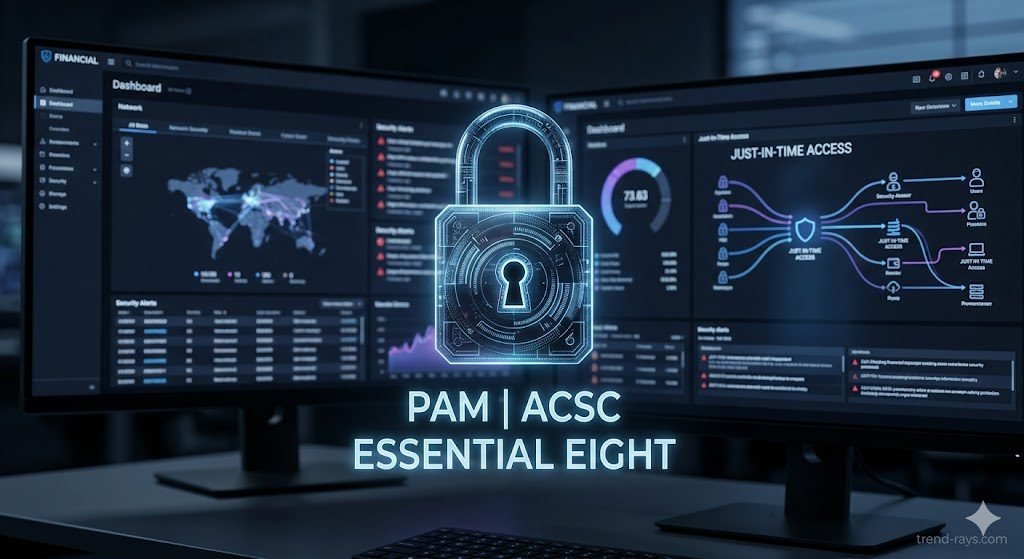
Achieving ACSC Essential Eight Maturity Level 3 is no longer just an aspirational goal for Australian organizations. Driven by stringent cyber insurance requirements and government supply chain mandates, Level 3 is the new baseline. However, reaching this tier is notoriously difficult—particularly when it comes to the mitigation strategy of Restricting Administrative Privileges.
At Maturity Level 3, simply having a password manager is not enough. You must transition from static security configurations to an actively managed, Zero Trust architecture. If you are implementing Privileged Access Management (PAM) to achieve Essential Eight compliance, use this comprehensive checklist to secure your administrative environments, enforce Just-In-Time (JIT) access, and eliminate standing privileges.
The Role of PAM in the ACSC Essential Eight
Administrative privileges are the absolute highest-value target for threat actors. When an attacker compromises a standard user account, their blast radius is limited. When they compromise an admin account, they can bypass security controls, deploy network-wide ransomware, and access sensitive data undetected.
The ACSC explicitly requires organizations to restrict administrative privileges to prevent privilege escalation and lateral movement. A robust PAM solution acts as the enforcement engine for this strategy, ensuring that administrative access is temporary, conditional, heavily monitored, and technically separated from day-to-day corporate environments.
(Internal Link Opportunity: Link to your recent article on Application Control Software here).
The Essential Eight PAM Implementation Checklist (Maturity Level 3)
Maturity Level 3 requires an environment where privileges are ruthlessly minimized and continuously validated. Follow this phased checklist to align your IT operations with the ACSC requirements.
Phase 1: Complete Discovery and Auditing
Before you can protect privileged access, you must know where it exists. The first step to Level 3 compliance is achieving 100% visibility over your administrative footprint.
- Audit all local and domain accounts: Identify every local admin, domain admin, and cloud root account across your environment.
- Remove orphaned accounts: Terminate access for former employees or deprecated service accounts immediately.
- Implement the 45-Day Rule: Configure automated policies to disable any privileged access to systems and applications after 45 days of inactivity.
Phase 2: Implementing the Principle of Least Privilege (PoLP)
Level 3 explicitly requires that users are only granted the specific privileges necessary to execute their immediate duties. The era of the “Global Admin” is over.
- Map roles to requirements: Assign privileges based strictly on technical requirements, not organizational hierarchy.
- Separate operating environments: Privileged accounts (excluding local admins) must be technically restricted from logging into unprivileged environments (standard workstations). Conversely, unprivileged accounts cannot log into privileged environments.
- Block internet access for admins: Privileged accounts must not be able to access the internet, read emails, or browse web services. This neutralizes drive-by downloads and phishing attacks targeting high-level credentials.
Phase 3: Enforcing Just-In-Time (JIT) Access
Standing privileges—where an IT worker is an admin 24/7, even while they sleep—are a critical vulnerability. Level 3 demands a dynamic approach to access.
- Eliminate permanent admin rights: Default all IT staff to standard user accounts for their daily tasks.
- Deploy time-bound elevation: Require users to request admin rights only when needed. Access should be granted for a specific timeframe (e.g., two hours) and automatically revoked when the window expires.
- Require approval workflows: Ensure high-risk administrative tasks trigger an approval request to a secondary IT manager or security officer before JIT access is granted.
Phase 4: Mandating Phishing-Resistant MFA
Multi-Factor Authentication is a standalone Essential Eight strategy, but it deeply intersects with administrative privileges at Level 3.
- Enforce MFA everywhere: All privileged access—whether local, domain, or cloud-based—must require MFA.
- Upgrade to phishing-resistant methods: SMS codes and push notifications are insufficient for Level 3 admins. Implement hardware-backed security keys (like YubiKeys) or certificate-based authentication.
(Internal Link Opportunity: Link to your article on Top 7 Phishing-Resistant MFA Solutions here).
Phase 5: Continuous Logging and Session Monitoring
You cannot protect what you do not measure. Level 3 compliance requires you to prove that your PAM controls are actually working during an audit.
- Centralize event logging: Ensure all privileged access events, privilege escalations, and configuration changes are logged centrally.
- Protect the logs: Event logs must be protected from modification or deletion by threat actors attempting to cover their tracks.
- Deploy session recording: For highly sensitive environments, implement video or keystroke recording of administrative sessions to provide absolute forensic accountability.
Top PAM Software Solutions for Australian IT Teams
Attempting to manage Essential Eight Level 3 compliance manually via spreadsheets and native active directory tools is nearly impossible. To enforce JIT access, automate password rotation, and record sessions, Australian enterprises typically deploy specialized software.
Top-tier solutions heavily utilized in the enterprise space include CyberArk, BeyondTrust, Delinea, and Microsoft Entra Privileged Identity Management (PIM). These platforms natively integrate the auditing, isolation, and automated revocation features required to satisfy strict ACSC assessors.
Conclusion & Next Steps
Securing administrative privileges is arguably the most culturally difficult phase of Essential Eight implementation because it introduces friction to your IT team’s daily workflow. However, it is also the most effective way to stop a localized malware infection from becoming a catastrophic, company-wide ransomware event.
To begin your journey to Maturity Level 3, start with visibility. Run a discovery scan on your network today to identify exactly how many standing admin accounts currently exist—the number is almost always higher than you think.
![One of the most dangerous blind spots in modern enterprise security does not come from sophisticated nation-state hackers—it comes from your own employees trying to bypass IT restrictions. Whether it is a remote worker downloading a cracked version of Adobe Premiere, or an employee installing a pirated "repack" of a video game (like a FitGirl or Dodi repack) onto their corporate laptop, the threat vector is the same. Threat actors are now heavily relying on repackaged "flat-pack" malware—inexpensive, off-the-shelf malicious components bundled inside seemingly legitimate software installers. These "piggyback" attacks are designed to silently execute InfoStealers, ransomware, or Remote Access Trojans (RATs) while the user is distracted by the installation of the main program. Because the malware is heavily compressed and obfuscated, traditional signature-based Antivirus (AV) completely fails to detect it. In this guide, we break down exactly how modern Security Operations Center (SOC) teams use Endpoint Detection and Response (EDR) platforms to hunt, isolate, and neutralize repackaged malware before it can compromise the corporate network. The Corporate Threat of "Repacks" (Why Antivirus Fails) To understand how to defeat flat-pack malware, you must understand why legacy security tools fail to see it. Traditional Antivirus relies on Static Properties Analysis. It scans a file's code on the hard drive and checks if its digital "signature" matches a known database of bad files. Malware authors easily bypass this by "packing" or compressing the malicious payload inside a custom wrapper. Because the wrapper's code is mathematically unique, the AV scans it, finds no matching signature, and allows the file to execute. Furthermore, attackers are utilizing "vibe-hacking" and social engineering to distribute these files. They buy sponsored search engine ads for "Microsoft Teams Installer" or "Free PDF Editor," which redirect employees to cloned websites serving the repackaged malware. The legitimate application actually installs and functions perfectly, but a secondary, invisible child process unpacks the malicious payload directly into the computer's volatile memory (RAM), bypassing the hard drive entirely. (Image Prompt 1 - Featured Hero) Prompt: A highly photorealistic, 16:9 cinematic image of a modern Security Operations Center (SOC). In the foreground, a dark-mode glowing computer monitor displays a complex cybersecurity threat-hunting dashboard. A red warning alert reads "Obfuscated Payload Detected." In the background, out-of-focus IT analysts monitor large digital wall screens. Cool blue and aggressive red cyber lighting. A clear, semi-transparent watermark reading "trend-rays.com" sits neatly in the bottom right corner. Step 1: Hunting for Indicators of Compromise (IoCs) If your organization does not yet have an enterprise EDR solution deployed, your IT administrators must actively hunt for the behavioral footprints—known as Indicators of Compromise (IoCs)—left behind by repackaged software. When analyzing an endpoint suspected of a shadow IT infection, look for these specific anomalies: Suspicious Child Processes: Legitimate software installers rarely need to invoke command-line tools. If a setup file (e.g., setup_v2.exe) suddenly spawns cmd.exe, PowerShell.exe, or WMI Provider Host in the background, it is a massive red flag that a flat-pack script is attempting to alter registry keys or disable local Windows Defender settings. Abnormal Memory Allocation: Packed malware must eventually unpack itself in memory to execute. Look for processes that allocate highly unusual amounts of memory relative to their size on the disk. Unrecognized Outbound Beacons: InfoStealers bundled in repacks will immediately attempt to exfiltrate browser passwords and session cookies. Monitor your network firewall logs for endpoints making sudden, persistent outbound connections to unknown IP addresses or unregistered domains (often using Telegram bots or Discord webhooks as Command and Control servers). Step 2: Deploying EDR to Catch "Unpacking" in Memory While manual threat hunting is possible, it does not scale. To protect a fleet of 5,000 corporate laptops, you need Endpoint Detection and Response (EDR). Unlike legacy AV, EDR focuses on Behavioral Analysis and continuous telemetry. It does not care what a file looks like; it cares what the file does. When an employee runs a repackaged installer, the EDR agent monitors the execution in real-time. The moment the hidden malware attempts to unpack itself and inject code into a legitimate process (like explorer.exe), the EDR’s machine learning algorithms flag the behavior as hostile. Top 3 Enterprise EDR Solutions for Repack Detection If you are upgrading your endpoint security stack in 2026, these three platforms provide the most robust defense against obfuscated, flat-pack payloads: CrowdStrike Falcon (Best for Memory Scanning): CrowdStrike’s lightweight agent is peerless at detecting fileless malware and in-memory unpacking. Its AI models instantly recognize the behavioral signatures of InfoStealers attempting to scrape credential vaults, killing the process in milliseconds before data exfiltration can occur. SentinelOne Singularity (Best for Automated Rollback): SentinelOne operates entirely autonomously on the endpoint, meaning it does not need a cloud connection to stop a threat. If a repackaged ransomware payload manages to execute, SentinelOne's "Storyline" technology can track every single file the malware altered and execute a 1-click automated rollback, restoring the PC to its pre-infected state instantly. Microsoft Defender XDR (Best for Windows-Native Environments): For organizations heavily invested in the Microsoft 365 ecosystem, Defender XDR provides incredible native telemetry. It correlates data not just from the endpoint, but from Office 365 emails and Azure Active Directory, allowing SOC analysts to see if the repackaged malware was initially delivered via a phishing link. (Image Prompt 2 - Threat Isolation) Prompt: A photorealistic 16:9 close-up of a cybersecurity professional's dual-monitor workstation. The screen displays an Enterprise EDR dashboard (like SentinelOne or CrowdStrike) showing a visual node-graph of a malware attack. One specific malicious file node is highlighted in bright red and marked "Isolated / Quarantined." Clean, bright corporate IT office lighting. A clear, semi-transparent watermark reading "trend-rays.com" sits neatly in the bottom right corner. The CISO Playbook: Blocking Shadow IT at the Perimeter Detecting malware is good; preventing the execution entirely is better. Chief Information Security Officers (CISOs) must implement strict "Zero Trust" policies to prevent employees from running unverified repacks in the first place. Enforce Application Allowlisting: Use tools like Windows AppLocker to create a strict Allowlist. Block the execution of any .exe, .msi, or script that does not reside in a protected directory (like Program Files) or isn't signed by a trusted corporate publisher. Revoke Local Admin Rights: 90% of repackaged malware requires administrative privileges to install its rootkits or disable security telemetry. By implementing a Privilege Access Management (PAM) solution, employees cannot install unauthorized software without an IT helpdesk ticket. Deploy DNS Filtering: Block access to known software piracy forums, torrent trackers, and "free software" directories at the network level using tools like Cisco Umbrella or Cloudflare Gateway. The True Cost of a Repack Breach (ROI & Business Impact) When an executive pushes back on the budget required for premium EDR software, it is vital to contextualize the financial devastation of a single successful flat-pack malware breach. An employee downloading a cracked PDF editor to "save the company $15 a month" can easily result in the deployment of an InfoStealer. That malware scrapes the employee's browser cookies, capturing their active session token for the company's AWS environment or Salesforce CRM. The attacker bypasses Multi-Factor Authentication (MFA) entirely using the stolen token, accesses your customer database, and deploys network-wide ransomware. The resulting downtime, ransom demands, regulatory fines (GDPR, HIPAA, or CCPA), and class-action lawsuits frequently exceed millions of dollars. Investing in an EDR platform that costs $50 per endpoint annually is the cheapest insurance policy a modern enterprise can buy. Frequently Asked Questions (Endpoint Malware Defense) What is flat-pack malware? Flat-pack malware refers to malicious payloads that are heavily compressed, obfuscated, and bundled together with legitimate software components using off-the-shelf hacker tools. This "repackaging" technique allows attackers to rapidly generate new malware variants that bypass traditional, signature-based antivirus scanners. Why is downloading FitGirl or Dodi repacks a corporate security risk? While often used by gamers to pirate software, "repacks" are a massive vector for shadow IT. Because these installers are inherently modified to bypass digital rights management (DRM), employees who download them onto corporate hardware often accidentally execute hidden InfoStealers or Remote Access Trojans (RATs) embedded by third-party distributors. What is the difference between EDR and Antivirus? Traditional Antivirus uses static signatures to block known bad files on the hard drive. Endpoint Detection and Response (EDR) uses behavioral analysis, AI telemetry, and memory scanning to monitor what a program is actively doing. EDR can detect and kill unknown, "zero-day" malware that legacy AV cannot see. How do InfoStealers bypass MFA? When an InfoStealer (often hidden in repackaged software) infects an endpoint, it targets the web browser's local storage to steal active session cookies. Attackers can import these stolen cookies into their own browsers, allowing them to log into corporate systems (like Microsoft 365 or Slack) without needing a password or triggering an MFA prompt. Conclusion & Next Steps The perimeter of your corporate network is no longer defined by your office firewall; it is defined by the security of your employees' endpoints. Relying on legacy antivirus to stop modern, repackaged malware is a guaranteed path to a data breach. By deploying behavioral-based EDR solutions and strictly policing shadow IT, you can isolate threats in memory before they execute their payloads. Securing your endpoints against rogue software is critical, but it is only half the battle. Threat actors are also using advanced AI to bypass human verification. Ensure your organization is prepared for the next wave of social engineering by reading our definitive guide on [Best Enterprise AI Voice Cloning SaaS for Corporate Training] to learn how to deploy deepfake guardrails and secure corporate communications.](https://trend-rays.com/wp-content/uploads/2026/03/unnamed-54-1.jpg "How to Detect Repackaged \"Flat-Pack\" Malware on Endpoints (2026) 2")