Introduction
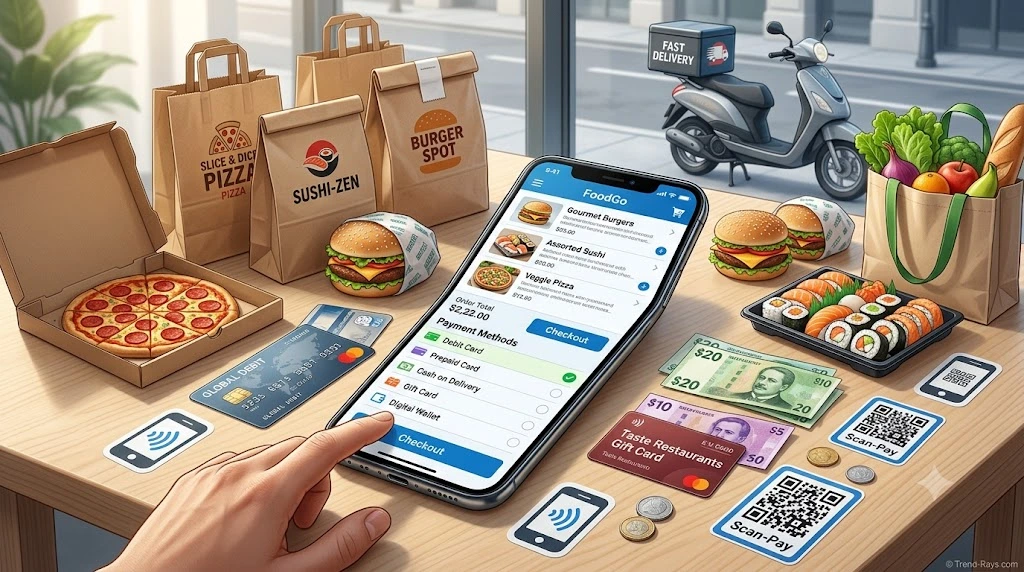
Ordering food online has never been easier—but for millions of people, one simple question can turn a quick dinner order into a frustrating experience:
“Can I order food without a credit card?”
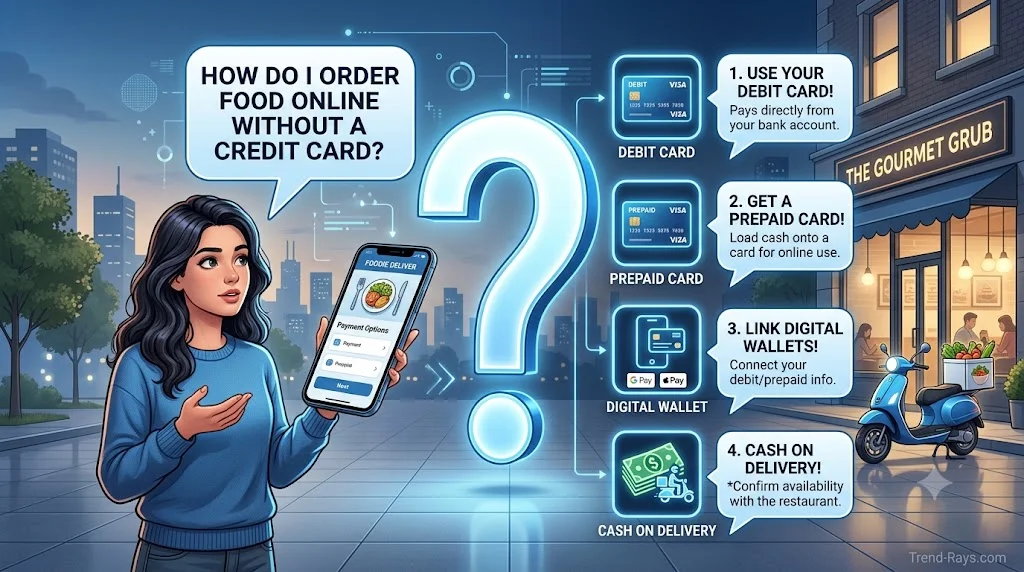
The answer is yes, but it depends on how you choose to order and which payment methods are available in your area.
Many people assume that food delivery apps require a credit card for every purchase. In reality, most modern delivery services support a variety of payment options, and many restaurants offer additional ways to pay when ordering directly.
Whether you’re a student without a credit card, someone who prefers using cash, a traveler, a budget-conscious customer, or simply looking for alternative payment methods, you still have several legitimate ways to order food online.
The challenge is that the information available online is often incomplete. Some articles focus only on one delivery app, while others mention payment methods without explaining where they work, when they work, or their limitations.
This guide is different.
Instead of promoting a single app or payment method, we’ll explore every practical way to order food without using a credit card. We’ll explain the advantages and disadvantages of each option, discuss when they work best, and help you choose the approach that fits your situation.
By the end of this guide, you’ll know:
- Whether you can order food without a credit card.
- Which payment methods are widely accepted.
- How to order food if you don’t have a bank account.
- Whether cash is still accepted.
- Which delivery services offer the greatest payment flexibility.
- Common mistakes that can prevent an order from going through.
- Practical tips to make the ordering process smoother.
Whether you’re ordering lunch for today or simply planning ahead, this guide will help you understand your options and make more informed decisions.
Quick Answer
Yes—you can often order food without a credit card.
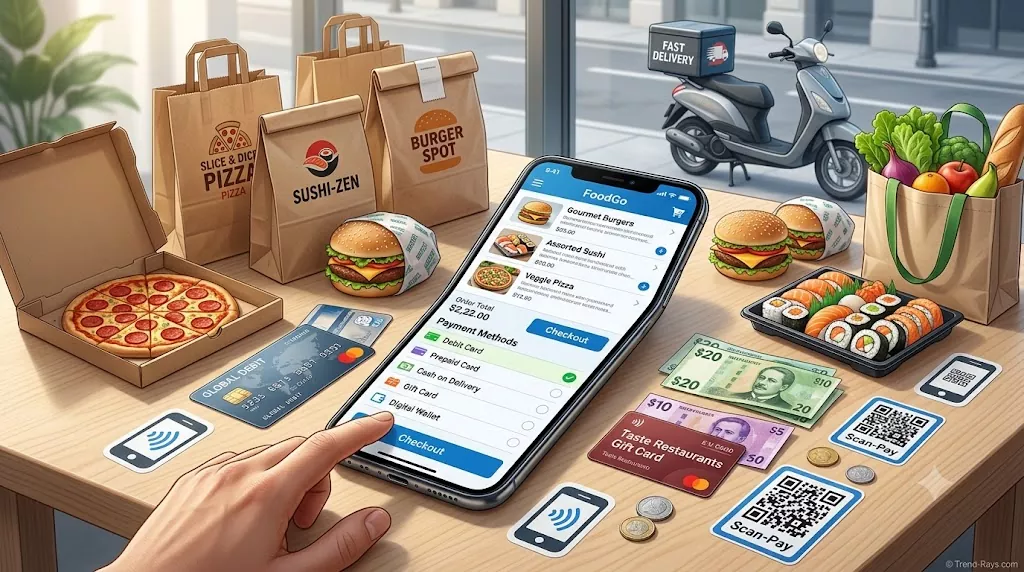
Depending on your location, the restaurant, and the delivery platform, you may be able to use one or more of the following payment methods:
| Payment Method | Credit Card Required? | Common Availability | Best For |
|---|---|---|---|
| Debit Card | No | Very common | Everyday online orders |
| Cash (where supported) | No | Varies by restaurant and location | Customers who prefer cash |
| Prepaid Cards | No | Common | Users without traditional banking |
| Restaurant Gift Cards | No | Restaurant dependent | Loyal customers |
| Digital Wallets | Sometimes | Common | Fast checkout |
| Direct Restaurant Ordering | No | Restaurant dependent | Local restaurants |
| Campus or Employer Meal Programs | No | Limited | Students and employees |
There isn’t one payment method that’s available everywhere. The best option depends on your location, the restaurant you’re ordering from, and the payment methods offered during checkout.
If one option isn’t available, another often is.
Why You Don’t Need a Credit Card to Order Food Anymore
A decade ago, online ordering was closely associated with credit cards.
Today, the situation is very different.
Food delivery platforms have expanded their payment options to accommodate a wider range of customers. At the same time, many restaurants have developed their own online ordering systems, giving customers additional flexibility beyond third-party delivery apps.
This shift reflects changing consumer behavior.
Some customers choose not to use credit cards because they prefer to avoid debt. Others may not qualify for a credit card, while some simply feel more comfortable using debit cards, prepaid cards, or cash.
Businesses have responded by offering more ways to complete an order.
However, payment flexibility still depends on several factors, including:
- The delivery platform.
- The individual restaurant.
- Your delivery location.
- Local payment infrastructure.
- Current operational policies.
That’s why two customers using the same app in different cities—or even ordering from different restaurants in the same city—may see different payment options during checkout.
Understanding this helps avoid one of the biggest misconceptions about food delivery: that every app works the same way for every customer.
Understanding Your Payment Options
Before looking at specific methods, it’s helpful to think of food delivery payments in three categories.
Digital Bank-Based Payments
These include payment methods connected directly to your bank account, such as debit cards or supported digital wallets.
For many people, these offer the easiest alternative to a credit card.
Stored-Value Payments
These include prepaid cards and restaurant gift cards.
Because the funds are loaded in advance, they can often be used without opening a traditional credit account.
Offline Payments
Cash remains an option in certain situations, particularly where restaurants or local delivery services continue to support it.
Although less common than digital payments, it remains an important choice for many customers.
Which Option Is Best?
There isn’t a universal answer.
The right payment method depends on your priorities.
If you value convenience, a debit card may be the easiest option.
If you don’t have access to traditional banking, prepaid cards or restaurant gift cards may work well.
If you prefer using physical currency, cash may still be available through participating restaurants or direct ordering.
The following sections explore each option in detail, beginning with one of the most commonly requested alternatives: paying with cash.
12 Legitimate Ways to Order Food Without a Credit Card
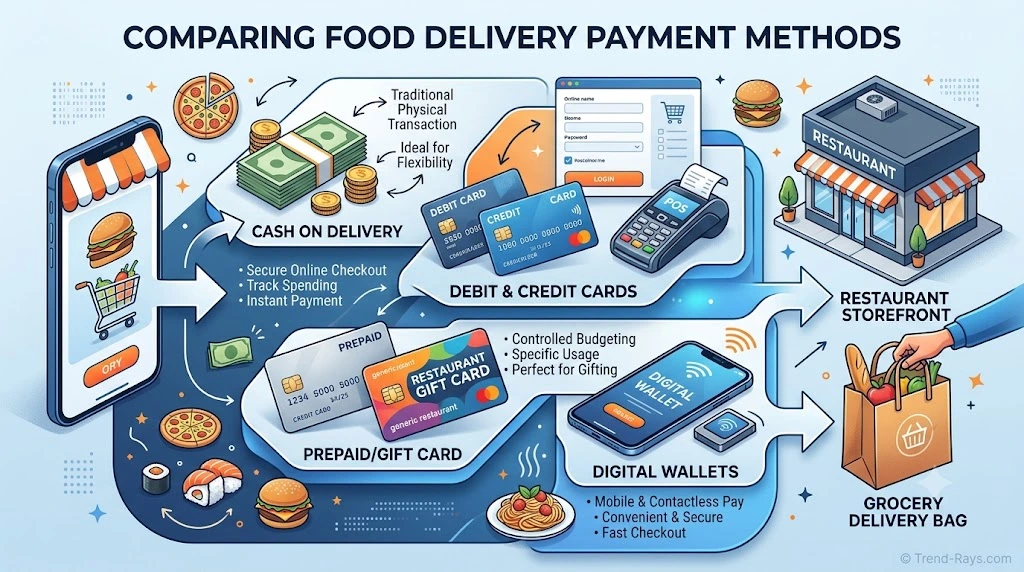
Not having a credit card doesn’t mean you have to miss out on food delivery.
Today, restaurants and delivery platforms offer a wider range of payment options than ever before. Some methods work almost everywhere, while others depend on your location, the restaurant, or the delivery service you’re using.
Understanding the strengths and limitations of each option will help you choose the one that best fits your situation.
Let’s explore them one by one.
1 – Use a Debit Card (The Most Widely Accepted Alternative)
For most people, a debit card is the easiest and most reliable alternative to a credit card when ordering food online.
Unlike a credit card, a debit card deducts money directly from your linked bank account. This means you’re spending funds you already have instead of borrowing money. Because of this, many people prefer debit cards for everyday purchases, including food delivery.
Today, most major food delivery platforms support debit cards issued by well-known payment networks, making them one of the most widely accepted payment methods available.
If you already have a checking or savings account, there’s a good chance you can start ordering food immediately without applying for a credit card.
One advantage of using a debit card is that it helps you stay within your budget. Since transactions are limited to the available balance in your account, it’s easier to track spending and avoid accumulating debt.
For customers who order food regularly, a debit card often provides the same convenience as a credit card without the long-term financial commitment.
Best For
- Everyday food delivery
- Students
- First-time online shoppers
- Budget-conscious users
- Customers who don’t want to use credit
Advantages
- Accepted by most major food delivery platforms.
- No credit application required.
- Money comes directly from your own bank account.
- Easier to manage monthly spending.
- Fast and convenient checkout.
Limitations
- Requires a linked bank account.
- Insufficient funds may cause payment failure.
- Some banks place temporary authorization holds before the final transaction is processed.
- International transactions may not always be supported.
Pro Tip
Before placing a large order, check your available bank balance rather than just your account balance. Some pending transactions may temporarily reduce the funds available for new purchases.
Real-World Example
Emma recently started college and hasn’t applied for a credit card. Instead of borrowing money, she uses her debit card for food delivery a few times each month. Because the payment comes directly from her checking account, she always knows exactly how much she’s spending and avoids unexpected bills.
Quick Summary
If you already have a bank account, a debit card is usually the simplest, safest, and most widely accepted alternative to a credit card for ordering food online.
2 – Pay With Cash (Where Available)
Although digital payments dominate online ordering today, cash remains an important payment method for many customers.
Some people prefer cash because it helps them stick to a budget, while others may not have access to traditional banking services or simply feel more comfortable paying in person.
The important thing to understand is that cash availability isn’t determined by the delivery app alone. Whether you can pay with cash often depends on your city, the restaurant, and the delivery platform’s current policies.
For example, one restaurant may accept cash for delivery while another restaurant on the same app only allows digital payments.
That’s why the checkout page is always the best place to confirm which payment methods are available for your specific order.
If cash is supported, you’ll usually see it listed alongside other payment options before completing your purchase.
Best For
- Customers without bank accounts.
- People who prefer budgeting with cash.
- Users avoiding online banking.
- Customers ordering from local restaurants.
Advantages
- No bank account required.
- No credit card needed.
- Helps control spending.
- Familiar payment method for many customers.
Limitations
- Not available on every delivery platform.
- Restaurant policies vary.
- Some delivery drivers may have limited change.
- Availability depends on location.
Pro Tip
Whenever possible, keep the exact payment amount ready before the driver arrives. This makes the delivery process faster and more convenient for both you and the delivery driver.
Real-World Example
Carlos prefers paying with cash because it helps him manage his weekly food budget. Before placing an order, he checks the payment options during checkout. If cash isn’t available, he orders directly from a nearby local restaurant that still accepts cash deliveries.
Quick Summary
Cash remains a practical option in some locations, but availability depends on the restaurant, delivery service, and your local market.
Related Guide: Food Delivery Apps That Accept Cash
3 – Use a Prepaid Card
A prepaid card offers many of the same benefits as a debit card without requiring a traditional bank account.
Instead of linking the card to your checking account, you load money onto it in advance and spend only the amount that’s available.
For people who don’t qualify for a credit card—or simply don’t want one—a prepaid card can be a convenient way to order food online while maintaining complete control over spending.
Many prepaid cards issued through major payment networks can be used anywhere those networks are accepted, including many food delivery services.
Because the balance is preloaded, there’s no risk of carrying long-term debt, making prepaid cards a popular option among students, teenagers, travelers, and people looking to manage their finances more carefully.
Best For
- Teenagers.
- Travelers.
- Customers without bank accounts.
- Gift recipients.
- Budget-conscious users.
Advantages
- No credit check required.
- Spending is limited to the loaded balance.
- Available from many retail stores.
- Useful for online purchases.
- Helps avoid overspending.
Limitations
- Must be loaded with funds before use.
- Some cards charge activation or maintenance fees.
- Not every prepaid card supports international transactions.
- Online purchases may require prior activation.
Pro Tip
If you’re planning to use a prepaid card for online food orders, activate it as soon as you purchase it and verify that online transactions are enabled. This helps prevent checkout issues later.
Real-World Example
Liam doesn’t have a bank account yet, so he purchases a prepaid card from a local retailer and loads it with enough money for the month. He uses the card to order food online whenever he needs it, knowing he can’t accidentally spend more than the balance available.
Quick Summary
A prepaid card is an excellent alternative for customers who want the convenience of online food ordering without opening a bank account or applying for a credit card.
4 – Use Restaurant Gift Cards
Restaurant gift cards are one of the most overlooked ways to order food without using a credit card. If you regularly order from a particular restaurant or chain, a gift card can be a simple and convenient payment method.
Many national restaurant brands sell physical and digital gift cards that can be purchased online or from supermarkets, convenience stores, and retail outlets. Once activated, the balance can often be used when ordering directly through the restaurant’s official website or mobile app.
For customers who don’t have a credit card, restaurant gift cards provide a practical way to enjoy online ordering without opening a credit account. They’re also popular gifts, making them a useful option for students, families, and anyone managing a budget.
One advantage of restaurant gift cards is that they encourage planned spending. Since you’re limited to the available balance, it’s easier to avoid unexpected expenses while still enjoying the convenience of online food ordering.
However, acceptance varies. Some restaurants allow gift cards only through their own ordering system and not through third-party delivery platforms, so it’s worth checking before placing your order.
Best For
- Regular customers of a specific restaurant
- Families
- Students
- Gift recipients
- Budget-conscious users
Advantages
- No credit card required.
- Helps control spending.
- Easy to purchase online or in stores.
- Popular gift option.
- Often compatible with restaurant loyalty programs.
Limitations
- Usually limited to one restaurant or restaurant group.
- May not work on third-party delivery apps.
- Cannot normally be exchanged for cash.
- Balance may not cover taxes, delivery fees, or tips in every situation.
Pro Tip
Before purchasing a restaurant gift card, confirm where it can be used. Some gift cards work only on the restaurant’s official website or app, while others may also be accepted for in-store purchases.
Real-World Example
Olivia orders from the same pizza restaurant almost every Friday. Instead of using a credit card, she buys a digital gift card every month and uses it to place orders through the restaurant’s official website. This helps her manage her monthly food budget while earning loyalty rewards.
Quick Summary
If you frequently order from the same restaurant, a gift card can be one of the easiest ways to enjoy online food delivery without relying on a credit card.
5 – Use a Digital Wallet
Digital wallets have changed the way millions of people pay for everyday purchases, including food delivery.
Instead of entering your payment information every time you place an order, a digital wallet securely stores your preferred payment method and allows you to complete purchases with just a few taps.
It’s important to remember that a digital wallet isn’t a payment method by itself. Instead, it acts as a secure container for other payment methods, such as a debit card, prepaid card, or eligible bank account.
For customers who don’t have a credit card, linking a debit card or prepaid card to a supported digital wallet can provide a fast, secure, and convenient way to order food online.
Many people also appreciate the additional privacy and security features that digital wallets provide, such as biometric authentication and tokenized transactions.
Best For
- Smartphone users
- Frequent online shoppers
- Customers who value convenience
- Users with debit or prepaid cards
Advantages
- Faster checkout.
- Secure payment processing.
- No need to repeatedly enter payment details.
- Often supports biometric authentication.
- Convenient for mobile ordering.
Limitations
- Requires a compatible device.
- Not every delivery platform supports every digital wallet.
- Usually requires another payment source, such as a debit or prepaid card.
- Availability varies by country and region.
Pro Tip
Link a debit card instead of a credit card to your digital wallet if your goal is to avoid borrowing money while still enjoying the convenience of one-touch payments.
Real-World Example
David prefers ordering food through his smartphone. Instead of typing his card information each time, he connects his debit card to a supported digital wallet and completes checkout in seconds while keeping his payment details protected.
Quick Summary
A digital wallet can make ordering food faster and more convenient, especially when it’s linked to a debit card or prepaid card instead of a credit card.
6 – Order Directly From the Restaurant
One of the smartest alternatives to using a food delivery app is ordering directly from the restaurant itself.
Over the past few years, many restaurants have invested in their own websites, mobile apps, and phone ordering systems. This allows them to build stronger relationships with customers while reducing the fees they pay to third-party delivery platforms.
For customers, direct ordering can offer several advantages beyond payment flexibility.
Some restaurants provide exclusive discounts, loyalty rewards, lower delivery fees, or additional payment options that aren’t available through large delivery apps.
In some cases, restaurants that don’t accept cash or certain payment methods through third-party platforms may still offer those options when customers order directly.
Ordering directly also gives you the opportunity to speak with restaurant staff if you have questions about payment methods, delivery times, or special requests.
Best For
- Local restaurant customers
- Independent restaurant supporters
- Customers seeking payment flexibility
- People looking to reduce delivery fees
Advantages
- May offer more payment options.
- Potentially lower service fees.
- Direct communication with restaurant staff.
- Access to restaurant-exclusive promotions.
- Supports local businesses more directly.
Limitations
- Not every restaurant offers direct online ordering.
- Smaller restaurants may have limited delivery areas.
- User experience varies between restaurant websites.
- Loyalty benefits differ by business.
Pro Tip
Before ordering through a third-party app, visit the restaurant’s official website. You may find lower prices, additional payment methods, or exclusive offers that aren’t available elsewhere.
Real-World Example
Sophia usually orders burgers through a popular delivery app. One evening she visits the restaurant’s website and discovers that direct orders include free delivery within her neighborhood and an additional payment option that isn’t available on the app. She saves money while supporting the restaurant directly.
Quick Summary
Ordering directly from a restaurant is often one of the most flexible and cost-effective ways to buy food online without relying solely on third-party delivery platforms.
Quick Comparison: Methods 1–6
| Payment Method | Ease of Use | Availability | Budget Friendly | Credit Card Required? |
|---|---|---|---|---|
| Debit Card | ⭐⭐⭐⭐⭐ | Very High | ⭐⭐⭐⭐⭐ | ❌ No |
| Cash | ⭐⭐⭐⭐☆ | Medium | ⭐⭐⭐⭐⭐ | ❌ No |
| Prepaid Card | ⭐⭐⭐⭐☆ | High | ⭐⭐⭐⭐⭐ | ❌ No |
| Restaurant Gift Card | ⭐⭐⭐⭐☆ | Medium | ⭐⭐⭐⭐☆ | ❌ No |
| Digital Wallet | ⭐⭐⭐⭐⭐ | High | ⭐⭐⭐⭐☆ | ❌ No (if linked to debit/prepaid) |
| Direct Restaurant Ordering | ⭐⭐⭐⭐☆ | Medium | ⭐⭐⭐⭐⭐ | ❌ No |
7 – Use Buy Now, Pay Later (Where Supported)
Buy Now, Pay Later (BNPL) services have become increasingly popular for online purchases, and in some regions they can also be used for food delivery orders.
Instead of paying the full amount upfront, eligible customers can split the purchase into smaller payments based on the terms offered by the payment provider. Some food delivery platforms and restaurant websites support BNPL through third-party payment services, while others do not.
Although this payment method can be convenient, it’s important to understand that BNPL is not free money. You’re still responsible for making future payments according to the provider’s agreement.
For everyday meals, many financial experts recommend using BNPL only when necessary. It can be helpful for larger group orders or special occasions, but relying on installment payments for routine food purchases may not be the best long-term financial habit.
Best For
- Large family orders
- Group meals
- Special occasions
- Customers eligible for supported BNPL services
Advantages
- Split larger purchases into smaller payments.
- Convenient checkout on supported platforms.
- May not require a traditional credit card during checkout.
- Useful for occasional high-value orders.
Limitations
- Not available on every delivery platform.
- Eligibility requirements vary.
- Missed payments may result in additional fees.
- Not recommended for frequent everyday food purchases.
Pro Tip
Reserve Buy Now, Pay Later for occasional large orders rather than everyday meals. If you’re ordering lunch or dinner several times a week, paying with available funds is usually the healthier financial choice.
Real-World Example
Mark is organizing a birthday dinner for six friends. Instead of paying the full amount immediately, he uses a supported Buy Now, Pay Later option offered during checkout to spread the cost over several payments. Because it’s a planned celebration rather than a routine expense, the option fits his budget comfortably.
Quick Summary
Buy Now, Pay Later can provide additional payment flexibility for larger food orders, but it should be used thoughtfully and only when you fully understand the repayment terms.
8 – Use a Campus Dining Account
If you’re a college or university student, you may already have access to an alternative payment method without realizing it.
Many educational institutions provide students with campus dining accounts or meal plans that can be used at university dining halls, cafés, food courts, and participating restaurants. Some colleges also partner with food delivery providers, allowing students to pay for eligible orders using their campus meal balance.
This can be especially helpful for students who don’t yet qualify for a credit card or who prefer not to use one while studying.
Campus dining programs differ significantly between universities, so it’s worth checking your institution’s dining services website to understand which restaurants and payment options are available.
Best For
- University students
- College students
- Campus residents
- Students with meal plans
Advantages
- No personal credit card required.
- Convenient for students living on campus.
- Integrated with university meal programs.
- Helps manage food expenses during the academic year.
Limitations
- Available only at participating institutions.
- Accepted only by approved restaurants or vendors.
- Meal balances may expire or reset.
- Off-campus delivery options may be limited.
Pro Tip
Before ordering, review your university’s dining services website. Many institutions publish a list of restaurants and delivery partners that accept campus dining funds.
Real-World Example
Emily lives in a university residence hall and has a prepaid campus meal plan. When ordering dinner from participating campus restaurants, she simply selects her student dining account at checkout instead of entering credit card information.
Quick Summary
Campus dining accounts provide a convenient alternative payment method for students, allowing them to order food without relying on a personal credit card.
9 – Use Employer Meal Programs
Many companies now provide meal benefits as part of their employee wellness, remote work, or travel policies.
Instead of reimbursing food expenses manually, employers may issue digital meal allowances, prepaid meal cards, or access to approved meal benefit platforms that employees can use for eligible purchases.
If your employer offers one of these programs, you may be able to order food without using your own credit card.
These benefits have become increasingly common for remote workers, business travelers, and employees working long shifts.
Because every employer designs its own program differently, accepted restaurants, spending limits, and eligible delivery services vary.
Best For
- Remote employees
- Office workers
- Business travelers
- Employees receiving company meal benefits
Advantages
- Employer-funded meals.
- Reduces personal food expenses.
- Convenient for workdays.
- Often integrates with approved restaurants.
Limitations
- Only available through participating employers.
- Spending limits may apply.
- Restaurant choices may be restricted.
- Benefits often expire if unused.
Pro Tip
Review your company’s meal benefit policy carefully. Some programs cover delivery fees, while others only reimburse the cost of food.
Real-World Example
James works remotely for a technology company that provides a monthly meal allowance. Instead of paying with his own credit card, he orders lunch through an approved meal benefit program, helping him save money while working from home.
Quick Summary
Employer meal programs can significantly reduce food expenses while providing an easy alternative to personal credit card payments for eligible employees.
Quick Comparison: Methods 7–9
| Payment Method | Ease of Use | Availability | Budget Friendly | Credit Card Required? |
|---|---|---|---|---|
| Buy Now, Pay Later | ⭐⭐⭐☆☆ | Limited | ⭐⭐☆☆☆ | ❌ Not always |
| Campus Dining Account | ⭐⭐⭐⭐☆ | Limited | ⭐⭐⭐⭐⭐ | ❌ No |
| Employer Meal Program | ⭐⭐⭐⭐☆ | Limited | ⭐⭐⭐⭐⭐ | ❌ No |
Not every food order has to be paid for using your own payment method.
Many households share food expenses by using a common payment method for grocery shopping, restaurant orders, and food delivery. Parents may allow teenagers to place orders using a family account, couples often share household expenses, and roommates sometimes rotate payment responsibilities for group meals.
This approach can be convenient for families who regularly order together and want to simplify budgeting.
However, shared payment methods should always be used responsibly and with the account holder’s permission. Clear communication helps prevent misunderstandings and makes it easier to track household spending.
Some food delivery platforms also allow users to save multiple payment methods or manage shared household accounts, making group ordering even more convenient.
Best For
- Families
- Couples
- Roommates
- Shared households
- Parents managing family food expenses
Advantages
- No need for every family member to have a separate payment method.
- Convenient for group meals.
- Simplifies household budgeting.
- Makes family ordering easier.
- Can reduce duplicate food orders.
Limitations
- Requires trust between users.
- Spending should be monitored carefully.
- Not suitable for everyone.
- Payment disputes can occur if expectations aren’t clear.
Pro Tip
If multiple people use the same account, agree on a monthly food budget and review recent orders regularly. Simple communication helps avoid unnecessary confusion later.
Real-World Example
Three roommates share dinner expenses during the week. Instead of each person creating separate accounts, they rotate responsibility for placing orders using a shared household payment method while keeping track of expenses through a budgeting app.
Quick Summary
Shared payment methods work well for families and households that already manage expenses together, provided everyone agrees on how the account will be used.
11 – Use Local Delivery Services
While national food delivery platforms receive most of the attention, many cities still have independent delivery companies that serve local restaurants.
These neighborhood delivery businesses often partner with independent restaurants that aren’t listed on major delivery apps. Because they operate locally, they may also offer different payment options, including cash payments or direct payment arrangements with participating restaurants.
In smaller towns and suburban areas, local delivery companies can sometimes provide faster service, lower delivery fees, and a more personal customer experience than national platforms.
If you haven’t explored local delivery services before, searching online for restaurants that deliver directly in your area may uncover options that larger apps don’t include.
Best For
- Small towns
- Independent restaurant customers
- Local food lovers
- Customers looking for flexible payment options
Advantages
- Supports local businesses.
- May offer cash payment options.
- Often lower delivery fees.
- Personalized customer service.
- Access to restaurants not listed on national apps.
Limitations
- Availability depends on your location.
- Restaurant selection may be smaller.
- Mobile apps may not be as polished as larger platforms.
- Delivery areas are often limited.
Pro Tip
Don’t assume national delivery apps list every restaurant in your area. Many independent restaurants prefer taking orders directly or working with local delivery companies instead of large national platforms.
Real-World Example
Rachel lives in a small town where several popular family-owned restaurants don’t appear on major delivery apps. Instead, she orders through a local delivery company that accepts cash and delivers directly from neighborhood restaurants.
Quick Summary
Local delivery services can provide excellent payment flexibility while supporting independent restaurants that may not participate in larger delivery platforms.
12 – Use Grocery Delivery With Ready-to-Eat Meals
When people think about food delivery, they often picture restaurant meals.
However, grocery delivery services have become another practical alternative for customers who don’t have a credit card.
Many grocery stores now offer prepared foods such as:
- Fresh sandwiches
- Rotisserie chicken
- Sushi
- Salads
- Pizza
- Soups
- Family meal bundles
- Heat-and-eat dinners
Depending on the grocery retailer and your location, payment options may differ from those offered by restaurant delivery apps.
For families or customers planning multiple meals, grocery delivery can also provide better value while reducing the number of separate food orders throughout the week.
Instead of ordering restaurant meals every evening, some customers combine prepared foods with groceries in a single delivery, saving both time and money.
Best For
- Families
- Weekly meal planning
- Budget-conscious shoppers
- Customers wanting prepared meals and groceries together
Advantages
- Wide selection of prepared foods.
- Opportunity to purchase groceries in the same order.
- Often more economical than frequent restaurant delivery.
- Convenient for larger households.
- Helps reduce multiple delivery fees.
Limitations
- Prepared meal selection varies by grocery store.
- Delivery availability depends on your location.
- Some stores require minimum order values.
- Restaurant-style menu choices may be more limited.
Pro Tip
If you’re already planning a grocery delivery, check the prepared food section before placing a separate restaurant order. Combining both into one delivery can save money and reduce delivery fees.
Real-World Example
Michael usually orders takeout several nights each week. Instead, he begins adding ready-to-eat meals to his weekly grocery delivery. He receives fresh dinners for several evenings while reducing both food costs and delivery charges.
Quick Summary
Grocery delivery with prepared meals offers a practical alternative for customers who want convenient food without placing separate restaurant orders every day.
Comparing All 12 Ways to Order Food Without a Credit Card
| Payment Method | Availability | Ease of Use | Credit Card Required? | Best For |
|---|---|---|---|---|
| Debit Card | Very High | ⭐⭐⭐⭐⭐ | ❌ No | Everyday ordering |
| Cash | Medium | ⭐⭐⭐⭐☆ | ❌ No | Cash users |
| Prepaid Card | High | ⭐⭐⭐⭐☆ | ❌ No | Users without bank accounts |
| Restaurant Gift Card | Medium | ⭐⭐⭐⭐☆ | ❌ No | Restaurant regulars |
| Digital Wallet | High | ⭐⭐⭐⭐⭐ | ❌ No (when linked to debit/prepaid) | Fast checkout |
| Direct Restaurant Ordering | Medium | ⭐⭐⭐⭐☆ | ❌ No | Local restaurant customers |
| Buy Now, Pay Later | Limited | ⭐⭐⭐☆☆ | ❌ Not always | Large occasional orders |
| Campus Dining Account | Limited | ⭐⭐⭐⭐☆ | ❌ No | Students |
| Employer Meal Program | Limited | ⭐⭐⭐⭐☆ | ❌ No | Employees with meal benefits |
| Family or Shared Payment | Common | ⭐⭐⭐⭐☆ | ❌ No | Families and roommates |
| Local Delivery Services | Varies | ⭐⭐⭐⭐☆ | ❌ No | Small towns and independent restaurants |
| Grocery Delivery | High | ⭐⭐⭐⭐⭐ | Depends | Families and meal planning |
Key Takeaways
If you don’t have a credit card, you still have plenty of legitimate ways to order food online.
For most people, a debit card remains the simplest and most widely accepted solution. If that isn’t an option, alternatives such as prepaid cards, restaurant gift cards, direct restaurant ordering, local delivery services, campus dining accounts, and employer meal programs can all help depending on your circumstances.
The important thing to remember is that payment options vary by restaurant, delivery platform, and location. Rather than assuming every service works the same way, check the available payment methods during checkout or contact the restaurant directly if you have questions.
Choosing the payment method that best fits your needs will make ordering food easier, more secure, and often more cost-effective.
Decision Guide
If you’re unsure which option to choose, this simple comparison can help.
| Situation | Recommended Payment Method |
|---|---|
| You have a bank account but no credit card | Debit card |
| You prefer physical cash | Cash (where available) |
| You don’t have a bank account | Prepaid card |
| You regularly order from one restaurant | Restaurant gift card |
| You want the fastest checkout | Digital wallet |
| You want to support local restaurants | Direct orderin |
Which Payment Method Is Right for You? A Practical Decision Guide
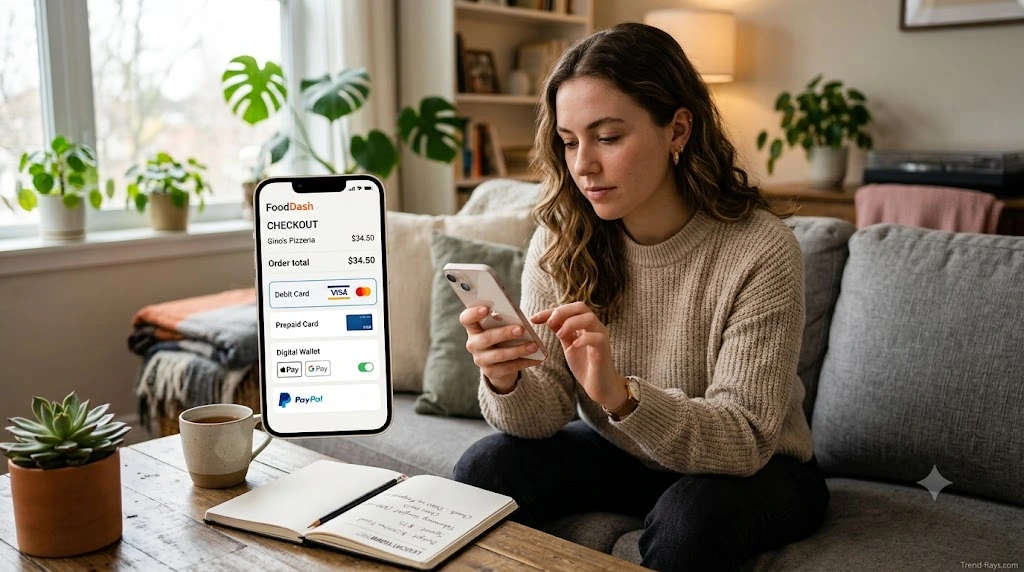
Finding an alternative to a credit card isn’t just about discovering what payment methods exist—it’s about choosing the one that fits your lifestyle, financial situation, and ordering habits.
The “best” payment method isn’t the same for everyone.
A college student has different needs than a family managing weekly grocery deliveries. Someone who orders takeout once a month may prioritize convenience, while frequent customers may care more about budgeting, security, or earning loyalty rewards.
The following recommendations can help you narrow down the best option based on your circumstances.
If You Already Have a Bank Account
A debit card is usually the best choice.
It offers nearly the same convenience as a credit card while allowing you to spend only the money available in your account. Most food delivery platforms accept debit cards, making them one of the simplest payment methods for everyday ordering.
Why it works well
- Widely accepted.
- Quick checkout.
- Easy to manage spending.
- No borrowing involved.
Recommended Payment Method: Debit Card
If You Don’t Have a Bank Account
If you don’t currently have access to a checking or savings account, you still have several practical options.
A prepaid card is often the easiest alternative because it allows you to load money in advance and use it for online purchases without opening a traditional bank account.
Depending on your location, cash payments or local restaurant ordering may also be available.
Recommended Options
- Prepaid Card
- Cash (where supported)
- Restaurant Gift Card
If You’re a College Student
Students often have unique payment options that many people overlook.
If your university offers a campus dining account or meal plan, you may already be able to order food without using a personal credit card.
Students with bank accounts can also rely on debit cards, while prepaid cards provide another option for those who prefer controlled spending.
Recommended Options
- Campus Dining Account
- Debit Card
- Prepaid Card
If You’re Trying to Stick to a Budget
Managing food expenses becomes much easier when you choose a payment method that naturally limits overspending.
Because debit cards, prepaid cards, and cash all use money you already have, they’re often better choices than borrowing through credit.
Restaurant gift cards can also help because they create a fixed spending limit.
Recommended Options
- Debit Card
- Cash
- Prepaid Card
- Restaurant Gift Cards
If You Order Food Every Week
Frequent customers usually benefit from payment methods that combine convenience with reliable acceptance.
Using a debit card or a supported digital wallet linked to your debit card allows you to complete checkout quickly without repeatedly entering payment details.
If you regularly order from the same restaurant, joining its loyalty program and using a restaurant gift card may provide additional savings.
Recommended Options
- Debit Card
- Digital Wallet
- Restaurant Gift Card
If You Frequently Order From Local Restaurants
Many independent restaurants now encourage customers to order directly instead of using third-party delivery platforms.
Ordering directly may provide:
- More payment flexibility.
- Lower service fees.
- Exclusive promotions.
- Better communication with restaurant staff.
If available, this can be one of the most cost-effective ways to order food.
Recommended Options
- Direct Restaurant Ordering
- Local Delivery Services
- Cash (where supported)
If You Want the Fastest Checkout Experience
Some customers value speed more than anything else.
If you regularly order through your smartphone, linking a debit card or prepaid card to a supported digital wallet can make checkout almost effortless.
Many digital wallets also include biometric authentication, reducing the need to repeatedly enter payment information.
Recommended Options
- Digital Wallet
- Debit Card
If You Receive Employer Meal Benefits
Take advantage of them whenever possible.
Employer-funded meal programs can significantly reduce your personal food expenses while allowing you to enjoy convenient food delivery during workdays.
If your employer provides digital meal allowances or prepaid meal cards, make sure you understand which restaurants and delivery services participate in the program.
Recommended Option
- Employer Meal Program
If You’re Ordering for a Family or Group
Group orders often involve higher costs, making budgeting and coordination more important.
Using a shared household payment method, restaurant gift card, or direct restaurant ordering can simplify the process while making it easier to divide expenses fairly.
Some restaurants also provide family meal bundles that offer better value than ordering individual meals.
Recommended Options
- Family Payment Method
- Restaurant Gift Card
- Direct Restaurant Ordering
Decision Matrix: Which Payment Method Fits Your Situation?
| Your Situation | Best Choice | Good Alternatives |
|---|---|---|
| You have a bank account | Debit Card | Digital Wallet |
| No bank account | Prepaid Card | Cash, Gift Card |
| College student | Campus Dining Account | Debit Card |
| Budget-conscious | Debit Card | Cash, Prepaid Card |
| Frequent food delivery | Digital Wallet | Debit Card |
| Local restaurant customer | Direct Ordering | Local Delivery Service |
| Family orders | Shared Payment Method | Restaurant Gift Card |
| Remote employee | Employer Meal Program | Debit Card |
| Occasional large group orders | Buy Now, Pay Later (where supported) | Shared Payment |
There Isn’t One Perfect Payment Method
The best payment method depends on your personal circumstances.
For many people, a debit card provides the ideal balance of convenience and financial control. Others may prefer prepaid cards for budgeting, while students, employees, or families may benefit from specialized payment options that better suit their daily lives.
The most important takeaway is that you don’t need a credit card to enjoy food delivery. With the growing variety of payment methods available today, there are legitimate alternatives for almost every type of customer.
Before placing your next order, take a moment to review the payment options available during checkout—you may discover a more convenient or cost-effective choice than you expected.
Common Mistakes People Make When Ordering Food Without a Credit Card
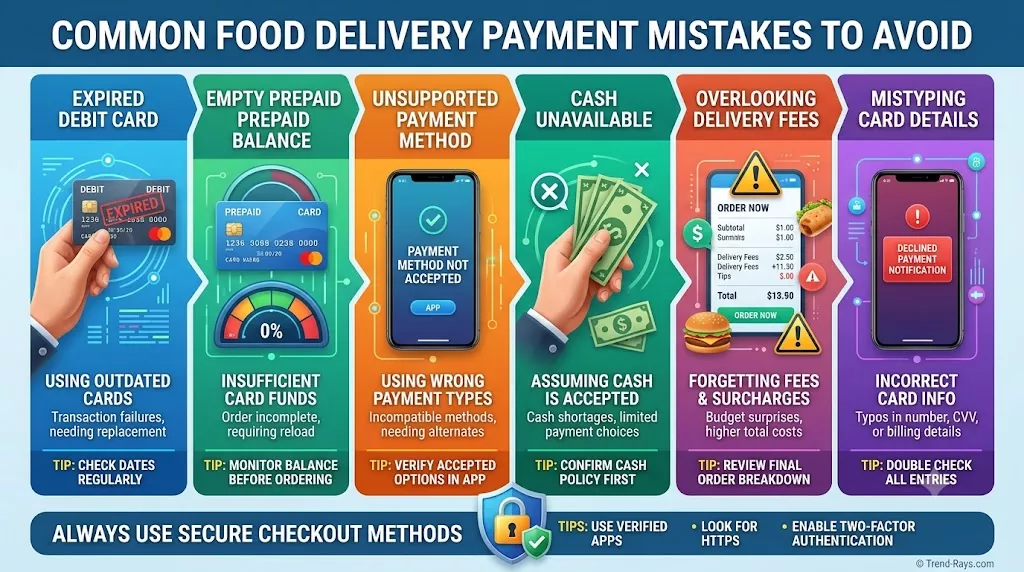
Ordering food without a credit card is easier than ever, but many customers still run into avoidable problems during checkout.
Sometimes an order is declined because the payment method isn’t supported. In other cases, customers assume a particular restaurant accepts cash, only to discover that it only accepts digital payments.
Understanding these common mistakes can help you complete your order smoothly and avoid unnecessary frustration.
Assuming Every Restaurant Accepts the Same Payment Methods
One of the biggest misconceptions is believing that every restaurant on a food delivery platform accepts the same payment options.
In reality, payment methods often vary from one restaurant to another.
For example, one restaurant may accept cash on delivery, while another restaurant on the same platform only allows digital payments. Similarly, some restaurants accept gift cards only through their official website rather than through third-party delivery apps.
How to Avoid This Mistake
Always review the payment options during checkout before confirming your order. If you’re unsure, contact the restaurant directly to confirm which payment methods are currently accepted.
Waiting Until Checkout to Check Available Payment Methods
Many customers spend time browsing menus, customizing meals, and adding items to their cart before discovering that their preferred payment method isn’t available.
This can be frustrating, especially if you’re ordering from a restaurant with limited payment options.
How to Avoid This Mistake
Before spending time building your order, quickly review the available payment methods if the platform allows you to do so. If not, be prepared with an alternative payment option.
Forgetting to Check Your Available Balance
Whether you’re using a debit card, prepaid card, or digital wallet linked to a bank account, insufficient funds remain one of the most common reasons for failed transactions.
Some banks also place temporary authorization holds, which can reduce the available balance even if your account appears to have enough money.
How to Avoid This Mistake
Check your available balance—not just your current balance—before placing an order. This helps reduce the chances of a declined payment.
Assuming Cash Is Always Available
Cash payments are becoming less common in many regions.
While some restaurants still accept cash, others have switched entirely to digital payment methods for operational or safety reasons.
Availability also varies depending on the delivery platform and your location.
How to Avoid This Mistake
Never assume cash is accepted. Confirm that the option appears during checkout before relying on it.
Using an Unactivated Prepaid Card
Many prepaid cards require activation before they can be used for online purchases.
Customers sometimes purchase a prepaid card, load funds onto it, and immediately attempt an online transaction without completing the activation process.
How to Avoid This Mistake
Follow the activation instructions provided with your prepaid card and verify that online purchases are enabled before placing your order.
Ignoring Delivery Fees and Service Charges
Many customers focus only on the menu price and forget to consider additional costs such as:
- Delivery fees
- Service charges
- Small order fees
- Taxes
- Driver tips
These extra charges can increase the final total significantly.
How to Avoid This Mistake
Review the complete order summary before confirming your purchase so there are no surprises at checkout.
Saving Outdated Payment Information
If your debit card expires or your prepaid card balance changes, saved payment information may no longer work.
This often leads to failed transactions at checkout.
How to Avoid This Mistake
Update your saved payment methods regularly and remove expired or inactive cards from your account.
Choosing Convenience Over Security
Using public Wi-Fi networks or unsecured devices to place online food orders can expose your personal information.
Although food delivery platforms invest heavily in security, customers also play an important role in protecting their accounts.
How to Avoid This Mistake
Whenever possible:
- Use trusted internet connections.
- Enable two-factor authentication if available.
- Keep your apps updated.
- Avoid sharing login credentials.
Forgetting to Check Restaurant Ordering Options
Many people automatically open a food delivery app without checking whether the restaurant offers direct ordering.
In some cases, ordering directly may provide:
- Lower prices
- Additional payment methods
- Exclusive discounts
- Better loyalty rewards
How to Avoid This Mistake
Before placing an order through a third-party app, visit the restaurant’s official website to compare pricing and payment options.
Assuming One Payment Method Works Everywhere
Payment options differ across countries, cities, restaurants, and delivery platforms.
What works perfectly in one location may not be available elsewhere.
How to Avoid This Mistake
Stay flexible. Having more than one payment method available—such as a debit card and a prepaid card—can make ordering much easier if your preferred option isn’t accepted.
Quick Checklist Before You Place Your Order
Use this simple checklist to reduce the chances of payment issues:
- ✅ Confirm your preferred payment method is accepted.
- ✅ Check your available account balance.
- ✅ Review delivery fees and additional charges.
- ✅ Make sure saved payment information is up to date.
- ✅ Activate prepaid cards before using them online.
- ✅ Compare direct restaurant ordering with third-party delivery apps.
- ✅ Verify cash availability if you plan to pay on delivery.
- ✅ Use a secure internet connection when placing your order.
Completing these checks takes only a minute but can help you avoid the most common payment and checkout problems.
Why These Mistakes Matter
Most payment issues aren’t caused by complicated technical problems—they’re usually the result of small assumptions or overlooked details.
By understanding how different payment methods work and taking a few moments to verify your options before ordering, you can enjoy a smoother, faster, and more reliable food delivery experience.
The next section will be:
Safety Tips for Ordering Food Without a Credit Card
Choosing an alternative payment method doesn’t mean sacrificing convenience or security. Whether you’re paying with a debit card, prepaid card, digital wallet, cash, or another option, following a few simple safety practices can help protect both your money and your personal information.
Most food delivery platforms invest heavily in secure payment technology, but customers also play an important role in keeping their accounts safe. Understanding a few basic precautions can reduce the risk of payment problems and make every order more secure.
Order Through Official Websites and Apps
One of the simplest ways to protect yourself is to order directly through a restaurant’s official website, mobile app, or a well-known food delivery platform.
Be cautious when clicking links from emails, text messages, or social media advertisements, especially if they ask you to log in or provide payment information.
Using official ordering channels reduces the chances of entering your information on a fraudulent website.
Best Practices
- Download apps from official app stores.
- Bookmark restaurant websites you use frequently.
- Double-check website addresses before entering payment details.
- Avoid clicking suspicious links.
Protect Your Payment Information
Whether you’re using a debit card, prepaid card, or digital wallet, your payment information should always be handled carefully.
Avoid sharing card details through email, text messages, or phone calls unless you’re certain you’re communicating directly with the restaurant or payment provider.
Most legitimate businesses will never ask for sensitive payment information through unsolicited messages.
Best Practices
- Never share PIN numbers or security codes.
- Store payment information only on trusted devices.
- Review saved payment methods periodically.
- Remove expired or unused cards from your account.
Be Careful When Using Public Wi-Fi
Ordering food while connected to public Wi-Fi in airports, cafés, hotels, or shopping centers may be convenient, but public networks can present additional security risks.
If you need to place an order while away from home, using your mobile data connection or a trusted private network is generally a safer option.
Best Practices
- Avoid entering payment information on unsecured public Wi-Fi.
- Use trusted internet connections whenever possible.
- Keep your device’s operating system updated.
Enable Two-Factor Authentication
If your food delivery account offers two-factor authentication (2FA), enabling it adds an extra layer of protection.
Even if someone discovers your password, they would still need the second verification step to access your account.
Benefits
- Reduces the risk of unauthorized access.
- Protects saved payment methods.
- Helps secure personal account information.
Keep Your Apps Updated
Software updates often include important security improvements in addition to new features.
Using the latest version of your food delivery app helps ensure you benefit from the provider’s most recent security enhancements.
Best Practices
- Enable automatic updates if possible.
- Install updates promptly.
- Remove apps you no longer use.
Review Your Order Before Paying
Before confirming any order, take a few moments to review the details.
Check:
- Restaurant name
- Delivery address
- Ordered items
- Total price
- Delivery fees
- Payment method
A quick review can help prevent accidental purchases and reduce the likelihood of payment disputes later.
Keep Receipts and Order Confirmations
Most delivery platforms send digital receipts by email or through the app.
Saving these confirmations can be helpful if:
- An order is delayed.
- Items are missing.
- You need to contact customer support.
- A payment question arises.
Keeping records also makes it easier to track your food spending over time.
Use Strong, Unique Passwords
Your food delivery account may contain:
- Payment methods
- Saved addresses
- Phone numbers
- Order history
Using a strong password helps protect all of this information.
Whenever possible, avoid reusing the same password across multiple websites.
Good Password Habits
- Use a unique password for each important account.
- Consider using a password manager.
- Update passwords if you suspect unauthorized access.
If you order food using a shared computer, tablet, or family device, remember to sign out when you’re finished.
This is especially important if your payment information is saved within the browser or mobile app.
Best Practices
- Log out after completing your order.
- Avoid saving payment information on public devices.
- Remove stored payment methods if others regularly use the device.
Watch for Unusual Account Activity
It’s a good habit to review your account periodically.
If you notice unfamiliar orders, unexpected payment attempts, or changes to your account information, contact the delivery platform or payment provider promptly.
Early action can often prevent larger issues later.
Food Delivery Safety Checklist
Before placing your next order, run through this quick checklist:
- ✅ Use the restaurant’s official website or a trusted delivery platform.
- ✅ Verify you’re connected to a secure internet connection.
- ✅ Confirm the payment method and total cost.
- ✅ Review your delivery address before submitting the order.
- ✅ Enable two-factor authentication if available.
- ✅ Keep your apps and devices updated.
- ✅ Save your receipt or order confirmation.
- ✅ Monitor your account for unexpected activity.
Safe Ordering Builds Better Habits
Ordering food without a credit card is easier than ever, and alternative payment methods continue to grow in popularity.
Whether you prefer using a debit card, prepaid card, cash, or another option, combining the right payment method with smart security habits helps create a safer and more reliable ordering experience.
Most problems can be avoided by using trusted platforms, reviewing your order carefully, protecting your payment information, and staying aware of your account activity.
Taking these small steps today can help make every future order faster, smoother, and more secure.
Frequently Asked Questions About Ordering Food Without a Credit Card
Can I order food online without a credit card?
Yes. Many restaurants and food delivery services accept alternative payment methods such as debit cards, prepaid cards, restaurant gift cards, digital wallets linked to eligible payment sources, and, in some locations, cash. The payment methods available depend on the restaurant, delivery platform, and your location.
What’s the easiest alternative to a credit card for food delivery?
For most people, a debit card is the simplest alternative because it’s widely accepted and allows you to pay directly from your bank account. If you don’t have a bank account, a prepaid card is often the next best option.
Can I order food if I don’t have a bank account?
Yes. You may still be able to order food using prepaid cards, restaurant gift cards, cash where supported, or by ordering directly from restaurants that offer additional payment options.
Are debit cards accepted by most food delivery apps?
In many cases, yes. Most major food delivery platforms support debit cards issued by common payment networks. However, acceptance ultimately depends on the delivery service and the payment options available in your region.
Can I pay cash for food delivery?
Sometimes. Some restaurants and delivery services continue to accept cash, while others only support digital payments. The most reliable way to confirm is by reviewing the payment options shown during checkout.
Do I need a credit check to use a prepaid card?
No. Prepaid cards are generally loaded with funds in advance, so they don’t typically require a credit check like a traditional credit card application.
Can I use a restaurant gift card to pay for delivery?
It depends on the restaurant. Many gift cards work when ordering directly through the restaurant’s official website or mobile app, but they may not always be accepted through third-party delivery platforms.
Are digital wallets the same as credit cards?
No. A digital wallet is a secure way to store payment methods. It can be linked to a debit card, prepaid card, eligible bank account, or, if you choose, a credit card. The wallet itself is not a payment method.
Why was my payment declined?
A payment may be declined for several reasons, including insufficient funds, an expired card, an unsupported payment method, incorrect billing information, or temporary security checks by your bank or payment provider.
Can I order food without using a third-party delivery app?
Yes. Many restaurants accept orders directly through their own websites, mobile apps, or by phone. Some even provide their own delivery service, which may include different payment options.
Is ordering directly from a restaurant cheaper?
Sometimes. Ordering directly may reduce or eliminate certain service fees charged by third-party delivery platforms. However, pricing and promotions vary, so it’s worth comparing the total cost before placing your order.
Can students order food without a credit card?
Yes. Students often use debit cards, prepaid cards, or campus dining accounts. Some universities also partner with food delivery providers, allowing students to use meal plans or dining balances for eligible purchases.
Quick Answers at a Glance
| Question | Short Answer |
|---|---|
| Need a credit card? | No |
| Debit card accepted? | Usually |
| Cash accepted everywhere? | No |
| Prepaid card works? | Often |
| Gift cards accepted? | Depends on the restaurant |
| Direct ordering possible? | Often |
| Campus meal plans accepted? | At participating institutions |
| Employer meal benefits accepted? | If supported by your employer’s program |
Still Have Questions?
If you couldn’t find the answer you’re looking for, check the payment options offered during checkout or contact the restaurant directly. Because payment methods vary by restaurant, delivery platform, and location, the restaurant itself is often the best source for order-specific information.