You just closed a massive ₹5 Lakh retainer for a 6-month digital marketing project. You send the invoice through your favorite automated billing software, the client pays with their corporate credit card, and the funds hit your account a few days later.
But when you check the ledger, you only received ₹4,85,000.
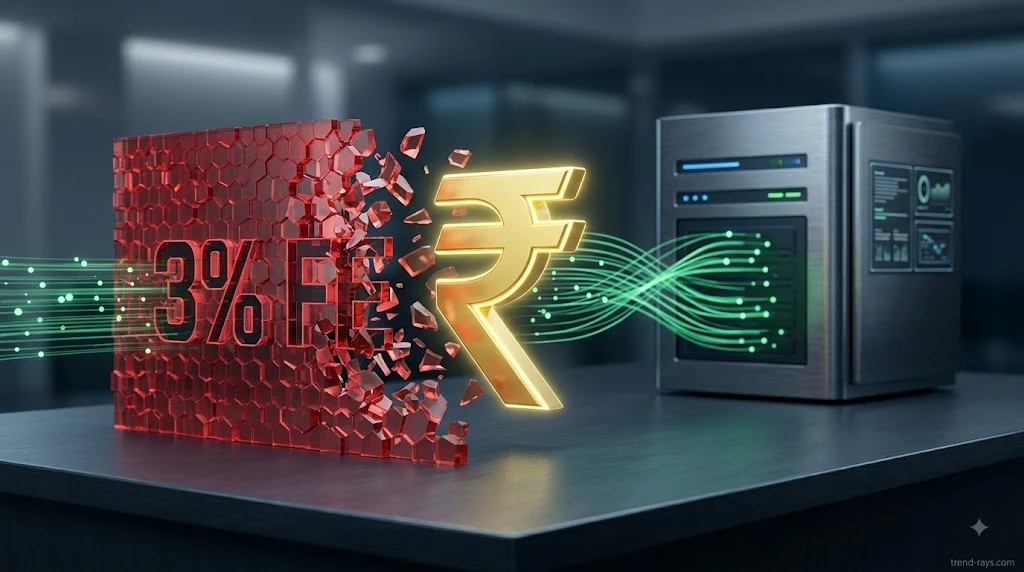
The payment gateway (like Stripe or Razorpay) legally took a 3% “platform fee” right off the top. Over the course of a year, an agency doing ₹1 Crore in revenue is bleeding ₹3,00,000 just for the privilege of accepting digital money.
Mainstream blogs only talk about consumer UPI. But the real financial revolution in 2026 is how Indian freelancers and B2B agencies are using Digital Rupee (e-RUPI) Smart Contracts to bypass payment gateways entirely, achieving instant, zero-fee settlements.
Here is how you can set up a B2B CBDC (Central Bank Digital Currency) workflow to stop leaking your hard-earned revenue.
📌 Quick Summary: The e-RUPI B2B Workflow
- The Gateway Tax: Standard payment gateways charge 2-3% plus fixed fees for automated invoices, destroying B2B margins.
- What is e-RUPI? It is a digital token equivalent to fiat cash, issued directly by the RBI. It settles instantly without a banking intermediary.
- Smart Contracts (Programmability): Unlike basic UPI, e-RUPI can be programmed for “Milestone Payments” (funds unlock automatically upon project delivery).
- Zero Settlement Delays: e-RUPI eliminates the T+2 (Transaction + 2 Days) delay associated with NEFT/RTGS and payment gateways.
- The Setup: Agencies use specialized Tier-1 banking apps (HDFC/ICICI CBDC portals) to generate purpose-specific B2B payment QR codes.
The “Gateway Tax” vs. The UPI Limit Problem
Why don’t agencies just use standard UPI? Because consumer UPI has severe daily transfer limits (often capped at ₹1 Lakh per day), making it useless for high-ticket B2B invoices. RTGS/NEFT solves the limit problem, but requires manual reconciliation, slowing down automated accounting systems like Zoho Books or QuickBooks.
So, agencies fall back to generating secure payment links through Razorpay or Stripe, swallowing a 2% to 3% fee to keep their invoicing automated.
The Fix
1.Audit Your Gateway Fees:
Log into your current payment processor dashboard. Filter your transactions for the last 12 months and isolate the total sum paid in “Platform Fees,” “Processing Fees,” and “GST on Fees.”
2.Shift High-Ticket Clients to CBDC:
Leave your payment gateway active for low-ticket retail sales, but transition any client paying a retainer over ₹50,000 directly to your new e-RUPI settlement workflow.
To see exactly how much money you are losing to “The Gateway Tax” right now, plug your agency’s numbers into this simulator:
Gateway Fee vs. e-RUPI Calculator
Calculate exactly how much your agency is losing to standard 2-3% payment gateway fees and 18% GST.
What is a B2B e-RUPI Smart Contract?

The Digital Rupee (e₹) is not cryptocurrency. It is a Central Bank Digital Currency (CBDC) backed 1:1 by the Reserve Bank of India.
The breakthrough for freelancers in 2026 is its programmability. You are not just transferring money; you are transferring a smart contract. You can generate an e-RUPI voucher that is “purpose-bound.”
The Fix
1.Create Milestone Vouchers:
Instead of fighting for a 50% upfront deposit, you can have the client issue an e-RUPI voucher for the full ₹5 Lakh amount. However, the smart contract is programmed to lock the funds.
2.Automate the Release:
The contract can be tied to a digital trigger (e.g., when the final website code is pushed to the client’s GitHub repository, the smart contract verifies the action and instantly unlocks the funds into your wallet).
Step-by-Step: Setting Up Your Agency for e-RUPI
Setting up a B2B CBDC wallet is different from downloading PhonePe. It requires a verified corporate current account.
The Fix
1.Register with a Tier-1 CBDC Node Bank:
You must have an active business Current Account with a bank participating in the RBI’s retail/wholesale CBDC pilot (e.g., State Bank of India, ICICI Bank, HDFC Bank, or IDFC First Bank).
2.Download the Dedicated e₹ App:
Download your specific bank’s “Digital Rupee” application (do not confuse this with their standard mobile banking app).
3.Generate a B2B Invoice QR:
Instead of pasting a Razorpay link into your Zoho Books invoice, generate a dynamic e-RUPI QR code for the exact invoice amount. Embed this QR code directly into your PDF invoice. When the client scans it via their corporate wallet, the settlement is instant and fee-free.
The Instant Ledger Reconciliation Benefit

One of the hidden nightmares of running a small agency is accounting reconciliation. If a client pays via NEFT, your accountant has to manually match the UTR (Unique Transaction Reference) number to the invoice. If they pay via Stripe, the payout hits your bank as a bulk sum 2 days later, minus fees, requiring complex journal entries to balance the books.
Because e-RUPI is fundamentally a digital bearer instrument (like physical cash), the exact billed amount hits your wallet instantly. Modern 2026 accounting APIs (like Zoho Books) can read the CBDC ledger, automatically marking the specific invoice as “Paid In Full” the second the transaction clears, with zero fee discrepancies.
🎁 Bonus: The “e-RUPI Pitch” Email Template
Clients are often hesitant to try new payment methods. To convince them to ditch the credit card payment link, you need to frame e-RUPI as a benefit to them. Copy and paste this template when sending your next invoice:
Subject: Invoice #[000] & New Secure Payment Option
“Hi [Client Name], attached is the invoice for this month’s retainer. As part of our 2026 financial security upgrades, we have integrated the RBI’s new Digital Rupee (e-RUPI) network for B2B settlements. If you process this invoice via your corporate CBDC wallet using the attached secure QR code, we waive the standard 3% payment gateway processing fee entirely. This ensures a 100% secure, instant settlement directly between our corporate accounts with zero third-party platform friction. Let me know if your finance team needs help initiating the transfer!”
Frequently Asked Questions (FAQ)
Can international clients pay me using e-RUPI?
Currently, no. The Digital Rupee is restricted to domestic transactions within India. For cross-border B2B payments, you must still rely on international gateways (like Swift, Payoneer, or Wise), which are subject to their respective forex markups and fraud filters.
Is e-RUPI considered cryptocurrency, and is it taxed at 30%?
No. e-RUPI is a Central Bank Digital Currency (CBDC), meaning it is the exact digital equivalent of physical sovereign fiat currency. It is not a decentralized crypto asset like Bitcoin. Therefore, revenue received via e-RUPI is taxed exactly the same as standard business income under normal GST and Income Tax slabs.
What happens if a client disputes a smart contract milestone?
If a smart contract milestone payment is contested, the funds remain locked in the cryptographic escrow state. B2B e-RUPI platforms have built-in arbitration protocols monitored by the partner banks, allowing both parties to submit proof of delivery before the funds are manually released or refunded.