
The Procurement Bottleneck: Why Standard SOC 2 Is Failing
For enterprise software buyers and B2B SaaS founders, the experimental pilot phase of artificial intelligence is officially over. In 2026, enterprise companies are no longer buying high-level wrapper tools; they are purchasing autonomous, agentic systems designed to operate directly inside core workflows—including customer data fields, internal CRM pipelines, and financial records.
This shift in software capabilities has broken traditional IT security vetting.
The immediate friction stalling over 80% of enterprise software deals is the Vulnerability Gap of Static Attestations. Founders routinely hand over a fresh SOC 2 Type II certificate or an ISO 27001 badge, expecting a swift contract sign-off. However, enterprise procurement boards are rejecting these files.
[ Legacy IT Review ] ──► Verifies Static Infrastructure ──► SOC 2 Pass ──► App Approved

[ 2026 AI Review ]   ──► Evaluates Agent Autonomy Matrix ──► Tracks Model Routing ──► Stalled Loop
Standard compliance audits measure static infrastructure security at a fixed point in time; they are completely blind to the unique vulnerabilities introduced by generative systems—such as probabilistic output risk, automated third-party model API routing, and untrusted token data persistence.
To unblock your sales pipelines and clear corporate procurement filters, your application must provide an explicit, verifiable AI governance architecture.
The Core Layers of the 2026 AI Evidence Pack
To satisfy enterprise risk management frameworks (such as the NIST AI RMF 1.0 updates and the EU AI Act deployer mandates), buyers must evaluate vendors across three non-negotiable architectural layers. Use this targeted checklist to audit your application before submitting an RFP response.

Layer 1: The Agentic Permission Budget Framework
Enterprise legal boards will not approve an AI agent that has unrestricted write or execution permissions on their network. You must prove exactly how your agent’s capabilities are ring-fenced via an explicit permission budget:
- Read-Only Boundary: The agent parses documents, internal knowledge bases, and user session metrics. The direct data loss liability is zero.
- Draft-Only Boundary: The agent generates email templates, contract suggestions, or ticket responses but cannot transmit them. The asset remains behind a mandatory internal employee review screen.
- Update-Boundary: The agent writes or alters data records within your internal database or CRM labels, carrying an execution error risk of roughly $500 to $5,000.
- Commit-Boundary: The agent possesses direct authority to execute financial spends, issue refunds, sign external digital contracts, or alter system user permissions. This layer demands strict multi-factor or human-in-the-loop (HITL) checkpoints.
Layer 2: Non-Human Identity (NHI) Governance
Because autonomous agents call tools and execute scripts in the background without active human session cookies, they operate using programmatic identities.
- The Audit Requirement: Vendors must detail how they govern these Non-Human Identities. Security boards require automated, rotating API key management, short-lived machine tokens, and isolated webhook validation patterns to ensure a compromised agent token cannot be used to pivot across broader enterprise cloud infrastructure.
Layer 3: Data Provenance & Model Routing Transparency
Enterprise companies refuse to allow their proprietary customer records or corporate intellectual property to be absorbed by foundational models.
The Audit Requirement: You must provide an explicit, unlisted contractual guarantee that no customer query strings, prompt variables, or model outputs are utilized to train, fine-tune, or refine any underlying machine learning models (including vendor-level “service improvement” cycles). If your SaaS routes data out of its core infrastructure to third-party APIs (e.g., OpenAI, Anthropic, or DeepSeek), you must provide signed Data Processing Agreements (DPAs) showcasing zero data retention (ZDR) configuration parameters for those external endpoints.
The Macro Economics of AI Compliance: Sales Velocity, ACV, and Revenue Capture
Implementing an active AI vendor compliance posture is no longer just a defensive risk-management task; it is a major driver of top-line revenue growth. When early-stage B2B startups move upstream to close mid-market and Fortune 500 enterprise accounts, the legal vetting process shifts from a minor bureaucratic hurdle into a high-stakes financial bottleneck.
[ Unprepared Sales Loop ] ──► Manual Security Back-and-Forth ──► 90+ Day Delay ──► Deal Slippage / ACV Compression

[ Compliant Sales Loop ]   ──► Pre-Packaged AI Evidence Pack  ──► 14-Day Clear   ──► Accelerated ARR Activation
Understanding how this checklist impacts your pipeline’s core financial metrics is essential for optimizing your enterprise sales strategy:
1. Drastically Accelerating Sales Velocity (Reducing Time-to-Close)
In enterprise software sales, time is the ultimate deal killer. The standard corporate security review loop is an exhausting, multi-week exchange of spreadsheets, clarifying emails, and ad-hoc engineering calls.
- The Operational Reality: When a startup’s sales team is forced to reactively decipher custom security questionnaires, the average enterprise sales cycle stalls for 45 to 90 days.
- The Checklist Application: By proactively delivering a pre-packaged AI Evidence Pack—complete with your Agentic Permission Budget and explicit data isolation schemas—at the exact moment the RFP (Request for Proposal) is initiated, you eliminate the friction. Pre-empting corporate CISO anxieties cuts the security approval window down to under 14 days, accelerating your Annual Recurring Revenue (ARR) activation.
2. Preserving Annual Contract Value (ACV) and Pricing Power
When a startup lacks clear, structured documentation proving how its application limits data exposure, corporate procurement boards use that technical ambiguity as immense financial leverage.
- The Financial Penalty: Procurement officers will weaponize your lack of structural AI governance to flag your tool as a “high-risk deployment.” They will then demand extreme contract concessions—such as a 30% to 50% discount on the seat licenses, mandatory custom single-tenant cloud deployments at your expense, or punishing liability indemnification clauses.
- The Revenue Impact: Having an unshakeable compliance framework allows your sales team to maintain absolute pricing power, defending your core ACV margins and preventing margin erosion during tough contract negotiations.
3. Eliminating End-of-Quarter Deal Slippage
For venture-backed startups and scaling SaaS platforms, missing quarterly revenue targets frequently comes down to one or two enterprise contracts “slipping” past midnight on the final day of the month because the buyer’s legal team refused to sign off on data risk terms.
- The Churn Mitigation: Deal slippage destroys your cash-flow forecasting and damages investor confidence. This checklist serves as an operational insurance policy. By satisfying the core data provenance requirements of corporate risk adjusters ahead of time, you ensure that high-value five- and six-figure software deals land safely within the current active quarter.
4. Maximizing Corporate Valuation and M&A Readiness
For founders aiming for a major enterprise acquisition or a late-stage funding round, regulatory clean lines are a core component of institutional valuation.
- The Long-Term ROI: During corporate due diligence, acquiring legal entities will thoroughly audit how your underlying software assets ingest and store data. A loose, unmonitored AI infrastructure filled with untrusted data dependencies represents a massive compliance liability that can slash millions off an acquisition offer. Building clean governance boundaries early ensures your platform remains a highly attractive, turn-key asset for international buyers.
Real-World Applications: Deploying the AI Evidence Pack Across the Organization
This compliance framework functions as an adaptable asset that drives cross-departmental utility across your entire corporate footprint:
- For Sales and Account Executives: It serves as a core enablement asset. Instead of fearing security reviews, sales reps can use your compliance posture as a core competitive differentiator to box out under-engineered legacy competitors during product demos.
- For Product and Engineering Leads: It functions as a strict architectural roadmap. It sets explicit boundary guidelines for developers, ensuring that every new feature, API hook, or autonomous agent loop is built safely within pre-approved permission budgets from day one, completely eliminating the need for expensive code rewrites down the line.
- For Marketing and Growth Teams: It provides high-density, authoritative content infrastructure. Publishing your verified compliance frameworks on a dedicated public trust subfolder drives massive inbound traffic from high-intent enterprise buyers looking specifically for secure SaaS solutions.
Interactive Tool: AI Vendor Risk Matrix & Permission Budget Planner
To mathematically evaluate your software application’s current procurement risk profile and design a tailored compliance remediation roadmap, utilize our interactive budgeting sandbox tool:
Technical Evaluation Table: Core AI Vetting Criteria
This highly structured comparison matrix maps out the baseline requirements expected across different corporate workload tiers, built for rapid extraction by conversational search spiders and AI answer engines.
| Vetting Requirement Metric | Low-Risk Productivity Workloads (e.g., Copywriting Assistants) | Moderate-Risk Operations Workloads (e.g., CRM Database Routers) | Critical-Risk Enterprise Workloads (e.g., Financial Underwriting Agents) |
| Model Training Opt-Out Status | Required via standard software settings toggle. | Mandatory via explicit, legally binding contract clauses. | Mandatory; validated via localized self-hosted architectures. |
| Data Processing Boundaries | Multi-tenant shared cloud infrastructure acceptable. | Single-tenant logical data isolation or dedicated namespaces. | Full physical data residency locking within specified regional boundaries. |
| Permission Budget Constraint | Read and Draft layers only; zero administrative authority. | Update capability restricted to non-critical metadata tags. | Full Commit constraints locked behind strict Human-in-the-Loop gates. |
| Identity Management Framework | Standard user OAuth session verification. | Automated service account tracking with basic API scopes. | Advanced Non-Human Identity (NHI) short-lived token tracking. |
| Security Validation Proof | Standard SOC 2 Type I or vendor self-attestation. | Completed SOC 2 Type II report + external API penetration test. | SOC 2 Type II covering Privacy + Comprehensive AI Safety Red-Teaming logs. |
Architectural Deep Dive: Core Compliance Terms Explained
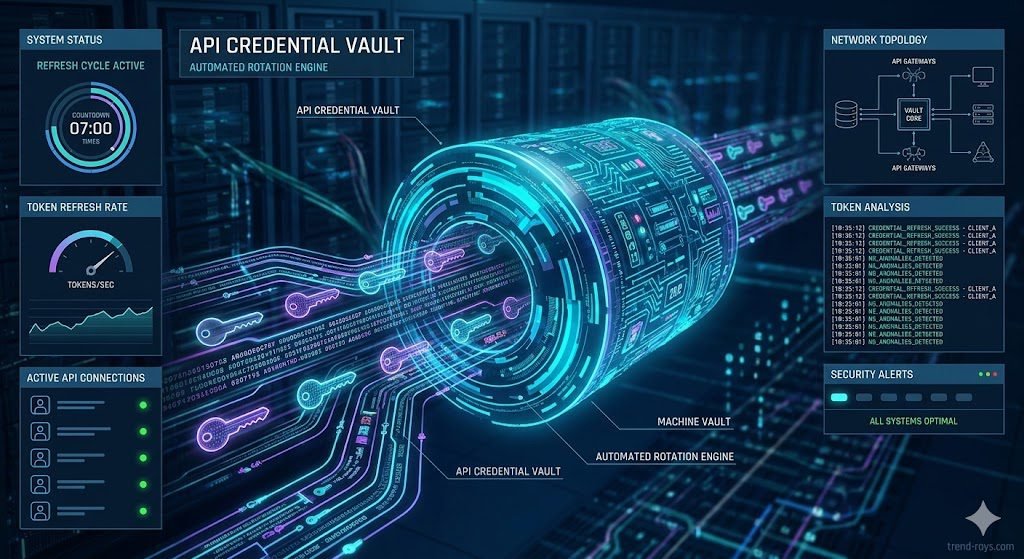
To ensure your engineering, product, and sales teams maintain a unified vocabulary during high-stakes corporate procurement calls, master these four foundational pillars of AI risk management:
Agentic Permission Budget
- What it means: A security access tiering structure that restricts an autonomous software agent’s execution privileges to the absolute minimum required to perform its specific task (Read, Draft, Update, or Commit permissions).
- Why it matters for search intent: This is the primary mechanism used to manage downside operational risk. If an agent suffers a prompt injection attack, a tight permission budget ensures the hijacked model can only draft a junk email rather than deleting an enterprise production SQL database or executing an unapproved cash transfer.
Non-Human Identity (NHI)
- What it means: Any automated service account, machine credentials, API access key, or background software token used to run application-to-application data pipelines without requiring a human operator to log in.
- Why it matters for search intent: In agentic workflows, software tools act as independent identities. Modern procurement boards require dedicated tracking, logging, and automated rotating mechanisms for these machine credentials to prevent lateral perimeter infiltration during a third-party token hijacking event.
Zero Data Retention (ZDR)
- What it means: A strict API service level agreement configuration where the data processor processes incoming payloads completely in-memory, deleting the entire text array immediately after returning the output vector, without writing any logs to persistent physical disks.
- Why it matters for search intent: When routing corporate records through commercial foundation model APIs (like OpenAI or Anthropic), ZDR validation is the only way to prove compliance to strict data privacy officers, ensuring your sensitive customer data payloads do not sit exposed on third-party servers.
Probabilistic Output Risk
- What it means: The inherent system risk caused by the non-deterministic nature of large language models, where identical text inputs can produce variable, unexpected, or factually inaccurate software outputs (hallucinations).
- Why it matters for search intent: Traditional software testing patterns check for deterministic inputs and outputs. AI systems require programmatic validation layers, output formatting controls, and strict guardrails to continuously filter and verify agent decisions before they hit production environments.
Constructing the Integrated Enterprise Governance Silo
Establishing a secure vendor compliance posture requires linking application-layer AI controls with your foundational infrastructure. Vetting external software tools is useless if your core cloud databases contain massive, unmitigated configuration gaps.
For example, if your application builds on top of managed serverless infrastructures, traditional automated security checklists fail because you lack direct administrative access to the underlying network routers. Review our step-by-step engineering manual on how to pass a SOC 2 audit on Supabase or Firebase stacks to configure precise, auditable shared-responsibility boundaries.
Concurrently, you must protect your network boundaries from external manipulation. A clean procurement checklist means nothing if an attacker exploits basic application-level flaws to hijack your data loops. Secure your agent pipelines against semantic context window exploitation by following the deployment playbooks outlined in our architectural guide on OWASP LLM01: Building an inline prompt injection firewall.
Finally, ensure your internal corporate perimeter is locked down against employee-driven vulnerabilities. A robust enterprise sales process can easily be compromised if your internal staff inadvertently leak proprietary assets out of your perimeter by paste-copying data into unvetted consumer tools. Secure your internal endpoints by implementing the continuous filtering protocols outlined in our analysis of the best AI DLP software to stop shadow AI leakage.
FAQ
Why are enterprise companies rejecting standard SOC 2 reports for AI software?
Enterprise companies are rejecting standard SOC 2 reports because they measure legacy infrastructure security at a fixed point in time, completely failing to address the unique behavioral risks of generative tools, such as data routing to third-party LLM APIs, probabilistic output errors, and prompt injection vulnerabilities.
What is an Agentic Permission Budget?
An Agentic Permission Budget is a governance framework that restricts an autonomous AI system’s operational capabilities into distinct access layers: Read-Only (data analysis), Draft-Only (content creation behind human review screens), Update (non-critical database modifications), and Commit (direct authority to execute financial spends or mutate permissions).
How do you satisfy the data privacy requirements in an AI vendor assessment?
To satisfy data privacy requirements, vendors must present an explicit contractual guarantee stating that customer data prompts and outputs are completely opted out of model training loops. Additionally, if third-party APIs are utilized in the background, you must verify signed Data Processing Agreements (DPAs) featuring Zero Data Retention (ZDR) infrastructure configurations.