As the Digital Operational Resilience Act (DORA) enters strict enforcement in 2026, financial entities and their SaaS providers must deploy specialized Third-Party Risk Management (TPRM) software. Legacy SOC 2 tools are insufficient because DORA’s Article 28 requires Nth-party sub-outsourcing mapping, Continuous Threat Exposure Management (CTEM), and automated extraction of vendor data into the standardized Register of Information (RoI) xBRL-CSV format. The leading enterprise TPRM platforms—such as OneTrust, UpGuard, Vanta, and Bitsight—solve this by integrating automated questionnaire intake with real-time, outside-in cybersecurity ratings and Threat-Led Penetration Testing (TLPT) SLA tracking.
The “informal tolerance period” for the Digital Operational Resilience Act (DORA) is officially over. As European National Competent Authorities (NCAs) actively audit the financial sector’s supply chains, enterprise banks are issuing ultimatums to their SaaS vendors: Prove your digital operational resilience, or lose the contract.
Managing this level of regulatory scrutiny via manual Excel spreadsheets or siloed email threads is no longer an option. If your internal compliance team takes four weeks to assess a new cloud vendor, your engineering velocity dies.
To survive the 2026 enterprise procurement cycle, B2B SaaS companies and financial institutions must deploy automated Third-Party Risk Management (TPRM) software purpose-built for DORA’s strict Information and Communication Technology (ICT) requirements.
Here is the architectural blueprint for choosing the right TPRM platform to automate your Nth-party mapping, streamline continuous monitoring, and instantly generate your mandatory xBRL-CSV reports.
Why Legacy SOC 2 Software Fails DORA Audits
Many CTOs mistakenly assume their existing Governance, Risk, and Compliance (GRC) software will handle DORA automatically because it tracks SOC 2 and ISO 27001. This is a critical architectural error. DORA requires a completely different data model.
Before purchasing a TPRM platform, ensure it solves these three specific bottlenecks:
- Nth-Party Sub-Outsourcing Mapping: DORA does not just care about your AWS servers. If your SaaS relies on an external AI API (like Anthropic) or a secondary data broker, the TPRM software must be able to recursively map and score those 4th and 5th-party dependencies.
- Continuous Outside-In Monitoring: Annual point-in-time vulnerability scans are obsolete. DORA requires Continuous Threat Exposure Management (CTEM). The TPRM platform must constantly scan your vendors’ public-facing assets for exposed credentials, ransomware susceptibility, and unpatched CVEs in real-time.
- The Register of Information (RoI) xBRL-CSV Export: Under Article 28, banks must submit a massive, standardized register of all ICT vendors to regulators every March. Your TPRM software must natively map vendor Legal Entity Identifiers (LEIs) and Critical or Important Function (CIF) tags into the exact ESA-mandated format.
Once your architecture is mapped, surviving enterprise procurement requires deploying automated TPRM software for DORA compliance to continuously monitor your sub-processors.
Top TPRM Platforms for DORA Compliance
TPRM Software Comparison Matrix (DORA 2026 Requirements)
| Platform | Best For | Continuous External Monitoring | Native xBRL-CSV (RoI) Export | Est. Annual Pricing |
| Vanta | Mid-Market SaaS | Partial (Via Integrations) | Manual / Custom | $15k – $35k |
| UpGuard | Cyber Security Teams | Full (Native Scanning) | Supported | $25k – $50k+ |
| Bitsight | Financial Institutions | Full (Threat Intel & Ratings) | Supported | Custom (Enterprise) |
| OneTrust | Global Enterprises | Partial (Integration Dependent) | Full (Native RoI Workflows) | $50k – $150k+ |
| ProcessUnity | Vendor Procurement | Partial (Questionnaire-first) | Supported | $30k – $80k+ |
Deep-Dive Architectural Evaluation: The Top 5 DORA TPRM Platforms
1. Vanta: Best for Automated Startup-to-Enterprise Compliance Posture
Vanta operates primarily as a continuous inside-out automated compliance platform. Instead of relying on manual point-in-time evidence gathering, Vanta utilizes direct API integrations across an organization’s modern cloud stack to continuously ingest configuration metadata and track compliance anomalies against defined security baselines.
[SaaS/Cloud Infrastructure Stack] ──(Continuous API Telemetry)──> [Vanta Agentic Engine] ──> [Automated Evidence Mapping to DORA Pillars]
Deep Architectural Core
Vanta’s underlying engine deploys a zero-trust polling model that connects directly to identity providers (IdPs), cloud service providers (CSPs via AWS IAM, GCP IAM), version control systems (GitHub, GitLab), and MDM solutions. It treats compliance controls as live, queryable database states. For DORA compliance, Vanta maps these live infrastructure states directly to ICT risk management objectives. Its built-in AI module parses vendor SOC 2 PDFs and uses semantic vector matching to extract vendor risk controls, instantly mapping them to DORA-specific requirements.
DORA-Specific Functional Capabilities
- Continuous Control Monitoring (CCM): Runs hourly automated checks against cloud infrastructure to ensure encryption-at-rest, multi-tenant data isolation, and log retention parameters comply with DORA Article 6 frameworks.
- Automated Vendor Ingestion Pipelines: Ingests vendor security documentation and processes it via LLM-driven document analysis to identify gaps in the vendor’s security posture relative to the financial institution’s risk tolerances.
- Gap Assessment Engine: Provides pre-built DORA readiness frameworks that continuously track internal gaps, automatically generating remediation tickets in Jira or Linear when an asset falls out of compliance.
Granular Technical Pros & Cons
- Pros: Native API connection schema eliminates manual screenshot gathering; fastest time-to-value for scaling B2B SaaS platforms; unified single-pane interface for internal SOC 2, ISO 27001, and DORA tracking.
- Cons: Outside-in network perimeter vulnerability scanning is basic compared to specialized attack surface tools; generation of the highly complex, multi-tiered xBRL-CSV Register of Information (RoI) requires manual configuration and custom metadata tagging.
Deployment Profile & Estimated Pricing
- Ideal Target Organization: Seed-stage startups up to scaling mid-market B2B software vendors ($1M to $30M ARR).
- Estimated Pricing: $15,000 to $35,000 annually, scaling based on infrastructure footprint, employee count, and the number of active framework modules deployed.
2. UpGuard: Best for Continuous External Attack Surface Management (EASM)
UpGuard approaches third-party risk management from an outside-in, zero-permission perspective. Rather than requiring credentials or infrastructure access to a vendor’s environment, UpGuard deploys a massive passive scanning infrastructure that continuously evaluates a vendor’s public-facing digital footprint and attack surface.
[Vendor Public Digital Footprint] ──(Passive Network Perimeter Scanning)──> [UpGuard Cyber Rating Scale: 0-950] ──> [Real-time DORA Exposure Alerts]
Deep Architectural Core
UpGuard’s engine leverages proprietary network scanners, DNS crawlers, and open-source threat intelligence (OSINT) harvesters to analyze billions of data points daily. It scores organizations on a scale of 0 to 950 across automated categories including email security (SPF/DKIM/DMARC configurations), website health, network security (open ports, SSL/TLS patch vulnerabilities), and active data leaks. For DORA compliance, this satisfies the requirement for Continuous Threat Exposure Management (CTEM) by providing an uninterrupted telemetry stream of a third-party vendor’s external risk profile.
DORA-Specific Functional Capabilities
- Automated Vendor Telemetry Feeds: Automatically discovers and charts undocumented internet-facing assets (shadow IT) belonging to your vendors, evaluating their exposure to zero-day exploits.
- Dynamic Questionnaire Cross-Validation: Correlates answers provided by vendors in DORA compliance questionnaires against real-time scanning data. If a vendor claims to enforce strict TLS 1.3 encryption but UpGuard detects an open port running deprecated TLS 1.0, the platform flags the contradiction automatically.
- Data Leak Intelligence Engine: Continuously monitors paste sites, public repositories, and the dark web for exposed corporate credentials or intellectual property belonging to your critical sub-processors.
Granular Technical Pros & Cons
- Pros: Requires absolutely zero setup or permission from the third-party vendor to begin surface scanning; highly accurate, real-time warning indicators for active perimeter vulnerabilities; exceptional visual reporting for executive risk assessments.
- Cons: Lacks deep visibility into inside-out code deployment pipelines or internal access controls; internal GRC workflow tools are less robust than those found in legacy enterprise compliance platforms.
Deployment Profile & Estimated Pricing
- Ideal Target Organization: Mid-market enterprises, regional financial institutions, and fast-growing FinTech platforms managing between 50 and 500 active digital vendors.
- Estimated Pricing: $25,000 to $60,000+ annually, highly dependent on the total number of vendor domains continuously monitored under the license.
3. OneTrust: Best for Global Enterprise GRC & xBRL-CSV Architecture
OneTrust is a highly complex, modular enterprise Governance, Risk, and Compliance (GRC) platform. It is engineered specifically for global financial institutions that require deep multi-departmental workflow orchestration, advanced localization across foreign legal entities, and rigorous data privacy architectures.
[Vendor Intake & LEI Validation] ──> [OneTrust Relational GRC Database] ──> [Automated Taxonomy Mapping] ──> [March 2026 xBRL-CSV Reporting Engine]
Deep Architectural Core
OneTrust is built on a highly relational enterprise database architecture designed to link corporate assets, vendors, legal contracts, and regulatory frameworks together. Its dedicated DORA module treats compliance through a strict data-governance lens. It allows organizations to input, track, and validate Legal Entity Identifiers (LEIs), map granular subcontracting structures (Nth-party risk), and link specific vendor dependencies back to the organization’s Critical or Important Functions (CIF).
DORA-Specific Functional Capabilities
- Native xBRL-CSV Transformation Engine: Features a dedicated workflow engine built specifically to meet the European Supervisory Authorities’ (ESAs) strict reporting parameters. It automates the extraction of vendor metadata directly into the 15 interlinked Implementing Technical Standards (ITS) templates required for the annual March submission.
- Nth-Party Supply Chain Mapping Architecture: Allows risk managers to build visual dependency trees showing how a primary vendor (3rd-party) links to underlying sub-processors (4th-parties) to monitor systemic concentration risks.
- Contractual SLA & Exit Strategy Workflows: Embeds task-management triggers within vendor profiles to document, audit, and force testing of mandatory DORA contractual requirements, such as Threat-Led Penetration Testing (TLPT) access and system exit portability.
Granular Technical Pros & Cons
- Pros: The most legally robust and customizable platform for enterprise-wide DORA Register of Information (RoI) compliance; eliminates the need for separate data-cleaning pipelines for xBRL submissions.
- Cons: High implementation friction; onboarding the platform requires extensive professional services and can take months; the user interface is dense and can feel overwhelming to non-compliance users.
Deployment Profile & Estimated Pricing
- Ideal Target Organization: Tier 1 global banks, multi-national financial entities, and enterprise SaaS systems managing massive, complex vendor portfolios (1,000+ vendors).
- Estimated Pricing: $50,000 to $150,000+ annually, structured via modular enterprise licensing and professional implementation overhead.
4. Bitsight: Best for Financial Institutional Cyber Risk Analytics & CTI
Bitsight operates as a high-end cyber risk analytics platform, focusing heavily on processing vast streams of Cyber Threat Intelligence (CTI) to quantify and manage third-party and fourth-party risk across the global financial ecosystem.
[Global CTI & Netflow Traffic Analysis] ──> [Bitsight Concentration Analytics Engine] ──> [Identification of Hidden 4th-Party Infrastructure Bottlenecks]
Deep Architectural Core
Bitsight’s analytics engine evaluates risk by executing full-scale internet asset mapping alongside extensive partnerships with global internet service providers (ISPs) to analyze billions of daily netflow and traffic interactions. This data allows Bitsight to track actual malware infections, system misconfigurations, and user behaviors across corporate networks. For DORA compliance, Bitsight’s standout architectural advantage is its ability to identify hidden systemic concentration risks—tracking when dozens of seemingly separate vendors are all dependent on a single, shared cloud infrastructure node.
DORA-Specific Functional Capabilities
- 4th-Party / Nth-Party Infrastructure Mapping: Automatically discovers hidden dependencies down your software supply chain. It flags when your vendors utilize shared sub-processors, protecting your institution from centralized cloud failures.
- Real-time Cyber Incident Alerting: Leverages deep open and dark web telemetry to monitor active breaches. If a zero-day exploit compromises a critical vendor’s infrastructure, Bitsight triggers real-time alerts to accelerate your 72-hour incident response window.
- Forrester-Validated Risk Quantification: Translates abstract technical risk metrics into financial exposure data, enabling compliance and finance teams to model the total economic risk of third-party system downtime.
Granular Technical Pros & Cons
- Pros: Unparalleled visibility into complex Nth-party concentration risks; highly reliable threat data backed by extensive global netflow partnerships; preferred by major global investment banks and regulators.
- Cons: Priced strictly for the upper enterprise market; focuses heavily on risk intelligence and scanning, meaning it requires external tooling or manual processes for comprehensive internal policy drafting and questionnaire workflow management.
Deployment Profile & Estimated Pricing
- Ideal Target Organization: Institutional investment firms, large regional banks, and high-volume enterprise FinTech networks seeking deep cyber threat telemetry.
- Estimated Pricing: Custom enterprise pricing models that frequently scale past $60,000 to $100,000+ based on data feed integrations and the scale of monitored assets.
5. ProcessUnity: Best for Vendor Risk Lifecycle Automation & Sourcing Integration
ProcessUnity specializes in automating the complete lifecycle of vendor risk management, tracking everything from initial procurement sourcing and onboarding to continuous assessment, mitigation, and eventual contract offboarding.
[Vendor Onboarding Request] ──> [ProcessUnity Automated Questionnaire Routing] ──> [External Feed Ingestion: Bitsight/EcoVadis] ──> [Dynamic Remediation Escalation]
Deep Architectural Core
ProcessUnity’s architecture is built around a highly flexible workflow automation engine. It excels at breaking down the administrative silos between procurement, cybersecurity, and legal departments. Instead of treating vendor risk as a static annual check, ProcessUnity turns compliance into a dynamic lifecycle. It features native connectors to major external cyber rating feeds (such as Bitsight and SecurityScorecard), allowing organizations to ingest outside-in scores while orchestrating their inside-out DORA compliance questionnaires within a single dashboard.
DORA-Specific Functional Capabilities
- Automated Questionnaire Remediation Routing: Dynamically adjusts questionnaire paths based on the vendor’s profile. If a vendor is tagged as supporting a Critical or Important Function (CIF), the platform automatically scales the assessment to include rigorous DORA-specific testing prompts.
- SLA and Contractual Vulnerability Tracking: Monitors vendor response times, patch remediation timelines, and contract renewal constraints against the compliance mandates defined in your Master Services Agreements (MSAs).
- Regulatory Taxonomy Alignment: Maps individual questionnaire responses directly to DORA’s core risk management pillars, creating automated audit trails that prove due diligence to visiting regulators.
Granular Technical Pros & Cons
- Pros: Exceptional workflow automation that significantly reduces the manual hours spent chasing vendors for questionnaire answers; highly customizable dashboard architecture; seamless pairing of automated tracking with human review workflows.
- Cons: Does not feature a native, proprietary asset scanning engine; relies completely on external data integrations to feed real-time cybersecurity perimeter scores into the platform.
Deployment Profile & Estimated Pricing
- Ideal Target Organization: Mid-to-large regional banks, healthcare networks, and enterprise software platforms with dedicated vendor risk management (VRM) departments.
- Estimated Pricing: $30,000 to $80,000+ annually, depending on platform customization requirements, integration modules, and the total volume of managed assessments.
The March 2026 Register of Information (RoI) Bottleneck
Under Article 28(3) of DORA, every European financial entity must maintain a comprehensive Register of Information (RoI) documenting all contractual arrangements with ICT third-party service providers.
For the March 2026 regulatory submission deadline, banks are legally forbidden from submitting standard Excel spreadsheets or PDF vendor lists. They must submit a highly structured, machine-readable xBRL-CSV reporting package. If your B2B SaaS platform fails to provide the exact data points required to populate the bank’s templates, the bank’s reporting software will trigger a hard validation failure, blocking your platform from being onboarded.
Top TPRM platforms automate the collection of these three critical data points:
- The Validated Legal Entity Identifier (LEI): The reporting taxonomy strictly requires a 20-character LEI (ISO 17442) for every ICT provider. If your SaaS company does not have a registered, active LEI, you will fail the vendor assessment.
- The Sub-Outsourcing Supply Chain (Nth-Party Risk): If your software supports a “Critical or Important Function” (CIF) for the bank, you must legally disclose your entire sub-contracting chain, including your cloud hosts, CDNs, and AI APIs.
- Critical or Important Function (CIF) Tagging: Your SaaS contract must explicitly define whether your service supports a CIF. CIF software requires full Threat-Led Penetration Testing (TLPT) and strict exit strategies tracked actively within the TPRM platform.
Interactive Tool: TPRM Software ROI & Budget Assessor
Enterprise TPRM platforms represent a significant CapEx investment, but relying on manual Excel tracking leads to severe operational bloat and regulatory fines.
Use this interactive tool to calculate your financial losses due to manual vendor risk management, and justify the ROI of upgrading to an automated DORA TPRM platform.
TPRM Automation ROI Calculator
Calculate operational savings by automating DORA vendor risk assessments.
FAQ
What is 4th-party concentration risk under DORA?
Under DORA, banks are not just liable for their direct software vendors (3rd-parties); they are liable for the infrastructure those vendors rely on (4th-parties and Nth-parties). Concentration risk occurs when multiple independent SaaS vendors all secretly rely on the same underlying cloud server (like AWS-East) or AI model. If that single 4th-party node goes down, the entire bank’s supply chain collapses. TPRM software identifies and maps these hidden dependencies.
Does TPRM software replace the need for SOC 2 audits?
No. TPRM software orchestrates the collection and validation of compliance artifacts (like SOC 2 reports, ISO certifications, and DORA telemetry) across your vendor supply chain. It acts as the central risk repository, but your vendors must still undergo independent third-party audits to generate those artifacts.
What is Continuous Threat Exposure Management (CTEM) in DORA?
Under DORA, financial entities cannot rely solely on annual risk assessments. CTEM is an architectural approach where TPRM software continuously scans the external attack surface of critical vendors for real-time vulnerabilities—such as exposed databases or expiring SSL certificates—allowing banks to proactively mitigate Nth-party risk before an incident occurs.
How much does enterprise TPRM software cost?
Pricing varies drastically based on the size of the vendor portfolio and the depth of telemetry required. For a mid-market SaaS company managing 100 vendors, platforms like Vanta may range from $15,000 to $30,000 annually. For global financial institutions requiring deep external monitoring (Bitsight, UpGuard) or massive GRC orchestration (OneTrust) for thousands of vendors, enterprise contracts frequently exceed $100,000 to $250,000+ per year.
What is the DORA Register of Information (RoI)?
The Register of Information is a mandatory, standardized xBRL-CSV file that all European financial entities must submit to regulators annually. It documents every contractual arrangement with an ICT third-party service provider, including exact Legal Entity Identifiers (LEIs) and comprehensive sub-outsourcing supply chains.


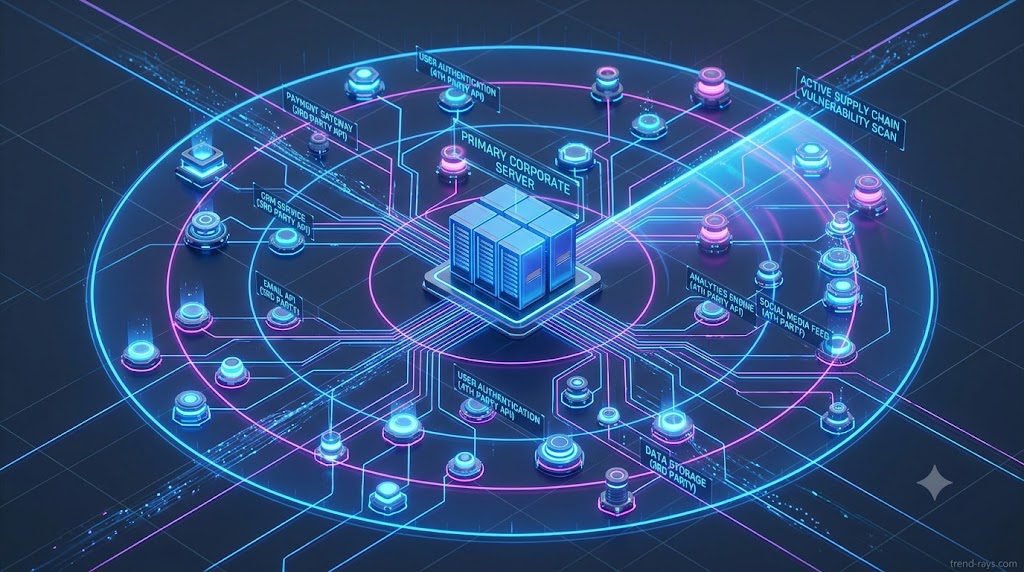
![Best NIS2 Compliance Software for the Polish KSC Act (2026 Blueprint) 3 Conversation with Gemini Prompt: A sleek 3D isometric illustration of a high-speed digital routing hub floating in the cloud. Glowing data packets are being intelligently sorted and redirected into three different secure server tunnels representing different payment gateways. Clean enterprise FinTech aesthetic, dark slate background with vibrant purple, cyan, and gold accents. Photorealistic, 8k resolution, Unreal Engine 5 render style. --ar 16:9 --v 6.0 A sleek, high-speed 3D isometric illustration rendered in the Unreal Engine 5 style, visualizing a sophisticated digital payment routing hub floating within a massive, complex network of dark slate cloud formations, against a deep dark background. Numerous small, brightly glowing data packets—luminous purple, cyan, and gold translucent cubes with light trails—are actively flowing into the central hub structure. This hub is a complex assembly of brushed dark metal conduits, illuminated circuit pathways, data sorting cores, and advanced holographic projections, marked with subtle FinTech shield and arrow icons. Within the central sorting core, packets are visibly categorized and guided by intelligent magnetic fields and small robotic sorters, separating the incoming data stream. From the floating hub, three large, secure server tunnels extend outwards, each clearly defined by vibrant, glowing accents and marked with distinct holographic labels: 1. **Vibrant Purple Gateway Tunnel:** Accented with purple light, labeled with glowing text: "PURPLE GATEWAY: GLOBAL PAYMENTS". Luminous purple/cyan packets are moving rapidly down this tunnel. 2. **Vibrant Cyan Gateway Tunnel:** Accented with cyan light, labeled with glowing text: "CYAN GATEWAY: ALTERNATIVE PAYMENTS". Luminous cyan/purple packets are moving rapidly down this tunnel. 3. **Vibrant Gold Gateway Tunnel:** Accented with gold light, labeled with glowing text: "GOLD GATEWAY: DIGITAL ASSETS". Luminous gold/purple packets are moving rapidly down this tunnel. The illustration features advanced lighting effects: strong global illumination from the glowing data packets and hub lights casting vibrant purple, cyan, and gold reflections onto the dark metal surfaces and surrounding slate clouds. The scene is photorealistic with crisp textures and high detail, in 8k resolution. Small floating digital indicators and transaction arrows enhance the FinTech aesthetic. A subtle, distant outline of a holographic city is integrated into the clouds, emphasizing the network connection. The overall composition is clean and premium, showcasing high-speed intelligent data flow in an enterprise enterprise FinTech platform., AI generated, AI generated Prompt: A sleek, high-tech 3D isometric illustration of a secure digital vault inside a modern cloud server rack. Glowing green checkmarks and cryptographic shields surround the server, representing verified operational resilience and compliance. Clean enterprise FinTech and SaaS aesthetic, dark slate background with neon cyan and emerald green accents. Photorealistic, 8k resolution, Unreal Engine 5 render style. --ar 16:9 --v 6.0 (Don't forget to add your trend-rays.com watermark to the bottom corner once it generates!) A sleek, high-tech 3D isometric illustration capturing a secure digital vault embedded within a modern cloud server rack assembly, set against a dark slate background with vibrant neon cyan and emerald green accents, rendered in a photorealistic Unreal Engine 5 style at 8K resolution. The central focus is a sophisticated, angled server rack branded "SaaS SECURE CLOUD" and "FINTECH DATA CENTER", composed of dark metal, glass panels, complex wiring, and glowing components. Within a specific reinforced module of the server stack is the "DIGITAL VAULT", a glowing, heavy-duty digital storage unit with intricate locking mechanisms, security symbols, a pulsing emerald light core, and labeled "VERIFIED OPERATIONAL RESILIENCE". The surrounding environment is bustling with data activity; numerous vibrant emerald green glowing checkmarks (✓) and multiple translucent, high-tech cryptographic shields (hexagonal grid shields with lock icons and code data, glowing neon cyan and green) float and rotate dynamically around the server assembly, validating its security. The server rack itself displays glowing blue and green LEDs, status indicators, complex circuit patterns, and fiber optic data streams. It features labels like "DATA ENCRYPTION", "COMPLIANCE VERIFIED", "DIGITAL VAULT ACCESS", and "SECURE STORAGE". Glowing lines, data particles, and circuit traces (neon cyan and emerald green) flow across the dark slate surfaces and connect to the server. The isometric perspective shows the server rack angled in the dark digital space, with subtle holographic UI elements, code patterns, and network nodes (blue/green) floating nearby. The lighting is cinematic, highlighting the metal textures, glowing elements, and reflections. The vault module is robustly enclosed within the detailed server stack. In the bottom right corner, the small, semi-transparent watermark text "trend-rays.com" is subtly integrated in white sans-serif font. The illustration is clean, highly detailed, and captures the advanced security and compliance aesthetic with sharp focus, atmospheric glow, and complex 3D textures., AI generated, AI generated Prompt: A 3D isometric illustration of a sleek, glowing digital scale. On one side sits a highly complex, glowing neural network representing AI machine learning. On the other side sits a stack of secure, holographic legal compliance documents and regulatory shields. The scale is perfectly balanced. Clean enterprise FinTech and RegTech aesthetic, dark slate background with neon orange and cyan accents. Photorealistic, 8k resolution, Unreal Engine 5 render style. --ar 16:9 --v 6.0 A photorealistic 3D isometric illustration rendered in the style of Unreal Engine 5, with a clean enterprise FinTech and RegTech aesthetic, set against a dark slate background accented with neon orange and cyan. A central, sleek digital scale, glowing with light, is perfectly balanced. On the left tray of the scale sits a highly complex, glowing neural network made of interconnected nodes and light pathways, representing AI machine learning. The neural network pulses with orange and cyan light. On the right tray of the scale, there is a stack of secure, holographic legal compliance documents and regulatory shields. The documents are translucent, glowing with holographic light, featuring stylized legal text and geometric shield icons, all shimmering in orange and cyan hues. The entire scene is sharply detailed in 8k resolution, with realistic textures and lighting that makes the elements look photorealistic within the context of the digital illustration style., AI generated, AI generated Featured Image Prompt (Midjourney/DALL-E 3): A sleek 3D isometric illustration of a digital supply chain dashboard. Glowing cloud server nodes are connected by intricate neon data streams. One node is flagged with a red holographic warning shield, while the central dashboard displays green compliant checkmarks. Clean enterprise FinTech and RegTech aesthetic, dark slate background with neon cyan, emerald green, and red accents. Photorealistic, 8k resolution, Unreal Engine 5 render style. --ar 16:9 --v 6.0 (Remember to add your trend-rays.com watermark!) A sleek, high-resolution 3D isometric illustration rendered in the clean, professional style of Unreal Engine 5, depicting a comprehensive digital supply chain dashboard. The overall setting is a dark slate background, providing a professional enterprise FinTech and RegTech aesthetic. Multiple stylized, glowing cloud server nodes, appearing as semi-transparent, structured floating modules, are distributed across the scene. These nodes are interconnected by a web of intricate neon cyan data streams that pulse with light, visually representing real-time information flow and data transactions. Small binary code particles and subtle data packet visualizations traverse these streams. In the center of the composition, a large, semi-transparent 3D visualization platform serves as the supply chain dashboard. The dashboard screen displays professional data visualizations, including interactive line graphs, pie charts, and bar charts showing key metrics like inventory levels, logistics status, and supplier performance. Within the main status panel of the dashboard, prominent green emerald checkmarks are clearly visible, indicating overall compliance and successful operations. Text labels on the dashboard UI include professional fonts displaying titles like "SUPPLY CHAIN INTEGRITY MONITOR," "COMPLIANCE STATUS: HEALTHY," and "DATA FLOW: OPTIMAL." On the periphery of the network, one specific cloud server node is highlighted with a distinct red holographic warning shield icon floating directly above it. This node pulses with a reddish hue, and adjacent text reads "COMPLIANCE ALERT: DISTRICT B." The lighting is volumetric and cinematic, consistent with a photorealistic 8k render, with soft glows emanating from the neon elements and reflections visible on the dark slate surfaces and semi-reflective modules. The depth of field is carefully managed to draw attention to the central dashboard while showing the depth of the network. A clean, subtle watermark text 'trend-rays.com' is discreetly positioned in the bottom right corner in a sans-serif font., AI generated, AI generated A 3D isometric diagram showing a primary corporate server connected to a massive web of smaller, glowing third-party and fourth-party cloud APIs. A sweeping, translucent radar pulse is actively scanning the entire network for vulnerabilities. Clean enterprise cybersecurity aesthetic, dark slate background with vibrant blue and magenta accents. Photorealistic, 8k resolution, Unreal Engine 5 render style. --ar 16:9 --v 6.0 (Remember to add your trend-rays.com watermark!) A 3D isometric diagram rendering with a clean, high-tech enterprise cybersecurity aesthetic, illustrating a complex corporate network architecture. The composition is centered on a sleek, primary corporate server datacenter, depicted as a large, glowing blue rectangular server rack structure with subtle metallic accents. Holographic blue text labels above it identify it as "PRIMARY CORPORATE SERVER." Sprawling outwards from this central hub is a massive, intricate web of glowing network connections represented by intersecting blue and magenta neon lines on a dark slate, slightly grid-patterned surface. Connected to this primary server are dozens of smaller, varied glowing nodes representing third-party and fourth-party cloud APIs. These nodes are hexagonal or cylindrical structures with bright neon blue and magenta glows, varying slightly in size. Legible holographic labels point to several representative nodes: "PAYMENT GATEWAY (3RD PARTY API)," "CRM SERVICE (3RD PARTY API)," "EMAIL API (3RD PARTY)," "USER AUTHENTICATION (4TH PARTY API)," "ANALYTICS ENGINE (4TH PARTY API)," "SOCIAL MEDIA FEED (4TH PARTY)," and "DATA STORAGE (3RD PARTY)." A sweeping, translucent blue and magenta radar pulse wave is actively scanning the entire isometric diagram in a concentric circle pattern, overlaying all elements and visually indicating the real-time vulnerability scan in progress. Holographic text near the radar pulse states "ACTIVE SUPPLY CHAIN VULNERABILITY SCAN." The aesthetic is clean, precise, and professional. Data streams and particle effects visibly flow along the glowing network lines. The background is a dark slate color with faint grid lines. The image has a photorealistic Unreal Engine 5 render style with high-resolution details, 8k resolution, depth of field, and sophisticated volumetric lighting effects. A subtle watermark reading "trend-rays.com" is visible in the bottom right corner., AI generated, AI generated A sleek 3D isometric illustration of a highly secure, glowing digital vault acting as a Data Clean Room. Two distinct cloud data streams (one neon cyan, one vibrant magenta) are entering the vault, merging their light at the center, but remaining separated by translucent, glowing cryptographic shields. Clean enterprise MarTech and cloud architecture aesthetic, dark slate background with cinematic lighting. Photorealistic, 8k resolution, Unreal Engine 5 render style. Add a subtle, professional watermark reading "trend-rays.com" in the bottom right corner. --ar 16:9 --v 6.0 A high-fidelity, photorealistic 3D isometric illustration rendered in the style of Unreal Engine 5, depicting a secure digital vault acting as a Data Clean Room. The vault is constructed from sleek, dark, brushed metallic panels and reinforced glass, emitting a secure, cool blue internal glow. It has advanced biometric scanners and cryptographic lock mechanisms visibly integrated into its large, circular door, which features subtle glowing hexagonal patterns. The perspective is a 3D isometric view looking down upon the vault and the surrounding platform. The vault is situated on a platform within a sophisticated cloud data center environment, set against a deep, dark slate background with cinematic lighting. Two distinct, flowing cloud data streams enter the vault from opposite sides. One data stream is composed of neon cyan, swirling patterns of binary code, abstract data packets, and glowing nodes, originating from a stylized "Cloud Source A" symbol located in the upper left background. The other data stream is composed of vibrant magenta, similar swirling patterns of data, originating from a separate "Cloud Source B" symbol in the lower left background. These two streams flow through secure, transparent conduit-like pathways towards the input ports of the digital vault. They enter the vault, and through a large, semi-transparent viewport or glass panel in the vault door, their analytical interaction is visible. At the core of the vault, the neon cyan and magenta lights swirl and appear to merge, creating a beautiful cool violet and purple luminescence at the center of the analytical processing area. Crucially, despite the visible merging of light and insights, the two underlying data cores remain strictly separated by several layers of translucent, shimmering cryptographic shield barriers and energy fields that glow with a cool blue-purple light. These barriers prevent the raw data from mixing. The platform surrounding the vault includes minimalist server racks with subtle status LEDs, circuit board patterns integrated into the floor panels, and small, floating hexagonal data visualization nodes. The overall aesthetic is a clean, corporate MarTech (Marketing Technology) and sophisticated cloud architecture look. The lighting is cinematic, with high contrast, dramatic shadows, and soft ambient blue and purple highlights balancing the intense glows of the data streams and shields. In the bottom right corner, a subtle, professional, sans-serif white watermark reads "trend-rays.com". The image has an 8k resolution and a polished, professional 3D render finish., AI generated, AI generated Prompt: A sleek 3D isometric diagram of an AI compliance pipeline. Glowing data nodes representing risk management, data governance, automated documentation, immutable record-keeping, and human oversight are connected by a bright, translucent energy beam forming a unified regulatory workflow. Clean enterprise RegTech architecture aesthetic, dark slate background with neon cyan and gold accents. Photorealistic, 8k resolution, Unreal Engine 5 render style. Add watermark "trend-rays.com" in the bottom right corner. --ar 16:9 --v 6.0 A sleek, photorealistic 3D isometric diagram visualizing an automated AI Compliance Pipeline, rendered in a high-resolution Unreal Engine 5 style on a dark slate and architectural RegTech background with glowing neon cyan and gold accents. The scene illustrates a unified regulatory workflow with five distinct, glowing tech nodes connected sequentially by a bright, translucent energy beam. The pipeline flows from left to right on a complex, structured platform of dark metal, glass, and embedded circuitry with glowing grid patterns. The five main nodes are: 1. DATA GOVERNANCE (Crystalline structure with shield, gear, and data icons; label: DATA GOVERNANCE). 2. RISK MANAGEMENT (Tech node with gear, arrow, and danger icons; label: RISK MANAGEMENT). 3. AUTOMATED DOCUMENTATION (Module generating documents with gears and automation symbols; label: AUTOMATED DOCUMENTATION). 4. IMMUTABLE RECORD-KEEPING (Node with lock on blockchain/data blocks and chain links; label: IMMUTABLE RECORD-KEEPING). 5. HUMAN OVERSIGHT (Control station with human figure, screen, magnifying glass; label: HUMAN OVERSIGHT). Each glowing node is built on a robust isometric base with internal lights and holographic displays showing icons, data flow metrics, and labels in sharp white sans-serif text. The nodes are linked by a dynamic, glowing translucent energy beam (cyan/gold) with moving data packets and regulatory symbols, labeled "REGULATORY WORKFLOW" (Gold text) along the path. The background is a sophisticated enterprise dark slate environment with depth, architectural elements, glowing grid lines, data visualizations, floating holographic panels, and circuit patterns. The platform is detailed with polished surfaces, wiring, LEDs, and structural complexity. Above the pipeline, glowing cyan text reads: AI COMPLIANCE PIPELINE (RegTech Architecture). The stage floats in the dark environment with ambient light and sharp reflections. The render is photorealistic 8k with cinematic lighting, depth of field, and crisp textures. In the bottom right corner, the watermark "trend-rays.com" is visible in subtle white text. The nodes are sharply detailed, illuminated, and arranged linearly in the futuristic workspace., AI generated, AI generated Prompt: A 3D isometric illustration of a digital control plane monitoring a live AI model. Streams of glowing text and data vectors flow out of a central neural node and are instantly encrypted and locked into a secure, glowing holographic ledger. Clean enterprise MLOps and cybersecurity aesthetic, dark slate background with vibrant blue, magenta, and emerald green accents. Photorealistic, 8k resolution, Unreal Engine 5 render style. Add watermark "trend-rays.com" in the bottom right corner. --ar 16:9 --v 6.0 A photorealistic, 8k resolution 3D isometric illustration capturing a complex digital control plane actively monitoring a live AI model, rendered in the Unreal Engine 5 style against a dark slate background with vibrant blue, magenta, and emerald green accents. The central feature is a massive, complex, glowing central neural node, a vibrant lattice of interconnected nodes, wires, and light sources (blue, magenta, green) pulsates with energy. From this neural node, multiple streams of glowing data vectors (dynamic lines, particles, binary code, and text including "AI_MODEL_01 // LIVE_FEED // STATUS:ACTIVE", "MODEL_ACCURACY:98.7%", "LATENCY:14ms", "DATA_STREAM_42") flow rapidly outward along glowing pathways on a dark, geometric enterprise platform. These data streams move dynamically toward a prominent, secure, glowing holographic ledger situated on the right. This ledger is a massive, intricate stack of translucent, illuminated digital blocks, pages, and architectural elements glowing with intense blue, magenta, and emerald light. As the glowing data streams reach the ledger, they pass through a specialized cryptographic module (glowing with emerald and blue cryptographic symbols, 'ENCRYPTION ACTIVE', 'SECURE HASH') and are instantly encrypted, transforming into locked blocks with glowing secure shield and lock icons, hashes, and text (e.g., "TXID:ae9f4c3... (LOCKED)", "CONFIDENTIAL_DATA // ENCRYPTED // HASH:7b2e1f", "LEDGER_BLOCK_#1402 // SECURE", "KEY:9a3d7b8c... (ENCRYPTED)") integrated into the glowing holographic ledger structure. The MLOps control plane features monitoring terminals with screens displaying graphs (performance, loss functions, network load) in the accent colors, keyboards, holographic interfaces, cabling, walkways, and complex equipment. The platform itself is dark slate with embedded glowing lines (blue, magenta, green), circuit board patterns, and machinery. Foreground elements include control stations, screens (showing MLOps dashboards with labels like "LIVE MONITORING", "CYBERSECURITY PROTOCOLS", "LEDGER STATUS", "NETWORK TOPOLOGY"), server racks, and intricate piping, all glowing in the specified palette. Volumetric lighting, shadows, atmospheric haze, and glowing particles enhance the scene. All text is sharp, legible, and glowing (cyan, magenta, white). The isometric perspective shows the multi-tiered platform extending into the dark network environment. The watermark "trend-rays.com" is subtley placed in the bottom right corner in white, clean text. The render is detailed with realistic textures (metal, glass, carbon fiber), complex geometry, and dynamic glows, 8k resolution, photorealistic., AI generated, AI generated Featured Image Prompt (Midjourney/DALL-E 3): A sleek 3D isometric illustration of a glowing corporate server node. A stream of sensitive blue data is flowing toward a massive, unauthorized red artificial intelligence neural network, but the data is intercepted and blocked by a glowing holographic security firewall reading "DLP." Clean enterprise cybersecurity aesthetic, dark slate background with neon cyan, red, and emerald green accents. Photorealistic, 8k resolution, Unreal Engine 5 render style. Add watermark "trend-rays.com" in the bottom right corner. --ar 16:9 --v 6.0 A detailed 3D isometric illustration rendered in Unreal Engine 5 style, depicting a glowing corporate server node on a dark slate background with neon cyan, red, and emerald green accents, presented in a clean enterprise cybersecurity aesthetic. On the left side, a sleek, glowing corporate server node, rendered in multi-rack units emitting a clean neon cyan light, sits on a polished platform. From this server, a luminous stream of sensitive blue data packets, visualized as flowing data cubes and energy trails, moves toward the right. Directly in the mid-ground, a massive, unauthorized red artificial intelligence neural network structure, composed of sprawling, intensely glowing red nodes and chaotic connections, is positioned to receive the data. However, the sensitive blue data stream is intercepted and blocked by a vibrant, multi-layered glowing holographic security firewall. This firewall is an intricate holographic barrier of energy fields and code patterns, glowing with emerald green and cyan light, and prominently displays the glowing text label "DLP". The blue data stream is seen breaking up and bouncing off the DLP firewall upon collision, deflecting into scatter particles and small red energy sparks, prevented from reaching the massive red AI network. The scene features volumetric lighting, bloom effects, and photorealistic textures on metal and dark slate surfaces. Small data packets that have bounced off or been deflected move into separate, secure green channels. The watermark "trend-rays.com" is clearly visible in a clean font in the bottom right corner. The perspective is isometric, 8k resolution., AI generated, AI generated Inline Redaction Visual Prompt (Midjourney/DALL-E 3): A 3D isometric diagram of a glowing digital text prompt traveling along a fiber optic path. As it passes through a transparent, glowing security gate, specific sensitive code blocks inside the text turn from red to a scrambled, secure green holographic token before continuing to a cloud server. Clean enterprise DevSecOps aesthetic, dark slate background. Photorealistic, 8k resolution, Unreal Engine 5 render style. Add watermark "trend-rays.com" in the bottom right corner. --ar 16:9 --v 6.0 A photorealistic, detailed 3D isometric infographic illustrating an inline redaction workflow, rendered in the sophisticated dark slate aesthetic of Unreal Engine 5 with soft amber and teal neon highlights. The horizontal flow shows a glowing digital text stream passing left-to-right through a software engine node. The original 'USER PROMPT' stream starts on the left as a cascade of glowing green and white code and text, containing specific highlighted sensitive information like: "PATIENT: John Doe (Doe highlighted). DOB: 01/15/1980 (01/15/1980 highlighted). SSN: 123-45-6789 (123-45-6789 highlighted)." The data flows through a complex, illuminated central cubic software node labeled "DLP REDACTION ENGINE" with internal light trails, gears, and code fragments. As the data passes through the engine's transparent energy field, the specific sensitive items (names, dates, SSN) turn into blacked-out bars replaced instantly by secure, scrambled green and white holographic tokens, like '[REDACTED_NAME]', '[REDACTED_DOB]', and '[REDACTED_SSN]'. The redacted text stream emerges on the right side as "REDACTED PROMPT," a clean flow of non-sensitive text and secure tokens. Labels use a modern sans-serif font. Flowing light particles and abstract data packets move along the pathway against the deep charcoal gray background. Gauges and status lights on the software engine display parameters like "CLASSIFICATION: CONFIDENTIAL", "SCANNING...", "REDACTING...", "SECURED". The composition is precise and technical, resembling a high-end SaaS workflow diagram. A clean, subtle watermark text "trend-rays.com" is in the bottom right corner., AI generated, AI generated Featured Image Prompt (Midjourney/DALL-E 3): A 3D isometric map of Poland and Central Europe with glowing digital nodes representing corporate cloud servers. Bright, secure data streams connect these nodes to a central, heavily shielded government cybersecurity portal. Clean enterprise RegTech and DevSecOps aesthetic, dark slate background with neon cyan, gold, and red accents. Photorealistic, 8k resolution, Unreal Engine 5 render style.](https://trend-rays.com/wp-content/uploads/2026/06/58411f30-4f89-4dcc-9475-36d60d923057.jpg)