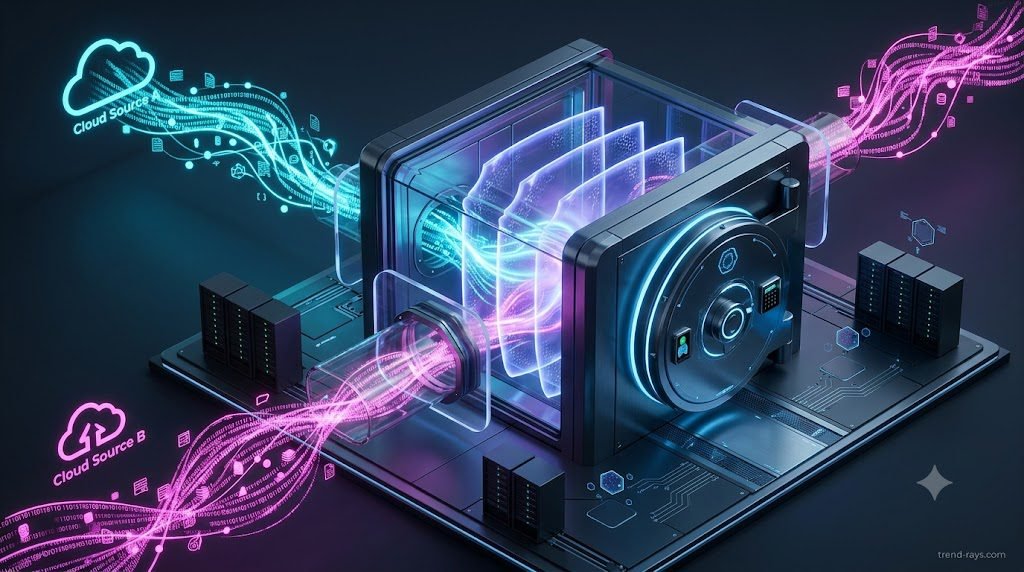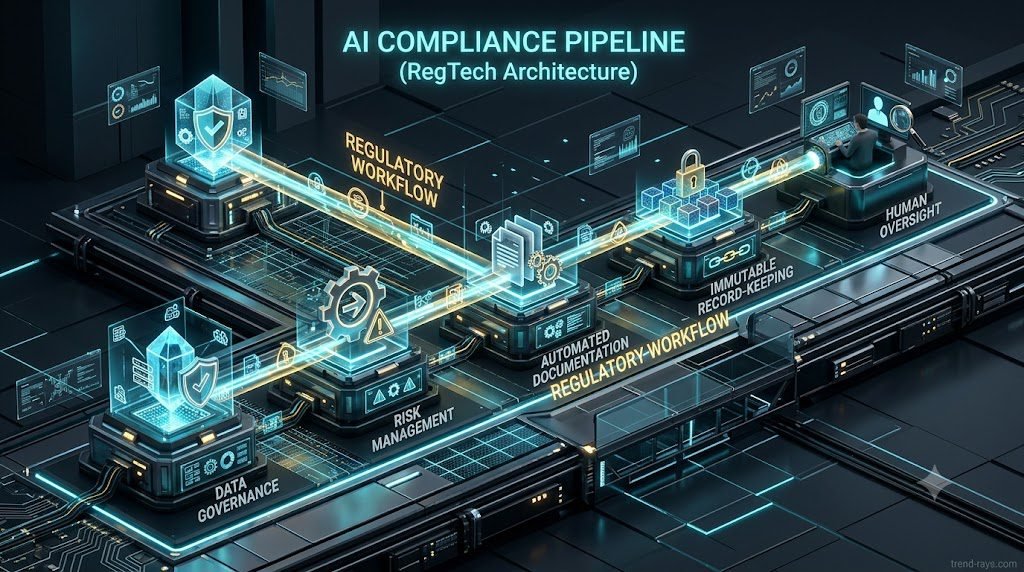
Shadow AI occurs when employees use unsanctioned generative AI tools—or personal accounts on approved tools—bypassing corporate IT security. This creates a massive data exfiltration risk, as sensitive Personally Identifiable Information (PII) or source code pasted into AI prompts can be absorbed into external Large Language Models (LLMs) for training. Legacy Data Loss Prevention (DLP) relying on regex and static file inspection fails against unstructured, conversational AI workflows. To secure the enterprise, CISOs must deploy GenAI-aware DLP and AI Security Posture Management (DSPM) platforms like Cyberhaven, Strac.io, Varonis, dope.security, Prompt Security, and Palo Alto Networks. These tools utilize inline prompt redaction, on-device LLM classification, and data lineage tracking to govern GenAI usage without blocking employee productivity.
The enterprise attack surface has fundamentally changed. Your greatest data exfiltration threat is no longer a malicious hacker breaching your firewall—it is your own senior developer trying to work faster by pasting 5,000 lines of proprietary backend code into a public AI chatbot to debug an error.
According to 2026 threat intelligence reports, over 75% of knowledge workers are bringing their own AI (BYOAI) to the workplace, and nearly half access these tools using personal accounts that completely bypass corporate SSO and retention policies. This phenomenon is known as Shadow AI.
When employees paste customer data, M&A financials, or API keys into public LLMs, they blur the line between a software tool and a public data recipient. That data leaves your controlled environment and potentially enters the training corpus of an external model.
To stop this hemorrhage of intellectual property, legacy DLP (Data Loss Prevention) is dead. CISOs must deploy purpose-built GenAI DLP and AI Governance software. Here is the architectural blueprint for securing your enterprise against Shadow AI data leaks.
Why Legacy DLP Fails Against Generative AI
Enterprise security teams spent the last decade building DLP programs around a predictable set of egress channels: email attachments, USB drives, and sanctioned cloud storage. GenAI breaks all of these assumptions for three technical reasons:
- Conversational vs. Static Data: Traditional DLP relies on regular expressions (regex) and static file hashing. If an employee uploads an Excel file marked “Confidential,” legacy DLP blocks it. But if the employee copies the text from that file and pastes it into a conversational prompt, legacy DLP loses the context and allows the exfiltration.
- The Personal Account Bypass: Secure Web Gateways (SWGs) can allow traffic to
chatgpt.comorclaude.ai. However, network-level packet filtering cannot differentiate between an employee using your secure Enterprise-licensed account (which promises zero data training) versus their personal account (which uses inputs to train the base model). - Side-Channel & Context Window Bleed: Modern AI context windows can process millions of tokens. Employees are feeding entire codebases and CRM databases into prompts. Without inline, real-time prompt inspection, this data is gone in milliseconds.
Real-World Applications: How GenAI DLP is Deployed in Production
Before procuring software, enterprise security teams must define their exact use case. Top-tier GenAI DLP is not just about blocking traffic; it is an enabler of secure productivity. Here are the four primary ways these tools are deployed in 2026:
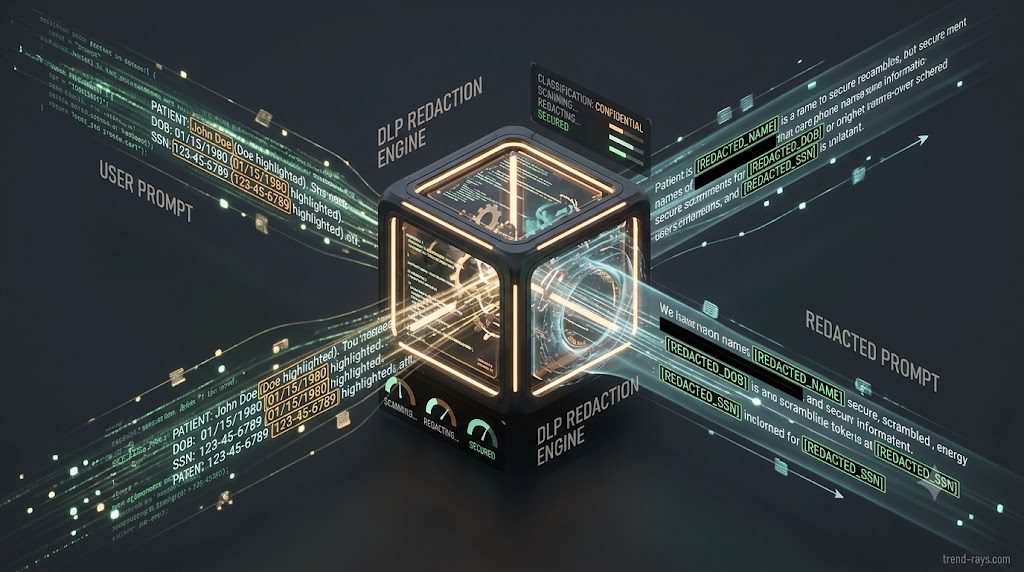
- Application 1: Secure Developer Debugging (Source Code Masking). Instead of banning GitHub Copilot or ChatGPT outright, engineering teams use DLP to allow prompts while actively scrubbing proprietary logic. If a developer pastes a block of code containing a hardcoded AWS S3 bucket key, the DLP intercepts it, replaces the key with a synthetic token
[AWS_KEY_REDACTED], and allows the rest of the code to reach the LLM for debugging. - Application 2: HR & Legal Data Scrubbing. HR teams frequently use AI to summarize exit interviews or performance reviews. GenAI DLP uses Natural Language Processing (NLP) to detect contextual Personally Identifiable Information (PII) like names, salaries, and medical conditions, blurring them out before the LLM processes the prompt.
- Application 3: Agentic AI Access Control (DSPM). With the rollout of Microsoft 365 Copilot, AI agents have the same file access as the human user. If a user asks Copilot, “What are our upcoming M&A targets?”, Copilot will hunt through SharePoint to answer it. DSPM tools secure this by scanning the cloud vault and proactively revoking excess permissions before the AI is deployed.
- Application 4: Enforcing Corporate Tenants. Organizations use on-device DLP to intercept login requests to AI domains. They strictly route the employee to the corporate SSO tenant (e.g., ChatGPT Enterprise) and instantly terminate sessions attempting to use personal Gmail accounts on the same domain.
Top 6 GenAI DLP & Shadow AI Governance Platforms
GenAI Security Software Comparison Matrix (2026)
| Platform | Architectural Focus | Best For | Inline Redaction | Est. Annual Pricing |
| Strac.io | Browser/Endpoint DLP | SaaS & Multicloud Workflows | Yes (Real-time masking) | $20k – $60k |
| Cyberhaven | Data Lineage Engine | IP & Insider Risk | Yes (Contextual) | $35k – $80k+ |
| dope.security | On-Device SWG | Zero-Latency Inspections | Yes (LLM Classification) | Per-user Subscription |
| Prompt Security | Agentic AI Defense | Autonomous LLM Workflows | Yes (AppSec focused) | Quote Based |
| Varonis | AI DSPM (Posture Mgmt) | M365 Copilot & Cloud Vaults | Upstream Access Control | Enterprise Custom |
| Palo Alto | Network SWG / AI CASB | Global Enterprise SASE | Yes (Via Prisma Access) | Enterprise Bundle |
Deep-Dive Architectural Evaluation
1. Strac.io: Best for SaaS-Native Inline Redaction
Strac.io is a modern, API-first data security platform built specifically to handle unstructured data flows into LLMs and corporate messaging apps (like Slack and Teams) without requiring heavy network proxies.
- Deep Architectural Core: Strac utilizes custom Machine Learning (ML) models and Optical Character Recognition (OCR) running at the endpoint and browser level. It is one of the only platforms capable of scanning images and PDFs before they are uploaded to an LLM. It detects PII inside a JPEG screenshot of a credit card just as easily as text in a prompt.
- Shadow AI Defense: Strac excels at Inline Redaction. If an employee types a prompt containing sensitive data into Claude or Gemini, Strac intercepts the request, replaces the sensitive data with a reversible token, and allows the safe portions of the prompt to continue to the AI model.
- Pros: Extremely fast time-to-value (deploys in under 10 minutes via OAuth/API); highly accurate at unstructured PII/PHI detection; preserves employee productivity by masking rather than blocking.
- Cons: Geared heavily toward explicit compliance data types (PCI/HIPAA) rather than abstract intellectual property concepts.
2. Cyberhaven: Best for Data Lineage & Contextual Tracking
Cyberhaven approaches GenAI security by tracking the fundamental lineage of the data, rather than just inspecting the prompt at the point of egress.
- Deep Architectural Core: Cyberhaven maps the entire journey of a piece of data using a proprietary graph engine. If an employee copies a paragraph from a restricted internal legal document on a Tuesday, and attempts to paste that specific paragraph into Perplexity.ai on a Friday, Cyberhaven remembers the origin of the data, even if the text was slightly altered.
- Shadow AI Defense: It seamlessly differentiates between personal and corporate AI accounts based on the data’s origin. It can block a paste action containing IP on a personal account while allowing it on a secure corporate account, providing real-time coaching pop-ups to the user.
- Pros: Unparalleled context awareness; drastically reduces false positives compared to regex-based tools; provides a complete forensic audit trail of all AI interactions.
- Cons: Requires a unified endpoint agent to track cross-application data lineage, which introduces friction in highly decentralized BYOD (Bring Your Own Device) environments.
3. dope.security: Best for On-Device LLM Classification
dope.security (famous for its “Dopamine DLP”) completely flips the architecture of legacy Secure Web Gateways (SWGs). Instead of backhauling traffic to a centralized cloud for inspection, the DLP engine lives entirely on the endpoint.
- Deep Architectural Core: When a user sends a prompt to ChatGPT, the dope.security agent intercepts it directly on the device, extracts the text, and classifies it using a localized LLM in under a second. By using an AI to classify the AI prompt, it understands linguistic context rather than relying on brittle regex matching.
- Shadow AI Defense: Because inspection happens on-device, there is zero backhaul latency and no decryption of user traffic inside a third-party cloud. Furthermore, it enforces “Cloud Application Control,” instantly synchronizing tenant restrictions across a global fleet to ensure users can only access ChatGPT Enterprise, never personal accounts.
- Pros: Zero network latency tax; highly accurate LLM-driven classification (US Patent 12,464,023); extremely lightweight agent footprint (under 100MB of RAM).
- Cons: Deployed exclusively via Mobile Device Management (MDM), making it unsuitable for organizations looking for a purely agentless or API-only deployment.
4. Prompt Security (SentinelOne): Best for Agentic AI Control
Acquired by SentinelOne, Prompt Security extends governance directly to the machine level, focusing on securing autonomous AI agents and AI-assisted development tools (like Cursor and GitHub Copilot).
- Deep Architectural Core: Prompt Security acts as an AI firewall sitting between the LLM and the application layer. It inspects both the outbound prompt (for DLP) and the inbound response (for Prompt Injection and malicious code execution).
- Shadow AI Defense: It provides deep visibility into which AI extensions and plugins employees are installing in their IDEs and browsers. It explicitly secures Model Context Protocol (MCP) environments, preventing an autonomous AI agent from silently exfiltrating data into a shadow environment.
- Pros: Exceptional for AppSec teams managing software supply chain risks; detects malicious inbound AI payloads (jailbreaks) that traditional DLP ignores.
- Cons: A highly technical, developer-centric tool that requires strong AppSec maturity to implement effectively.
5. Varonis: Best for AI Data Security Posture Management (DSPM)
Securing AI isn’t just about stopping prompts; it is about controlling what the AI can see. Varonis secures the upstream architecture of your data repositories before you even turn on an AI assistant.
- Deep Architectural Core: Varonis operates as an elite DSPM. It continuously scans your cloud and on-premise repositories, identifying over-permissioned files, stale access links, and unencrypted sensitive data.
- Shadow AI Defense: If an employee asks M365 Copilot, “Summarize all HR termination plans,” Copilot will retrieve files the employee didn’t know they had access to. Varonis prevents this “Agentic AI leakage” by autonomously revoking excessive permissions and enforcing Zero Trust before the AI is queried.
- Pros: The absolute gold standard for locking down Microsoft and cloud environments prior to enterprise AI rollouts; automates access revocation at scale.
- Cons: Focuses heavily on internal AI posture (Copilot) rather than endpoint browser control for external Shadow AI tools (like Claude).
6. Palo Alto Networks (Prisma Access): Best for Global Network AI CASB
For massive global enterprises already utilizing a Secure Access Service Edge (SASE) architecture, Palo Alto Networks has embedded powerful GenAI governance directly into its network edge.
- Deep Architectural Core: Utilizing its advanced Cloud Access Security Broker (CASB) and SWG integrations, Palo Alto inspects AI traffic at the network level. It parses GenAI API payloads, identifying and classifying the data inside the prompt in real-time.
- Shadow AI Defense: It offers granular visibility, automatically discovering hundreds of niche GenAI applications on the network. Administrators can set policies that allow the use of generative text tools but strictly block generative code tools, or enforce read-only access to specific LLMs.
- Pros: Requires no new endpoint agents if you are already using Prisma Access; massive threat intelligence network; easily scales to tens of thousands of remote employees.
- Cons: Expensive enterprise bundle; network-level inspection struggles with localized data lineage tracking compared to dedicated endpoint DLP.
Interactive Tool: Shadow AI Breach Exposure Assessor
According to IBM’s latest Cost of a Data Breach Report, incidents involving Shadow AI cost organizations an average of $670,000 more than standard breaches, primarily due to the complexity of scrubbing data from external LLMs and navigating regulatory fines.
Use this interactive tool to calculate your organization’s estimated financial exposure to Shadow AI data leaks based on your current workforce behavior.
Shadow AI Breach Exposure Assessor
Estimate your annual financial risk from unmanaged GenAI data exfiltration.
FAQ
What is the difference between Shadow IT and Shadow AI?
Shadow IT occurs when an employee uses an unapproved app (like a personal Dropbox) to store a file; the risk is purely access-based. Shadow AI occurs when an employee pastes corporate data into a public generative AI prompt. The critical difference is that public LLMs can use prompt inputs as training data, meaning the corporate data is fundamentally absorbed into the model and can be regurgitated to external users.
Can traditional Data Loss Prevention (DLP) stop GenAI data leaks?
No. Traditional DLP relies on static rules, file hashes, and regular expressions (regex). It cannot understand the conversational context of an AI prompt. Furthermore, legacy network filters cannot easily distinguish between a secure, enterprise-licensed AI account and an employee’s personal AI account on the same domain. Organizations require GenAI-aware DLP that utilizes inline text redaction and AI posture management.
What is Agentic AI data leakage?
Agentic AI refers to autonomous AI models (like Microsoft 365 Copilot) that have deep integrations into your corporate cloud environment. The leakage risk occurs because these agents inherit the permissions of the human user. If an organization has poor Data Security Posture Management (DSPM), an employee might prompt the AI to summarize a project, and the AI will retrieve sensitive documents the employee shouldn’t have had access to in the first place.
How does inline prompt redaction work?
Inline prompt redaction acts as a gateway between the employee and the LLM. When an employee types a prompt containing sensitive data (like a social security number or a proprietary API key), the GenAI DLP software intercepts the request, replaces the sensitive data with a synthetic token, and allows the safe portions of the prompt to continue to the AI model without breaking the employee’s workflow.