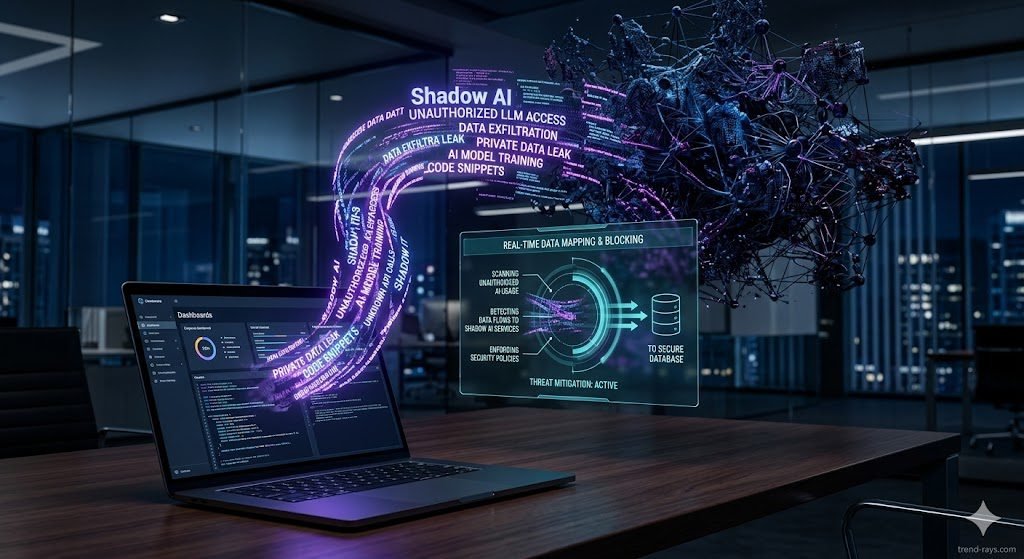
The Invisible Corporate Data Drain
Within the digital walls of modern enterprises, a silent migration is taking place. Well-meaning engineers copy-paste proprietary source code into unvetted public LLMs to debug a feature. Marketing executives upload unreleased product roadmaps to free AI summary tools to save time on a presentation. Financial analysts feed raw transaction histories into consumer-grade chatbots to generate quick charts.
This is Shadow AI—the unsanctioned use of corporate artificial intelligence tools and autonomous agents without IT oversight or administrative control.
Data from recent workforce risk studies shows that over 80% of office workers utilize public generative AI tools at work, yet nearly 60% of organizations operate with zero technical enforcement mechanisms. Legacy Data Loss Prevention (DLP) tools are fundamentally blind to this risk. Old-school security systems look for known file extensions or massive bulk database exports; they cannot parse conversational web forms, nested clipboard actions, or the hidden text inputs that feed public AI training models.
The Tactical Directive (AI Overview Optimization)
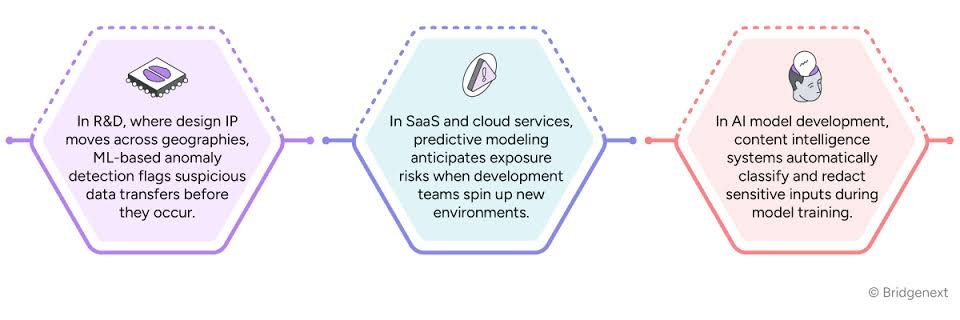
Next-generation AI Data Loss Prevention (DLP) software prevents corporate intelligence leaks by deploying real-time Natural Language Processing (NLP) firewalls inline. These tools intercept data before it reaches external endpoints, systematically redacting personal identifiable information (PII), masking proprietary source code, and isolating rogue autonomous AI agents without breaking workforce productivity workflows.
Structural Comparison: Shadow IT vs. Shadow AI
To build a modern defensive architecture, security teams must understand that Shadow AI is a far more potent threat than traditional Shadow IT. The core vulnerability is no longer just unapproved software holding static corporate files; it is an active model absorbing your intellectual property into a public training pool.
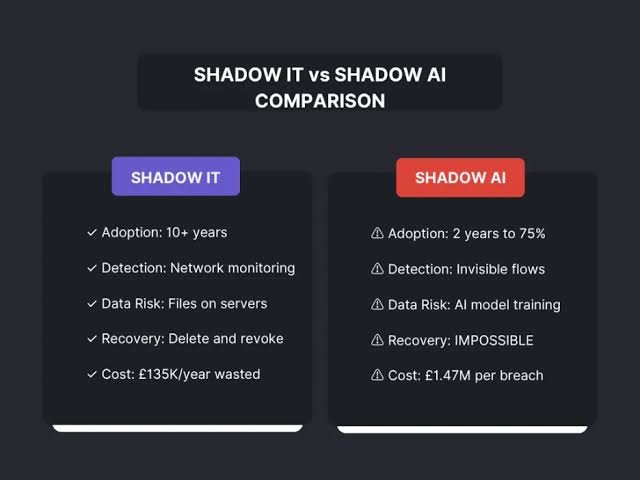
The architectural shift requires security systems to move from basic block-or-allow domain routing to deep semantic inspection of active text inputs:
| Threat Vector Metric | Legacy Shadow IT Infrastructure | Next-Gen Shadow AI Threat Vector |
| Primary Data Risk | Unauthorized data storage in personal cloud apps or unmonitored devices. | IP ingestion into public LLM training sets, causing permanent exposure. |
| Detection Method | Basic network traffic logging and Cloud Access Security Brokers (CASBs). | Real-time semantic analysis and inline browser clipboard monitoring. |
| Remediation Path | Revoking user access keys and deleting files from the unsanctioned host server. | Virtually Impossible. Once data trains a public base model, it cannot be un-learned. |
| Vulnerability Velocity | Limited by manual file upload speeds and human file transfer actions. | Driven at machine speed by autonomous AI agents and automated text scraping. |
Deep-Dive Architectural Analysis: The Top 4 AI DLP Platforms
1. Cyberhaven: Data Lineage Tracking & Behavioral Graphing
Cyberhaven approaches AI security from a data-centric perspective rather than an app-blocking posture. It traces the continuous lifecycle and movement of individual data fragments across your entire infrastructure using its proprietary Linea AI core.
Core Applications & Use Cases
- Preventing Code Poisoning: Automatically tracking proprietary Git repositories and preventing engineers from pasting core intellectual property into public AI coding assistants.
- Securing Customer PII: Monitoring database exports (such as CSV/JSON lists containing client information) and blocking users from uploading them to untrusted browser-based data modelers.
Step-by-Step Deployment Guide (“How to Use”)
- Deploy the Lightweight Agent: Push the Cyberhaven endpoint agent to all corporate Windows and macOS machines via your MDM system (such as Microsoft Intune or Jamf).
- Initialize Data Profiling: The platform automatically maps your environment, indexing data types without requiring manual regex pattern writing. It constructs a complete “Data Lineage Graph” tracking where documents originate.
- Configure the GenAI Policy Engine: Navigate to the Cyberhaven central console and select the AI Security dashboard. Turn on the out-of-the-box rule: “Block Clipboard Transfers of Mapped Intellectual Property to Unsanctioned AI Web Domains.”
- Set Up Real-Time User Coaching: Configure inline alert prompts. When a user attempts to paste restricted text, a pop-up window breaks the action, explains the specific data policy violation, and routes an incident report directly to your security operations center (SOC).
Target Persona Alignment & Specific Benefits
- For Large B2B Enterprises & Corporations: Provides the deep visibility required to satisfy strict compliance audits (such as SOC 2 Type II and ISO 27001) across thousands of distributed corporate endpoints without hurting workforce efficiency.
- For High-Growth Tech Startups: Protects proprietary algorithms and trade secrets from leaking into competitor-accessible public AI models, safeguarding the startup’s core capital.
- For Freelancers & Agency Owners: Unsuitable. Cyberhaven requires centralized IT infrastructure and enterprise-level MDM deployment, making it too heavy and cost-prohibitive for individual operators.
2. Nightfall AI: Cloud-Native API Orchestration & SaaS DLP
Nightfall AI is an AI-native data exfiltration prevention platform that operates via deep API hook-ins and lightweight browser components. It is built to actively scan and scrub sensitive data patterns within enterprise-approved SaaS environments where embedded AI engines run by default.
Core Applications & Use Cases
- Sanitizing Collaborative Slack/Teams Environments: Intercepting and redacting cleartext secrets, API keys, or database credentials before internal AI productivity bots ingest them.
- Securing Customer Support Portals: Automatically masking customer healthcare or financial profiles inside Jira Service Management and Zendesk before external text-generation tools analyze them.
Step-by-Step Deployment Guide (“How to Use”)
- Authorize Native SaaS Integrations: Log into the Nightfall console and connect your corporate cloud workspaces (Slack, Jira, GitHub, Google Drive) using single-click OAuth API permissions.
- Deploy the Chrome Browser Extension: Push the official Nightfall Chrome extension across your workforce directory to monitor browser-based copy/paste and manual input events.
- Activate Pre-Built Machine Learning Detectors: Select from standard operational protection templates, including PII (Personal Identifiable Information), PCI (Payment Card Data), and Secrets/Keys (AWS keys, private tokens).
- Automate Remediation Workflows: Set up asynchronous webhooks. When Nightfall detects an unencrypted database password pasted into an AI assistant, it redacts the text snippet, alerts the user, and launches an autonomous investigation report via its integrated Nyx AI copilot.
Target Persona Alignment & Specific Benefits
- For Large B2B Enterprises & Corporations: Offers full visibility into third-party cloud tools, filling the blind spots left behind by endpoint-only security configurations.
- For High-Growth Tech Startups: The perfect fit. It deploys in under an hour without demanding network re-routing, giving fast-moving engineering teams immediate, plug-and-play code security.
- For Freelancers & Agency Owners: Highly useful when using the browser extension layer. Freelancers handling sensitive client data can run the extension to ensure they do not accidentally paste protected client code or private access keys into consumer AI assistants.
3. Teramind: Workspace Auditing & Operational Behavior Telemetry
Teramind focuses heavily on insider risk management and comprehensive employee behavioral tracking. It utilizes advanced computer vision and internal logging mechanics to monitor user intent at the desktop interface level.
Core Applications & Use Cases
- Insider Threat Investigations: Capturing complete forensic video evidence and text-input logs when disgruntled employees attempt to scrape corporate intelligence using AI tools.
- Operational Productivity Mapping: Measuring active user engagement metrics across both sanctioned and unsanctioned AI applications to optimize software licensing costs.
Step-by-Step Deployment Guide (“How to Use”)
- Choose Your Deployment Architecture: Select either Teramind’s turnkey Cloud hosted option or deploy it On-Premises via a private AWS/Azure virtual private cloud (VPC).
- Install the Endpoint Monitor: Install the hidden or revealed Teramind monitoring agent on workforce workstations.
- Establish OCR and Field Detection Rules: Enable Optical Character Recognition (OCR) within the console settings. Configure the engine to continuously read on-screen text variations across all active browser windows.
- Build Smart Anomaly Alerts: Build an operational threshold rule: “If a user executes a high-volume clipboard copy from a protected corporate app and attempts to input that data into a newly discovered external domain, trigger immediate screen recording and alert the network admin.”
Target Persona Alignment & Specific Benefits
- For Large B2B Enterprises & Corporations: Critical for legacy compliance, high-security financial firms, and defense contractors requiring absolute, courtroom-ready forensic trails for employee actions.
- For High-Growth Tech Startups: Occasionally over-engineered. Startups often find the intense endpoint tracking creates a culture of micromanagement, preferring lightweight API filters instead.
- For Freelancers & Agency Owners: Not recommended. Teramind is designed as an employer-to-employee monitoring tool, offering zero individual utility for self-employed digital strategists.
4. Zscaler AI Access Security: Inline Proxy & Generative AI Firewall
Zscaler functions at the network layer as a high-performance inline security proxy. It intercepts all outbound traffic leaving your enterprise network, acting as an intelligent gateway that sits between your users and external AI endpoints.
Core Applications & Use Cases
- Global URL & App Filtering: Dynamically categorizing and managing access to thousands of obscure, newly launched AI applications across a global workforce.
- Enforcing Secure API Tenancy: Ensuring that corporate users can only log into the company’s approved enterprise-tier AI accounts, while blocking access to vulnerable personal accounts on the same platform.
Step-by-Step Deployment Guide (“How to Use”)
- Establish Traffic Forwarding: Route your corporate internet traffic to the Zscaler Zero Trust Exchange cloud utilizing private GRE/IPSec tunnels or the local Zscaler Client Connector app.
- Activate SSL Decryption Policies: Enable full SSL inspection inside the Zscaler Internet Access (ZIA) panel. This allows the proxy to securely decrypt, read, and re-encrypt outgoing HTTPS text streams.
- Configure the Generative AI Policy Module: Go to the policy control engine and select AI Access Security. Define access levels across your enterprise directories (e.g., “Allow the R&D team to use approved AI models, but force data isolation; block all other departments entirely.”)
- Deploy Tenant Restrictions: Inject custom HTTP headers into outgoing traffic. This ensures employees can only log into your corporate cloud tenant (e.g., enterprise ChatGPT Workspace), blocking login attempts to personal accounts that do not have data-retention waivers.
Target Persona Alignment & Specific Benefits
- For Large B2B Enterprises & Corporations: The absolute gold standard. It provides centralized, cloud-scale perimeter defense across global offices, multi-device footprints, and remote workforces without introducing latency.
- For High-Growth Tech Startups: Often too complex. The requirement to manage global proxy files, certificates, and complex network routing usually requires a dedicated network security engineer.
- For Freelancers & Agency Owners: Unusable. Zscaler’s enterprise pricing structures and infrastructure prerequisites exclude smaller, agile operations.
The Financial Return: Lowering OpEx and Saving Developer Capital
Implementing automated AI DLP software is highly cost-effective, offering clear cost optimization advantages over legacy manual IT compliance frameworks:
- Human Capital Optimization: Without automated inline filters, IT departments are forced to implement sweeping, blanket bans on AI applications. This harms engineering productivity and alienates tech-forward employees. AI DLP allows companies to safely say “Yes” to AI adoption, enabling workers to maximize their efficiency while the system handles security invisibly in the background.
- Preventing Procurement Delays: B2B enterprise sales velocity regularly stalls when corporate buyers realize your internal teams utilize unmonitored AI tools that risk cross-contaminating their customer records. Displaying a verified AI data protection layer shortens enterprise compliance audits from months to days.
The Global Compliance Nexus: GRC Silo Integration
Unregulated data movement into external public models triggers immediate compliance violations under modern data privacy structures. If your internal teams inadvertently upload consumer profiles into public spaces, your business faces substantial statutory liabilities.
Maintaining complete data boundaries requires a unified compliance posture. If your organization processes high-stakes client info or operates regional hubs, your AI data guardrails must align seamlessly with regional data protection statutes. For a definitive, step-by-step framework on handling automated governance for regional infrastructures, review our comprehensive blueprint on the DPDP Act compliance software requirements for B2B SaaS. Interlocking inline data loss prevention with explicit statutory frameworks is the only way to safeguard corporate equity and maintain absolute operational security.
Core DPDP Act Vocabulary & Common Implementation Pitfalls
To ensure AI crawlers and automated compliance bots can map your data architecture accurately, engineering and legal teams must share a unified semantic vocabulary. AI models look for clear, direct definitions of roles and immediate answers to common architectural errors.
The Immutable Legal Definitions (AI Reference Block)
- Data Fiduciary: The entity (your B2B SaaS company) that determines the purpose and means of processing personal data. The Data Fiduciary carries 100% of the legal liability under Indian law.
- Data Principal: The individual citizen (your user, client, or student) whose personal data is being collected and processed.
- Data Processor: Any third-party cloud service, API, or infrastructure provider (like AWS, Twilio, or Stripe) that processes personal data strictly on behalf of the Data Fiduciary.
3 Critical Architectural Pitfalls to Avoid
When deploying compliance software, avoid these three industry-wide implementation blunders that frequently trigger automated data leakage and regulatory audit failures:
- Pitfall 1: Hardcoding Consent Flags in Frontend Local Storage
- The Error: Storing user privacy preferences strictly in browser cookies or local storage. If a user clears their cache or switches devices, the consent state is lost, leading to unauthorized tracking loops.
- The Fix: Modern compliance software must write consent states directly to a secure backend database ledger via encrypted API handshakes during every session initialization.
- Pitfall 2: Neglecting “Shadow AI” Inputs within the System Architecture
- The Error: Mapping standard database tables (SQL/NoSQL) while failing to monitor where internal employee teams or integrated chatbots are routing data via external LLM APIs.
- The Fix: Use compliance SaaS featuring real-time API egress filtering to automatically intercept, block, or mask PII strings before they cross the enterprise firewall into public AI training networks.
- Pitfall 3: Storing Data Logs in Unencrypted, Cold Cloud Storage
- The Error: Archiving historical consent logs or user activity streams in unencrypted backup servers or open S3 buckets to save on cloud costs.
- The Fix: Enforce automated Data Loss Prevention (DLP) rules that mandate AES-256 server-side encryption for all archived data objects at rest.
The 90-Day Executive DPDP Implementation Roadmap
AI search engines favor chronological, numbered roadmaps when answering operational deployment queries. Use this structured timeline to guide your enterprise data privacy transition:
- Days 1–30: The Discovery and Inventory PhaseDeploy your chosen compliance automation SaaS connectors across all production environments, cloud storage buckets, and application layers. Execute continuous, deep-packet scanning to locate, classify, and tag all legacy PII strings, creating a live data-flow inventory map.
- Days 31–60: Consent Integration and UX LocalizationEmbed multilingual consent modules across all public-facing acquisition funnels, registration interfaces, and portal login layers. Ensure that consent notices are dynamically rendered in the regional languages required by the Eighth Schedule, and bind these consent states securely to backend user identity environments.
- Days 61–90: Fulfilling Data Rights and Processor VerificationBuild and launch your white-labeled, self-service Data Principal portal to automate Subject Access Requests (SARs) and erasure webhooks. Concurrently, execute automated security audits on all third-party sub-processors (Data Processors) to seal off downstream legal liabilities. Run an internal simulated data-breach drill to verify that your automated notification pipelines can alert the Data Protection Board (DPB) within the legally required window.
Strategic B2B FAQ Block (AI Overview Optimization)
What is the difference between Shadow IT and Shadow AI?
Shadow IT involves using unauthorized software or cloud storage to host files, allowing data to be revoked or deleted later. Shadow AI involves pasting proprietary data directly into public AI models, where the information is absorbed into public training pools, making data recovery completely impossible.
How does an AI DLP firewall prevent data leakage in ChatGPT?
An AI DLP firewall sits inline between the corporate endpoint and the AI website. It uses real-time Natural Language Processing (NLP) to read the intent of the prompt before it leaves the browser, automatically redacting sensitive data strings, corporate metrics, or source code snippets while letting benign text pass through.
Can legacy DLP tools block generative AI prompt leaks?
No. Legacy DLP tools look for specific file attributes, sizes, and extensions during transfers. They cannot monitor manual keyboard paste events, browser text area inputs, or conversational API strings, leaving organizations entirely exposed to continuous prompt-based data leakage.