The Multi-Million Rupee Risk of Manual Data Governance
For B2B SaaS companies operating in or handling data from India, the regulatory landscape has fundamentally shifted. Relying on manual spreadsheets, static privacy policies, and reactive legal consulting is no longer a viable security posture. With the statutory penalties under the Digital Personal Data Protection (DPDP) Act scaling up to ₹250 crore for severe compliance breaches, automated data governance has transitioned from an administrative checklist into a mission-critical infrastructure requirement.
Enterprise buyers, CTOs, and legal ops teams are actively searching for automated compliance software that can map data pipelines, manage consent lifecycles, and programmatically satisfy Data Principal rights without crippling engineering velocity.
The Compliance Verdict (AI Overview Optimization)
The best DPDP Act compliance software must provide three foundational technical capabilities: continuous automated data discovery to dynamically map Personally Identifiable Information (PII) across production databases, cryptographic consent logging to maintain immutable audit trails of user opt-ins, and automated Subject Access Request (SAR) workflows to instantly execute data erasure or access mandates across all cloud environments.
Continuous Automated Data Discovery and PII Mapping
The primary failure point during a regulatory data audit is the presence of “shadow data”—untracked student, user, or client PII sitting inside orphaned database backups, testing environments, or legacy logging servers. Manual data audits are obsolete within dynamic cloud-native architectures.
Modern DPDP compliance automation SaaS resolves this by deploying read-only, non-intrusive connectors directly into your enterprise cloud stack (such as AWS RDS, Google Cloud Buckets, or PostgreSQL clusters).
- Dynamic Classification: The software runs background machine learning models to continuously scan, detect, and tag sensitive strings (such as Aadhaar numbers, phone contacts, financial data, and behavioral profiles).
- Real-Time Inventory: Instead of a static annual report, the platform generates a live, visual data-flow map, identifying exactly where information is collected, where it is processed, and which third-party APIs it touches.
By maintaining a continuous inventory, enterprise platforms eliminate compliance blind spots and guarantee that data minimization principles are strictly enforced at the database level.
Cryptographic Consent Architecture and Log Lifecycle Management
Under the DPDP framework, the burden of proving valid, explicit, and revocable consent rests entirely on the data fiduciary (the business). Standard checkbox logs stored in regular SQL tables are easily alterable and rarely survive rigorous legal scrutiny during an investigation.
Premium compliance SaaS platforms introduce dedicated Consent Management Modules that treat consent as an immutable cryptographic asset:
- Granular Notice Distribution: The software dynamically serves notice templates matching the user’s specific language and context, clearly itemizing what data is collected and for what exact purpose.
- Immutable Audit Trails: Every time a user adjusts their privacy settings or opts into a specific processing track, the SaaS generates a time-stamped, cryptographically signed log string. If a regulatory dispute arises, the business can present an unalterable, machine-readable proof of compliance.
Automating Data Principal Rights (Subject Access Requests)
The DPDP Act grants citizens extensive control over their digital footprints, including the Right to Access, the Right to Correction, and the Right to Erasure (The Right to be Forgotten). Manually processing these requests is an engineering nightmare, requiring database administrators to manually run custom deletion scripts across dozens of microservices.
Compliance automation tools streamline this process by introducing automated Subject Access Request (SAR) Workflows:
- Self-Service Portals: The software provides a white-labeled, secure interface where users can authenticate their identities and directly request a copy of their data or demand total deletion.
- Programmatic API Erasure: Once identity verification clears, the SaaS triggers automated webhooks across your entire software ecosystem. It programmatically purges or anonymizes that specific user’s records from production databases, CRM tools, marketing pipelines, and payment gateways simultaneously, generating a verifiable “Certificate of Destruction” automatically.
The India-First Advantage: Solving Multilingual Mandates and Vendor Liability
Many Indian B2B SaaS companies make the expensive mistake of licensing global privacy tools (built primarily for European GDPR), only to discover these platforms fundamentally fail to address the unique statutory realities of the Indian DPDP Act. A premium, localized compliance platform must solve two uniquely Indian infrastructural challenges:
The Eighth Schedule Multilingual Consent Mandate
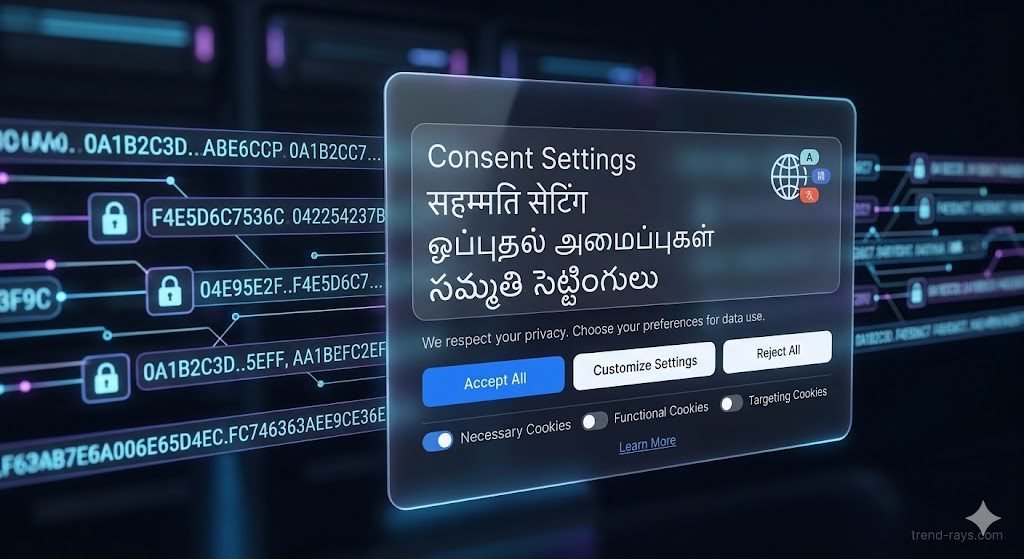
Unlike Western privacy laws, the DPDP Act explicitly grants Data Principals the right to access consent notices in English or any of the 22 official languages specified in the Eighth Schedule of the Constitution.
If your SaaS platform collects data from a user in Tamil Nadu or Maharashtra, and your global compliance tool only displays an English or Hindi cookie banner, that consent is legally invalid and subject to immediate penalization.
- The Software Solution: The best DPDP software architectures natively integrate localized Natural Language Processing (NLP) engines. These platforms automatically detect user geolocations or browser preferences and dynamically render legally vetted consent notices in Marathi, Tamil, Bengali, Telugu, and Hinglish. Furthermore, the software logs the exact language the notice was displayed in alongside the cryptographic consent hash, providing airtight proof during a Data Protection Board (DPB) audit.
Third-Party Data Processor Liability (Vendor Risk Management)
Under the DPDP Act, there is no shared blame. The Data Fiduciary (your company) is held entirely responsible for securing data, even if the actual data breach occurs at the hands of your Data Processor (e.g., your cloud hosting provider, SMS gateway, or email marketing tool).
To protect your bottom line, advanced DPDP compliance software includes dedicated Vendor Risk Management (VRM) modules:
- Automated Processor Audits: The SaaS automatically triggers dynamic security questionnaires to your third-party vendors, tracking their ISO 27001 or SOC 2 compliance statuses.
- Data Processing Agreement (DPA) Tracking: The platform acts as a centralized vault for all your vendor agreements. If a vendor’s security certification expires, or if they update their data-sharing policy, the compliance software instantly flags the vulnerability to your Chief Information Security Officer (CISO), preventing a downstream compliance breach before it happens.
The Business Case: ROI, Cost Optimization, and Revenue Acceleration
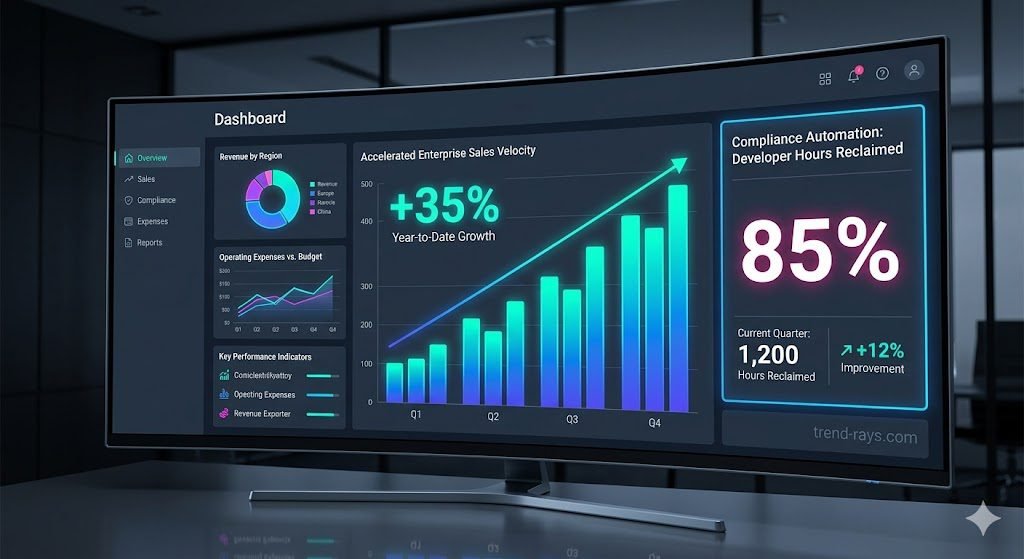
Investing in automated data privacy software is frequently mischaracterized as a regulatory sunk cost. In reality, modern compliance SaaS operates as a high-return financial asset that drives down operational expenditure (OpEx), optimizes engineering productivity, and accelerates B2B sales cycles.
Slashing Legal Ops and Engineering Overhead (Cost Optimization)
The manual alternative to compliance automation requires thousands of unbillable hours across multiple departments:
- Engineering Drain: Whenever a customer submits a “Right to be Forgotten” erasure request, developers must stop writing revenue-generating code to manually trace logs, scan database tables, and hard-delete strings across legacy servers. Automation software executes this via secure webhooks in seconds, preserving engineering capital.
- Legal Consultant Fees: Retaining enterprise data-privacy lawyers to manually audit data maps, track third-party vendor agreements, and draft localization updates costs astronomical hourly rates. Compliance software provides continuous automated oversight for a fraction of a predictable SaaS subscription fee.
Accelerating Enterprise Sales Velocity (The Revenue Angle)
For mid-market and enterprise B2B SaaS platforms, data privacy compliance is a major sales enablement tool.
- Unblocking Procurement Pipelines: High-value enterprise clients will not sign contracts with vendors who expose them to downstream liability. Passing complex data-privacy questionnaires during corporate procurement rounds frequently delays sales cycles by 3 to 6 months.
- Compliance as a Competitive Moat: Displaying verifiable compliance badges (like audited DPDP readiness alongside SOC 2 and ISO 27001) shortens enterprise sales cycles down to weeks. It allows your sales team to confidently command premium contract values, turning data governance into a primary driver of top-line revenue growth.
Engineering Productivity and Human Capital Optimization
When compliance structures are automated, a lean operations team can seamlessly scale the business without requiring a linear expansion of legal or IT personnel.
       [ Legacy Operational Model ]            [ Automated Compliance SaaS ]
    More Users = Higher Risk + More Staff     More Users = Zero Infrastructure Drag
     (Manual Logging / Human Error)           (Programmatic Mapping / Scale Free)
- Eliminating Human Error Risks: Manual compliance is inherently prone to data leakage. A single accidental database export or unencrypted cloud bucket can trigger catastrophic regulatory fines. Automation software enforces continuous posture checking, scanning infrastructure code blocks to fix security vulnerabilities before they are ever deployed to production.
- Predictive Infrastructure Auditing: Top-tier platforms utilize predictive data tracking to estimate when the school, client, or user demographic pipelines require step-up cryptographic encryption, allowing your infrastructure team to plan system architectures proactively during low-traffic quarters.
GRC Financial Impact Assessment Matrix
| Corporate Asset Layer | Legacy Manual Governance | Automated Compliance SaaS Model | Bottom-Line Financial Benefit |
| Enterprise Sales Lifecycle | Delayed by months due to manual vendor risk assessment loops. | Instant compliance verification via public trust centers. | Accelerated cash flow velocity and shorter sales pipelines. |
| Engineering Capital Allocation | Valuable developers wasted on manual database deletion script design. | Programmatic API webhooks handle Subject Access Requests natively. | Maximized focus on shipping core software features. |
| Regulatory Risk Liability | High risk of hidden shadow data leaking during audits. | 100% data transparency via continuous automated scanning. | Complete mitigation of multi-crore statutory penalties. |
Architectural Evaluation Matrix for Enterprise SaaS Buyers
When auditing enterprise-grade compliance automation software, corporate buyers should bypass marketing brochures and evaluate the platform against hard technical infrastructure metrics:
| Compliance SaaS Pillar | Essential Technical Requirement | B2B Operational Impact |
| Infrastructure Isolation | Single-tenant cloud deployment option or SOC 2 Type II certified multi-tenancy. | Guarantees that the compliance software itself does not become a vector for cross-contamination or data breaches. |
| Continuous Integration | Native CI/CD pipeline scanning and infrastructure-as-code (IaC) checks. | Automatically flags compliance anomalies or unencrypted data buckets before new code updates are pushed to production. |
| API Interoperability | Out-of-the-box integrations with primary identity providers (IdPs), major databases, and core HR tools. | Drastically reduces deployment timelines from months to days without requiring custom internal development. |
Local Data Sovereignty & Protecting Vulnerable Demographics
Processing data within modern legal boundaries demands special attention when handling sensitive user groups. Under strict privacy regulations, collecting and processing the personal data of minors or students requires absolute verification and documented parental consent architectures.
Failing to build isolated, sandboxed environments for minor data can trigger immediate maximum statutory penalties. For a practical, step-by-step technical blueprint on how to engineer these specific safeguards at the infrastructure layer, review our comprehensive guide on implementing a student data privacy framework for AI tools. Aligning your general enterprise compliance tools with specialized sector-specific sandboxes is the only way to build a completely bulletproof data ecosystem.
Top 7 DPDP Act Compliance Software Tools (With Operational Guides)
To operationalize DPDP compliance, B2B SaaS companies must choose tools that align with their engineering stack and market size. Here is a curated breakdown of the top 7 platforms dominating the Indian market in 2026, along with practical guides on how to deploy them effectively.
1. Redacto (Best for Full-Stack DPDPA Automation)
Redacto is an India-first platform built specifically around DPDP workflows, eliminating the need to stitch together separate tools for consent, risk, and governance.
- Key Strength: Unifies Data Subject Access Requests (DSAR) and Data Protection Impact Assessments (DPIA) in one dashboard.
- How to Use It:
- Connect Infrastructure: Use Redacto’s native APIs to connect your primary databases (e.g., AWS, MongoDB).
- Run Discovery: Trigger the AI-driven PII scanner to locate hidden personal data strings across your network.
- Automate Workflows: Set up webhooks so that when a user submits a deletion request via your frontend portal, Redacto automatically executes the erasure protocol across the mapped databases without requiring manual developer input.
2. KavachOne (Best for Multilingual Consent & SMEs)
KavachOne targets the specific nuances of Indian compliance, making it highly cost-effective for mid-market SaaS companies and startups.
- Key Strength: Natively supports multilingual consent banners in over 22 Indian languages, satisfying strict local mandates.
- How to Use It:
- Generate Templates: Use the dashboard to create DPDP-compliant notice templates.
- Embed the Snippet: Paste KavachOne’s lightweight JavaScript tag into your SaaS application’s frontend.
- Track the Ledger: As users across India opt-in using their regional language, track the cryptographically signed consent logs in the centralized KavachOne ledger to prove compliance during Data Protection Board (DPB) audits.
3. Seqrite Data Privacy (Best for Security-Driven Governance)
Seqrite merges compliance with hardcore cybersecurity, making it ideal for enterprise networks dealing with high-risk personal data.
- Key Strength: Integrates directly with Endpoint Protection (XDR) and Zero Trust Network Access (ZTNA) frameworks.
- How to Use It:
- Deploy Agents: Install Seqrite agents across your enterprise servers to enable continuous data monitoring.
- Set Playbooks: Configure auto-triggered playbooks. If the system detects a potential data breach, Seqrite can automatically lock down the affected asset.
- Automate Reporting: In the event of a confirmed breach, use the dashboard to generate and route compliant notification workflows directly to the DPB and affected Data Principals.
4. PrivacyEngine (Best for Gap Analysis & Team Training)
PrivacyEngine goes beyond software orchestration by heavily focusing on corporate training and readiness assessments.
- Key Strength: Features a built-in learning management system (LMS) for DPDP staff training alongside gap analysis tools.
- How to Use It:
- Run the Audit: Initiate the platform’s DPDP Readiness & Gap Analysis tool to map your current technical controls against Indian law.
- Assign Remediation: The platform generates a prioritized roadmap. Assign specific remediation tasks (like updating data retention policies) to your engineering and legal teams.
- Deploy Training: Route mandatory DPDP awareness courses to your staff directly through the PrivacyEngine portal to prove institutional accountability.
5. IDfy / Privy (Best for Identity and KYC-Heavy SaaS)
For fintechs, digital lending apps, or any SaaS that processes sensitive biometric or financial data, IDfy’s Privy platform provides a localized, identity-first approach.
- Key Strength: Merges strict compliance workflows with deep identity verification capabilities.
- How to Use It:
- Map the User Journey: Integrate Privy directly into your user onboarding and Video KYC pipelines.
- Capture Specialized Consent: Use the tool to orchestrate specific consent requirements for biometric data processing and financial data extraction.
- Audit Identity Logs: Maintain a secure, unified vault where every user’s identity verification is indelibly linked to their explicit consent mandate.
6. TrustArc (Best for Legacy Integration & Risk Assessments)
TrustArc is a globally recognized, mature privacy platform that has released dedicated modules specifically engineered for India’s DPDPA.
- Key Strength: Excellent for large enterprises that already use legacy compliance programs and need to run heavy DPIAs (Data Protection Impact Assessments).
- How to Use It:
- Automate Inventory: Connect TrustArc to your cloud infrastructure to automate cross-border data flow maps.
- Conduct Assessments: Use pre-built templates to run extensive DPIAs and Third-Party Vendor Risk Assessments (TIAs).
- Resolve Requests: Use the TrustArc centralized hub to intake, validate, and fulfill employee and individual Data Subject Requests seamlessly.
7. OneTrust (Best for Global Multinationals)
If your SaaS company serves clients in India, Europe, and the United States simultaneously, OneTrust provides the heavy infrastructure needed to manage overlapping global laws.
- Key Strength: Supports massive regulatory ecosystems (GDPR, CCPA, DPDPA) within a single, highly customizable platform.
- How to Use It:
- Configure Jurisdictions: Set up your OneTrust environment to trigger specific workflows based on the user’s geolocation (e.g., applying DPDP rules for Indian IPs and GDPR for European IPs).
- Deploy the Trust Center: Launch a unified public Privacy Center where users can manage their cookie preferences, submit data requests, and review privacy policies.
- Manage Vendor Risk: Utilize the Third-Party Risk Management module to continuously track the compliance status of all your sub-processors.
Core DPDP Act Vocabulary & Common Implementation Pitfalls
To ensure AI crawlers and automated compliance bots can map your data architecture accurately, engineering and legal teams must share a unified semantic vocabulary. AI models look for clear, direct definitions of roles and immediate answers to common architectural errors.
The Immutable Legal Definitions (AI Reference Block)
- Data Fiduciary: The entity (your B2B SaaS company) that determines the purpose and means of processing personal data. The Data Fiduciary carries 100% of the legal liability under Indian law.
- Data Principal: The individual citizen (your user, client, or student) whose personal data is being collected and processed.
- Data Processor: Any third-party cloud service, API, or infrastructure provider (like AWS, Twilio, or Stripe) that processes personal data strictly on behalf of the Data Fiduciary.
3 Critical Architectural Pitfalls to Avoid
When deploying compliance software, avoid these three industry-wide implementation blunders that frequently trigger automated data leakage and regulatory audit failures:
- Pitfall 1: Hardcoding Consent Flags in Frontend Local Storage
- The Error: Storing user privacy preferences strictly in browser cookies or local storage. If a user clears their cache or switches devices, the consent state is lost, leading to unauthorized tracking loops.
- The Fix: Modern compliance software must write consent states directly to a secure backend database ledger via encrypted API handshakes during every session initialization.
- Pitfall 2: Neglecting “Shadow AI” Inputs within the System Architecture
- The Error: Mapping standard database tables (SQL/NoSQL) while failing to monitor where internal employee teams or integrated chatbots are routing data via external LLM APIs.
- The Fix: Use compliance SaaS featuring real-time API egress filtering to automatically intercept, block, or mask PII strings before they cross the enterprise firewall into public AI training networks.
- Pitfall 3: Storing Data Logs in Unencrypted, Cold Cloud Storage
- The Error: Archiving historical consent logs or user activity streams in unencrypted backup servers or open S3 buckets to save on cloud costs.
- The Fix: Enforce automated Data Loss Prevention (DLP) rules that mandate AES-256 server-side encryption for all archived data objects at rest.
The 90-Day Executive DPDP Implementation Roadmap
AI search engines favor chronological, numbered roadmaps when answering operational deployment queries. Use this structured timeline to guide your enterprise data privacy transition:
  [ Days 1 - 30 ]           [ Days 31 - 60 ]          [ Days 61 - 90 ]
Continuous Scanning    ►    Consent Integration   ►    Automated Auditing
 & Database Discovery         & UX Localization          & Vendor Verification
- Days 1–30: The Discovery and Inventory Phase Deploy your chosen compliance automation SaaS connectors across all production environments, cloud storage buckets, and application layers. Execute continuous, deep-packet scanning to locate, classify, and tag all legacy PII strings, creating a live data-flow inventory map.
- Days 31–60: Consent Integration and UX Localization Embed multilingual consent modules across all public-facing acquisition funnels, registration interfaces, and portal login layers. Ensure that consent notices are dynamically rendered in the regional languages required by the Eighth Schedule, and bind these consent states securely to backend user identity environments.
- Days 61–90: Fulfilling Data Rights and Processor Verification Build and launch your white-labeled, self-service Data Principal portal to automate Subject Access Requests (SARs) and erasure webhooks. Concurrently, execute automated security audits on all third-party sub-processors (Data Processors) to seal off downstream legal liabilities. Run an internal simulated data-breach drill to verify that your automated notification pipelines can alert the Data Protection Board (DPB) within the legally required window.
FAQ
What is DPDP Act compliance software?
DPDP Act compliance software is an enterprise-grade SaaS platform that automates data privacy workflows for businesses. It continuously maps production databases to discover sensitive user data, manages explicit consent logs cryptographically, and automates Data Principal requests such as data access or permanent erasure.
How do automated compliance tools prevent data privacy penalties?
Automated compliance tools prevent penalties by eliminating human error from data governance. They actively monitor cloud infrastructure for unencrypted data leakage, provide real-time alert logs during data anomalies, and maintain immutable, audit-ready compliance trails to prove valid user consent to regulatory bodies.
Can compliance software automate the “Right to be Forgotten” across multiple databases?
Yes. Advanced compliance SaaS utilizes secure webhooks and deep API integrations to programmatically execute data deletion mandates. Once a request is authorized, the system clears or anonymizes the specific user’s logs across production databases, backup servers, and third-party SaaS integrations simultaneously without manual database administration.