In late 2025 and early 2026, thousands of faceless YouTube channels woke up to a creator’s worst nightmare: their channels were demonetized overnight under the dreaded “Inauthentic Content” flag. Panic swept through Reddit and creator forums. Was YouTube banning AI?
The short answer is no. YouTube isn’t banning AI; they are purging “AI slop” to make room for real creator empires.
As YouTube CEO Neal Mohan has consistently emphasized, the platform’s priority is cracking down on low-effort, mass-produced spam while empowering genuine creators to use AI as a tool to become fully-fledged media companies.
If you want to protect your ad revenue and scale your channel, you need to understand the new rules of the game. This guide breaks down the exact 2026 YouTube Partner Program (YPP) guidelines, how to survive the Content ID minefield with AI music, and the business blueprint for turning a faceless AI channel into a scalable startup.
Will an AI Voiceover Get You Demonetized in 2026?
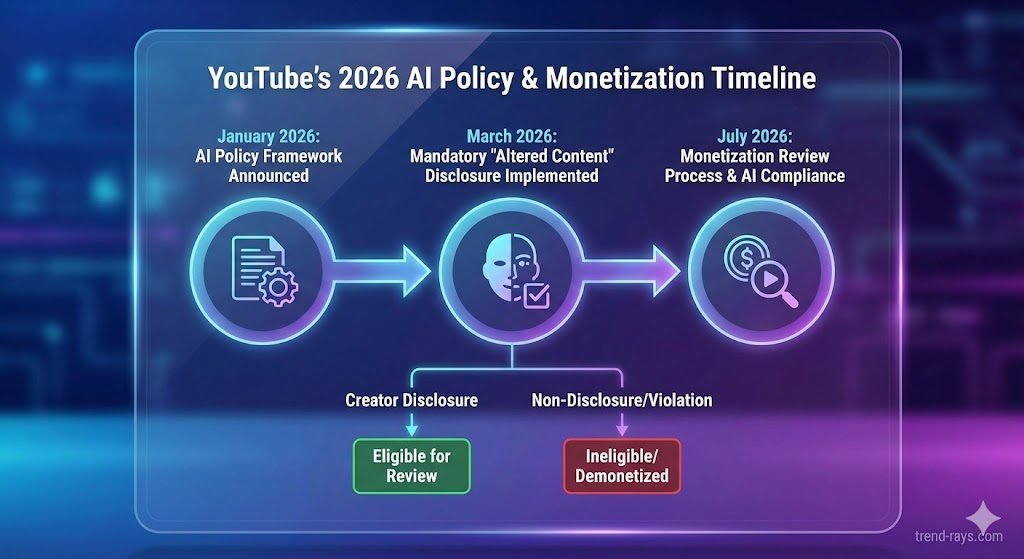
The “Repetitious & Inauthentic” Policy Update
YouTube’s algorithm has evolved. It no longer tolerates the “prompt-and-publish” model—for example, scraping a Wikipedia article, feeding it into ChatGPT, and having a default AI voice read it over unedited stock footage. This is now immediately flagged as “Repetitious and Inauthentic Content.”
The Quality Threshold
High-quality AI voices are perfectly safe for monetization IF the underlying script and video editing show substantial human effort. If you are producing well-researched video essays, unique commentary, or deep-dive tutorials, using an AI voiceover will not prevent you from earning AdSense. It is about the value of the video, not just the voice reading it.
The “Altered Content” Trap & Global Laws
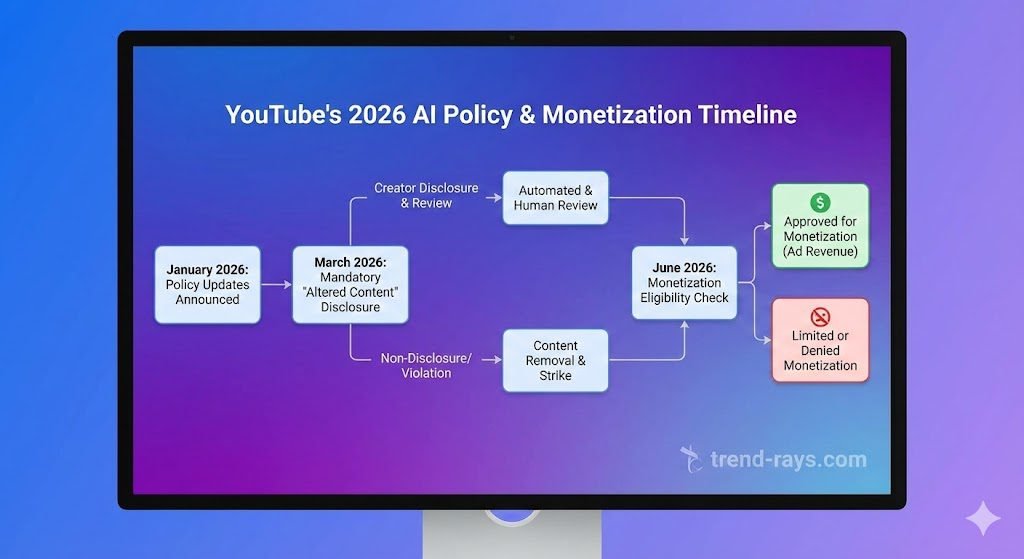
In YouTube Studio, you are now prompted with the “Altered or Synthetic Content” checkbox. Many creators make the mistake of checking this box just because they used an AI voiceover, which unnecessarily flags their video for strict manual review.
You are only required to check this box if the AI depicts a realistic event that didn’t happen or alters the likeness of a real person (deepfakes).
However, failing to label genuine deepfakes carries massive risks. With strict global compliance laws—such as the IT Amendment Rules in India—platforms are mandated to execute rapid takedowns for unlabeled or unlawful synthetic content. Violating this doesn’t just get you demonetized; it gets your channel terminated.
The AI Music Minefield: Copyright Strikes and Content ID
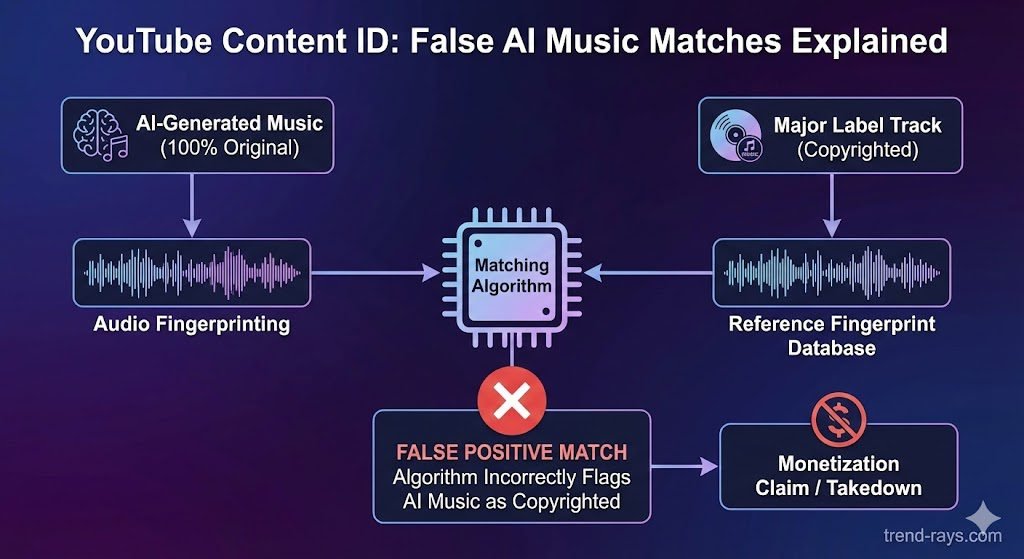
Why Suno and Udio Tracks Are Getting Strikes
One of the biggest headaches for creators in 2026 is AI-generated music. You might generate a 100% original track using Suno or Udio, only to receive a copyright claim from Sony or UMG minutes after uploading.
Why? Because YouTube’s automated Content ID system is deeply flawed when it comes to AI. It frequently flags AI tracks for accidentally mimicking the chord progressions, 808 drum patterns, or vocal cadences of existing copyrighted music the AI was trained on.
The Legal Reality of AI Copyright
If you get a false claim on an AI track, fighting it is a losing battle. Under current US and international law, purely AI-generated music cannot be copyrighted because it lacks “human authorship.” If you try to dispute a YouTube Content ID claim, you cannot legally prove you own the song.
Pro Tip: To avoid 3 strikes (which permanently deletes your channel), stick to highly modified AI tracks or use established royalty-free AI music generator SaaS tools that offer commercial sync licensing and built-in Content ID protection.
The “Human-Led” Formula: How to Safely Monetize
To bypass the “Mass-Produced Content” filter, you must prove to YouTube’s manual reviewers that a human is behind the wheel.
- Transformative Visuals: Never rely solely on AI-generated slideshows. Splice in real B-roll, dynamic text overlays, and complex editing timelines.
- Unique Scripting: Ensure your scripts are highly original. Utilize the best AI SEO writing SaaS tools to rank on Google and YouTube, but always inject your own tone, humor, and pacing.
- The Appeal Video Strategy: If you are unfairly demonetized, do not panic. Film a behind-the-scenes “Appeal Video.” Screen-record your editing software (Premiere Pro/DaVinci), show your script drafts, and demonstrate the human hours you put into directing the AI tools. This works over 80% of the time.
The Quality Content Mandate: Excelling in Documentary & Storytelling Niches
If you are using an AI voice, the bar for your visual and narrative quality is actually higher, not lower. YouTube’s algorithm aggressively pushes long-form documentary and storytelling channels, but these viewers demand exceptional production value.
To thrive in 2026, your faceless channel must operate like a mini-Netflix studio:
- The Script is King: AI voices read whatever they are given. If your script is a dry Wikipedia summary, viewers will click off in 10 seconds. You must structure your videos with a powerful hook, rising tension, and a satisfying payoff.
- Pacing and Silence: Novice creators let the AI voice talk continuously without taking a breath. Professional storytelling requires strategic pauses. Use your editing timeline to add 2-3 seconds of silence after a major revelation to let the audience absorb the information.
- The Vital Role of Background Music: In a faceless documentary, music is your primary tool for emotional connection. A sudden shift from an upbeat synth track to a tense, low-bass drone completely changes the vibe of the video. If your music doesn’t match the emotion of the AI voiceover, the video feels robotic and cheap.
Top 5 Safe & Royalty-Free Music Platforms for Creators (2026)
Since AI-generated music (like Suno or Udio) carries a high risk of false Content ID strikes, serious creators invest in licensed royalty-free music libraries. These platforms whitelist your YouTube channel, ensuring you keep 100% of your AdSense revenue.
Here are the top 5 platforms to build your channel’s soundscape, complete with pricing and how to use them:
1. YouTube Audio Library (Best for Absolute Beginners)
Before spending money, start here. It is built directly into YouTube Studio and is completely free to use.
- How to Use It: Navigate to YouTube Studio > Audio Library. Browse by genre or mood. Download the track and drop it into your editor.
- Subscription Model: 100% Free.
- The Catch: The library is somewhat limited, and you will hear the same tracks on thousands of other beginner channels. Some tracks require you to paste attribution text in your video description.
2. Epidemic Sound (Best Overall for YouTubers)
Epidemic Sound is the industry standard for content creators. They own the exclusive rights to every track in their massive catalog, meaning zero copyright strikes.
- How to Use It: Create an account and link your YouTube channel URL to your profile. This “whitelists” your channel. Download tracks and stems (e.g., just the drums or just the melody) to custom-fit your documentary pacing.
- Subscription Model: The “Personal” plan is roughly $15/month (or $120/year) and covers your YouTube, TikTok, and Instagram accounts.
- The Benefit: High-quality, modern tracks categorized perfectly for “Documentary,” “Tension,” or “Corporate.”
3. Artlist.io (Best for Cinematic Storytelling)
If you are building a high-end documentary channel, Artlist features incredibly cinematic, film-score-quality music from real indie artists.
- How to Use It: Similar to Epidemic, you link your channel. Artlist’s interface is highly visual, making it easy to find tracks based on the “Video Theme” (e.g., slow motion, timelapse, vlog).
- Subscription Model: The “Music & SFX Social” plan costs about $14.99/month (billed annually at $119.88).
- The Benefit: Their universal license means that even if you cancel your subscription next year, the videos you uploaded while active remain permanently cleared and monetized.
4. Envato Elements (Best All-in-One Asset Hub)
If you need more than just music, Envato Elements is the ultimate cheat code for faceless channels.
- How to Use It: For every track you download, you generate a specific “license certificate” for that video project. If YouTube Content ID ever flags you, you simply upload the PDF certificate to clear the strike instantly.
- Subscription Model: Roughly $16.50/month.
- The Benefit: Alongside thousands of music tracks and sound effects, your subscription includes unlimited downloads of stock video (B-roll), Premiere Pro video transitions, and custom fonts.
5. Musicbed (Best for Premium & Commercial Quality)
Musicbed curates a highly exclusive roster of chart-topping artists and composers. This is for established channels looking for a truly unique audio identity.
- How to Use It: Connect your YouTube channel. Musicbed’s search engine is incredibly granular, allowing you to filter by specific instruments, BPM, and complex moods.
- Subscription Model: Their “Creator” subscription starts at $19.99/month for individual YouTubers.
- The Benefit: The music doesn’t sound like “stock music.” It sounds like it was pulled straight from Spotify or a Netflix original series.
From Channel to Empire: The Business & Monetization Angle
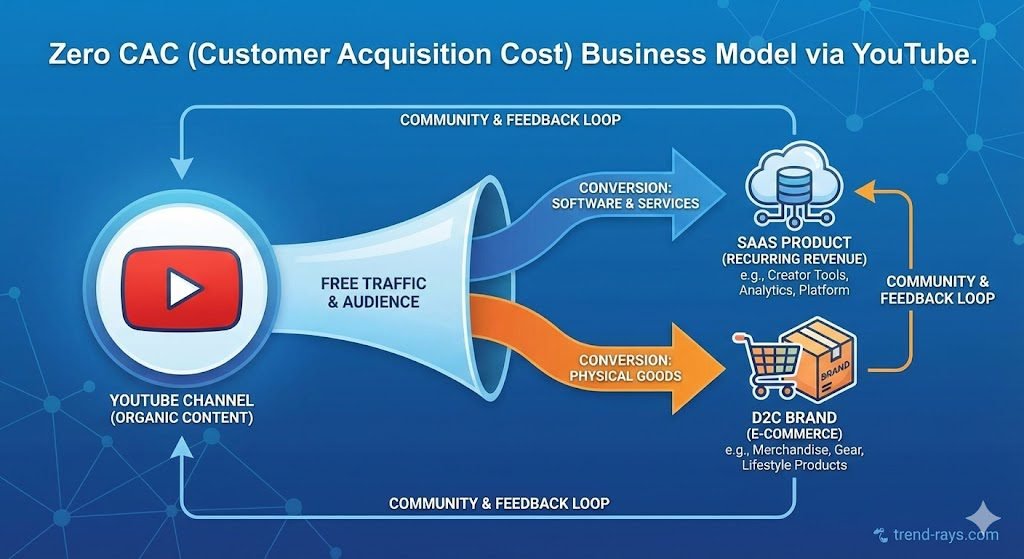
Beyond AdSense: The Zero CAC Model
AdSense is just the tip of the iceberg. The smartest creators in 2026 use their audience to drive Zero Customer Acquisition Cost (CAC). Instead of relying solely on YouTube ad revenue, they funnel their viewers to their own digital products, newsletters, and SaaS tools.
The “Shark Tank” Pipeline
Modern tech startups are increasingly being born from content creation. Consider the trajectory of viral content networks (like the founders of WittyFeed pivoting to STAGE, which pitched on Shark Tank India). They used massive digital audience insights to build highly funded platforms.
Furthermore, the AI tech boom itself is incredibly lucrative. While using raw AI music might be risky for a creator, building the tools for creators is a massive business opportunity—as seen by AI music startups like Soundverse making waves in the venture capital space and pitching on shows like Shark Tank.
YouTube’s 2026 Shopping Features
With YouTube’s native shopping integrations, you can now tag affiliate products and digital downloads directly inside YouTube Shorts. This drives massive e-commerce revenue independent of the traditional AdSense program.
Actionable Tips to Bulletproof Your Channel
- Niche Down Aggressively: Don’t make a channel about “General Facts.” Build a hyper-specific channel about “The Economics of Formula 1” or “The History of Cybersecurity.” High relevance equals high CPMs.
- Create an Audio Identity: Because AI text-to-speech is disrupting the voiceover industry, you must stand out. Don’t use the default settings. Tweak the pitch, speed, and prosody of your AI voice to create a recognizable, branded “host” that viewers trust.
- Audit Your Back Catalog: Record labels are actively running historical sweeps. Take down old AI voice covers of real artists immediately to avoid retroactive copyright strikes.
Frequently Asked Questions (FAQ)
Can you monetize a faceless YouTube channel with an AI voice?
Yes. As long as the video provides unique educational or entertainment value, features dynamic editing, and is not a mass-produced template, YouTube will monetize it.
Do I own the copyright to my AI-generated music?
No. Even if you have a paid subscription to an AI generator, courts currently rule that purely AI-generated outputs lack the human authorship required for copyright protection.
Does YouTube detect AI background music?
Yes, the automated Content ID system frequently scans and flags it due to similarities with copyrighted training data. It is safer to use licensed royalty-free tracks.
Are the songs in the YouTube Audio Library actually free to use?
Yes. You can use any track or sound effect from the YouTube Audio Library in your monetized videos without facing copyright strikes or paying royalty fees. It is completely free and completely safe.
Do I need to give credit when using music from the YouTube library?
It depends on the track. Some songs are completely unrestricted. However, if you see a “CC” (Creative Commons) icon next to a track, YouTube requires you to copy and paste the artist’s attribution text into your video’s description.
Can I use YouTube Audio Library music on TikTok or Instagram?
Officially, the license provided by the YouTube Audio Library is only valid for videos uploaded to YouTube. If you use those tracks on other platforms like TikTok or Facebook, you risk receiving a copyright strike on those specific platforms.
Is it illegal to download and use copyrighted music if I don’t monetize the video?
Yes. Whether you monetize the video or not, using copyrighted music without a license violates the creator’s rights. You can still receive a copyright strike or have the video blocked globally.
What happens if I get a Content ID claim on my AI-generated song?
Because AI-generated music cannot be legally copyrighted by you, disputing a claim is risky. If you get a false match on an AI track, your safest bet is to either swap the track out using the YouTube editor or accept that the revenue will be diverted to the claimant.
Can I monetize a YouTube video that uses Epidemic Sound music?
Yes, but only if you have an active subscription. Epidemic Sound requires you to link your YouTube channel to your account, which “whitelists” your channel. This guarantees that you keep 100% of your AdSense revenue without any copyright claims.
If I cancel my royalty-free music subscription, will my old videos get strikes?
This depends entirely on the platform. With platforms like Artlist or Epidemic Sound, any video published while your subscription was active remains permanently cleared and monetized. However, if you publish a new video using their track after canceling, you will be flagged.
Does YouTube have an AI music generator in the Audio Library?
In 2026, YouTube began experimenting with the “Dream Track” tool, allowing creators to generate short musical snippets using the voices of participating artists. However, for full-length documentary tracks, creators must rely on the traditional Audio Library or third-party SaaS tools.
Conclusion: The Honest Truth About AI Channels in 2026
Let’s cut through the noise and the panic. The era of the “get-rich-quick” faceless channel—where you could generate a script with one click, slap a robotic voice over unedited stock footage, and passively collect AdSense checks—is permanently over. YouTube’s algorithm is now actively hunting and demonetizing that exact type of lazy, mass-produced content.
But does that mean AI is a dead end for YouTube creators? Absolutely not.
The true potential for monetization in 2026 is actually higher than ever, provided you shift your mindset. You must treat AI as your production assistant, not your entire production team. YouTube will gladly monetize your channel and push your videos to millions of viewers if you operate like a digital director. The algorithm rewards the human element: the deep niche research, the compelling storytelling, the psychological hooks in your script, and the dynamic, highly edited visuals.
The Final Verdict for Creators: If you want to build a profitable, long-term media business, use high-quality AI voiceovers to scale your production. It is a smart, efficient workflow. However, protect your asset by pairing that voice with a deeply human script, and never risk your entire channel on unverified AI-generated music that triggers false copyright strikes.
Invest in a proper royalty-free music subscription, focus on delivering genuine value to your niche, and look beyond AdSense to build a real brand with your own digital products. YouTube isn’t punishing AI; it is punishing laziness. Your audience—and the algorithm—will always pay for quality.