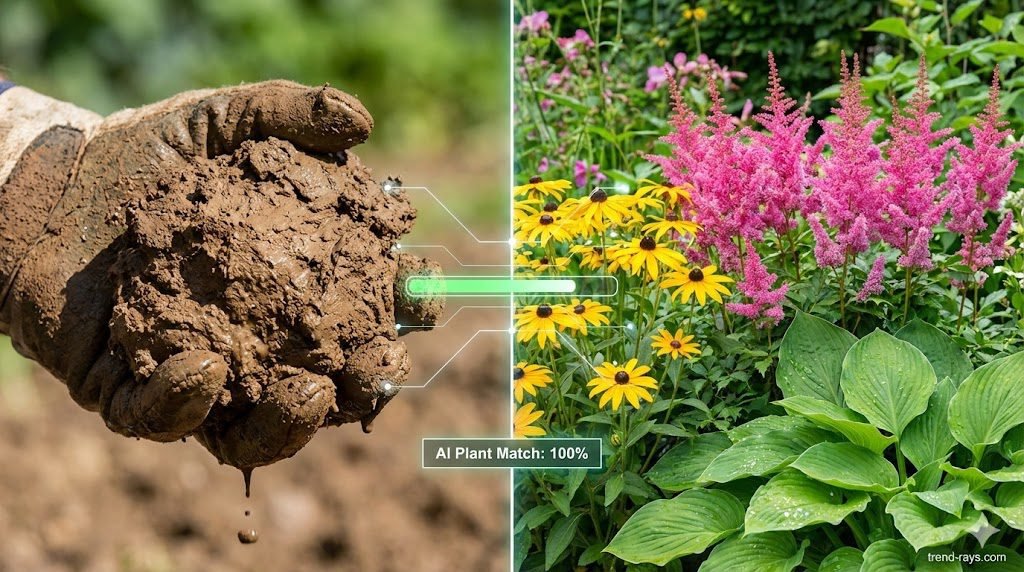
Gardening on heavy UK clay is famously a tale of two extremes. In the wet winter months, it turns into a heavy, waterlogged bog that rots plant roots. Come July, a heatwave can bake that same soil into impenetrable, cracked concrete.
For decades, British gardeners have wasted fortunes buying beautiful plants at the garden centre, only to watch them drown or suffocate in the clay. While digging in tons of organic compost is the long-term fix, the immediate solution is much simpler: right plant, right place.
Today, Artificial Intelligence is removing the costly guesswork from this process. By utilizing advanced AI garden planners, you can instantly generate a list of resilient, beautiful plants that actually prefer the challenging conditions of heavy British clay. Here is how to use AI to turn your flooded yard into a thriving oasis.
Why Generic Plant Advice Fails on Clay

If you ask a standard search engine for “beautiful garden shrubs,” it will likely suggest Mediterranean plants like Lavender or Rosemary. If you plant these in heavy UK clay, they will almost certainly be dead by March. Their roots simply cannot handle sitting in freezing, stagnant water.
AI landscape tools, however, cross-reference massive horticultural databases with local climate data. When you prompt an AI with “heavy clay” and “UK climate,” it filters out the delicate plants and specifically targets species with robust, penetrating root systems and a high tolerance for winter wet.
Top AI Tools for Problem Soils
Not all AI tools understand soil ecology. For the best results, use platforms that factor in environmental data:
- Neighborbrite: This tool excels at environmental matching. By inputting your location, it analyzes local weather patterns and allows you to specify your soil type (e.g., clay) before generating a custom, climate-appropriate plant list.
- Garden AI (App): Highly tailored for UK spaces, this app allows you to upload a photo of your garden and directly input “clay soil” into the parameters. It will generate a 3D layout featuring plants that can survive your specific conditions.
- ChatGPT (with RHS Prompts): As a text generator, ChatGPT is brilliant if you give it the right instructions. Try this prompt: “Act as an RHS expert. I have a waterlogged garden in the UK with heavy clay soil. Give me a list of 5 perennials and 3 shrubs that will thrive in these conditions, and explain why their root systems can handle the clay.”
The Best Plants for Heavy UK Clay (According to AI)
When analyzing millions of successful garden layouts on challenging soils, AI consistently recommends a specific group of highly adaptable “clay-busting” plants.
Here is a quick-reference table of the top performers you should include in your AI design prompts:
| Plant Name | Type | Why it Survives Heavy Clay | Sun/Shade Preference |
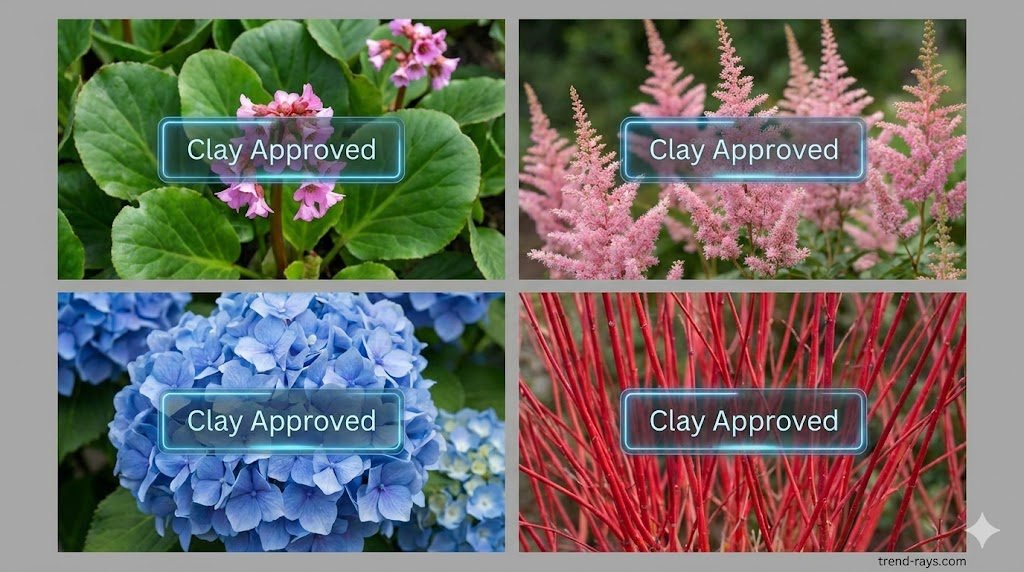
| Bergenia (Elephant’s Ears) | Evergreen Perennial | Its thick, spreading rhizomes sit near the surface, avoiding deep rot while stabilizing wet soil. | Sun or Shade |
| Astilbe | Herbaceous Perennial | It naturally thrives in damp, moisture-retentive conditions, loving the wet winter clay. | Partial Shade |
| Rudbeckia (Black-Eyed Susan) | Herbaceous Perennial | Features an incredibly tough, adaptable root system that pushes through dense soil. | Full Sun |
| Hemerocallis (Daylily) | Herbaceous Perennial | Strong, fleshy roots easily penetrate dense clay and store water for the dry summer months. | Full Sun |
| Hydrangea macrophylla | Deciduous Shrub | A highly thirsty plant that actively benefits from the moisture held by clay soils. | Partial Shade |
| Viburnum tinus | Evergreen Shrub | Exceptionally tough; it easily adapts to poor drainage and provides essential winter flowers. | Sun or Shade |
| Cornus alba (Dogwood) | Deciduous Shrub | Naturally grows in boggy areas; thrives in wet winter clay while providing bright winter stem colour. | Sun or Partial Shade |
Step-by-Step: Designing Your Clay Garden with AI
Step 1: Document the Waterlogging
Before using a visual AI tool like Ideal House or Garden AI, take a photo of your garden after heavy rainfall. This allows the AI to see exactly where the water pools, helping it suggest where to place the most moisture-loving plants (like Astilbe or Dogwood) and where to build raised beds.
Step 2: Prompt for “Seasons”
Clay soil behaves differently depending on the month. When using AI, prompt it to design a year-round space: “Design a UK garden border for heavy clay. Include plants that tolerate winter waterlogging but can also survive a dry, baked summer.”
Step 3: Ask for Soil Improvement Tactics
AI isn’t just for picking plants. Ask your AI assistant to generate a step-by-step soil improvement schedule. It will guide you on exactly when to apply bulky organic matter, horticultural grit, or mulch to slowly break down the heavy clay over the coming years.
By working with your clay soil rather than fighting it, and using AI to confidently select the right species, you can save money, reduce your gardening frustration, and build a beautiful, resilient landscape.
Frequently Asked Questions (FAQ)
1. Can AI help me fix waterlogged clay soil?
Yes. While AI can’t dig the soil for you, it can generate a custom soil amendment plan, advising you on the exact ratios of organic compost and grit needed to improve drainage over time.
2. Why do my plants keep dying in clay soil?
Heavy clay soil consists of microscopic particles packed tightly together. In winter, this traps water, essentially drowning the roots (root rot). In summer, it bakes solid, making it impossible for new roots to penetrate.
3. What is the best evergreen shrub for heavy clay in the UK?
AI and horticultural experts consistently recommend Viburnum tinus. It is incredibly resilient to poor drainage, keeps its leaves year-round, and flowers during the bleakest winter months.
4. Can I grow roses in clay soil?
Absolutely. Roses actually love the rich nutrients locked inside clay soils. However, they hate sitting in stagnant water. Plant them on a slight mound or incorporate plenty of compost into the planting hole to aid local drainage.
5. Are there any trees that soak up water in a flooded garden?
Yes. Trees like Willow (Salix), Alder (Alnus), and River Birch (Betula nigra) are fantastic at absorbing excess moisture. Ask your AI planner to position these at the lowest, wettest points of your garden.
6. Will Lavender grow in UK clay?
Generally, no. Lavender requires excellent drainage. If you must grow it on clay, you will need to plant it in a raised bed filled with a sandy, well-draining soil mix.
7. How do I prompt an AI to design a garden for clay?
Be specific about the problem. Use prompts like: “Generate a planting plan for a damp, heavy clay UK garden in partial shade. Focus on herbaceous perennials that will not rot in winter.”
8. Can I use gravel to improve clay soil drainage?
Adding a little gravel to a planting hole can actually make the problem worse, creating a “sump” where water gathers. AI will advise you to dig in bulky organic matter (like well-rotted manure or compost) to break up the clay structure instead.
9. Are raised beds better for clay soil?
Yes. If your clay is completely unworkable, building raised beds and filling them with imported topsoil is the fastest way to bypass the problem and start growing immediately.
10. What free AI tools are best for UK garden planning?
Neighborbrite, Gardenly, and the Garden AI app are excellent for generating visual layouts, while ChatGPT is the best free tool for generating specific, text-based plant lists and care schedules.