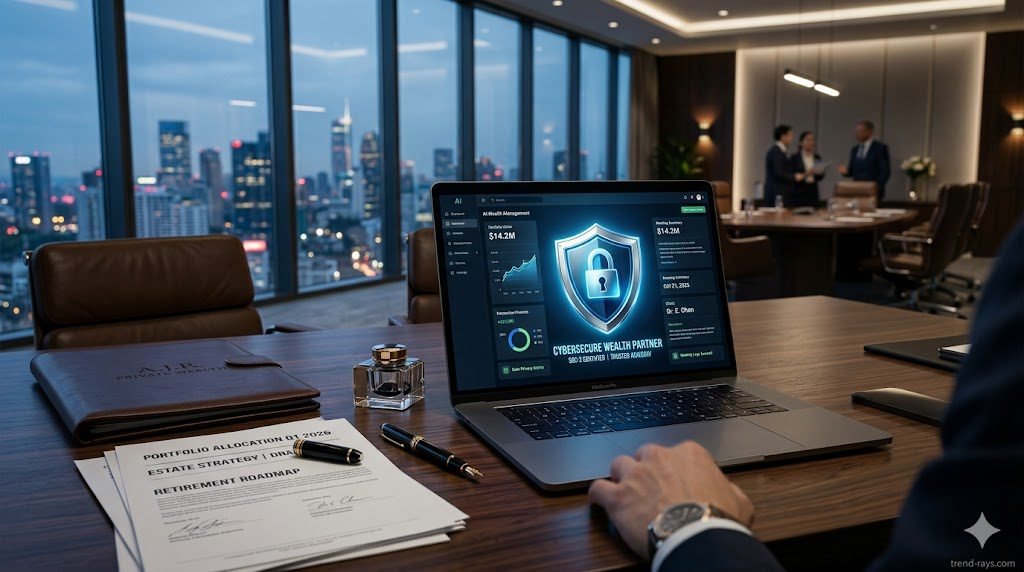
Time is a financial advisor’s most valuable asset. During the greatest wealth transfer in history, you should be spending your hours deepening client relationships and finding new prospects, not frantically typing up meeting summaries and updating your CRM.
While thousands of professionals have adopted AI meeting assistants to automate their note-taking, financial advisors, wealth managers, and CPAs have largely been left behind. The reason is simple: if you bring a standard, public AI bot (like standard Otter.ai or standard ChatGPT) into a client meeting discussing Social Security numbers, portfolio balances, and estate plans, you are risking massive SEC and FINRA fines.
You do not have to choose between operational efficiency and regulatory compliance. In this guide, we break down the exact technologies that make an AI note-taker legally viable for financial institutions, and we review the top three SOC-2 Type II compliant tools built specifically for wealth management in 2026.
What is an AI Note-Taker (And Why Focus on SOC-2 Compliance?)
An AI note-taker is a software tool that uses speech-to-text algorithms and Large Language Models (LLMs) to listen to your meetings, generate highly accurate transcripts, and instantly create formatted summaries, task lists, and follow-up emails.
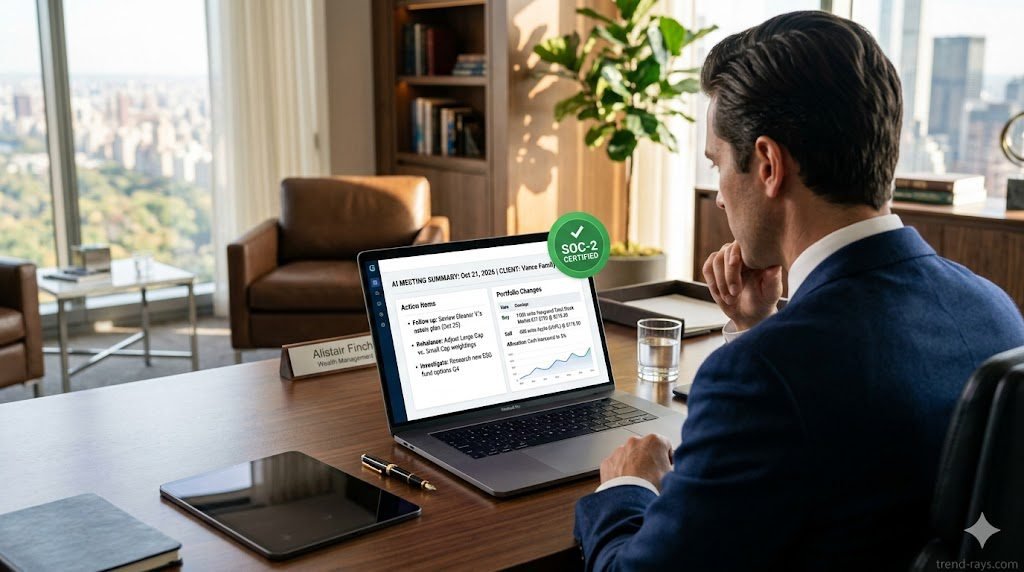
However, for financial professionals, accuracy is secondary to security. SOC-2 Type II is an auditing procedure ensuring a service provider securely manages your data to protect the organization and the privacy of its clients. If an AI software does not have a verifiable SOC-2 Type II certification, it means independent auditors have not verified their encryption standards, access controls, or data retention policies. Using uncertified software to process Personally Identifiable Information (PII) is a direct violation of your fiduciary duty and invites immediate regulatory action.
The Core Problem: Generic AI vs. SEC & FINRA Regulations
Understanding why generic AI fails in wealth management is critical to choosing the right software.
Consumer-grade AI note-takers are built for tech startups and marketing agencies. They record the audio file, store it indefinitely on their servers, and worse, often use your conversation transcripts to train their future public AI models.
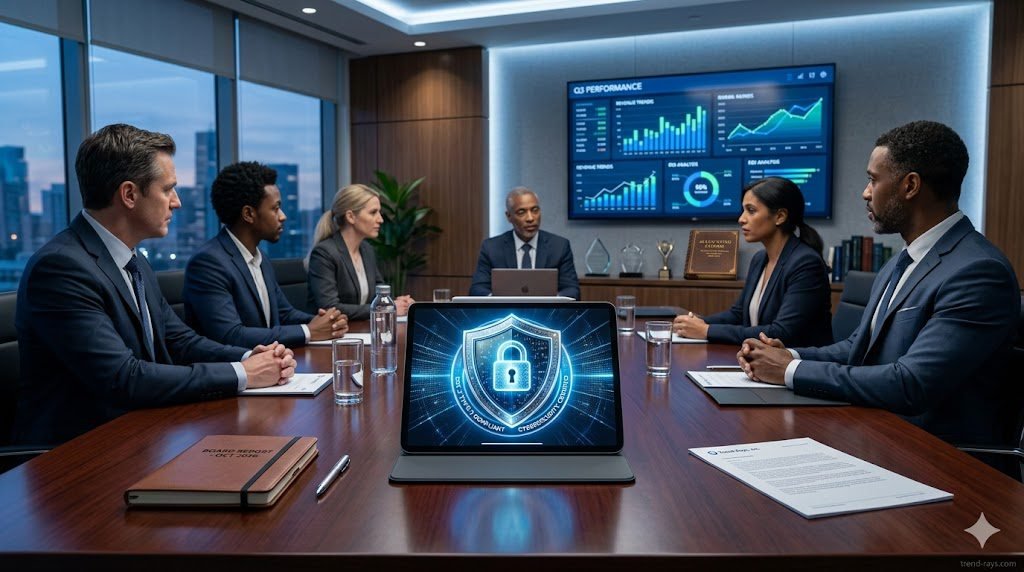
The SEC (specifically Rule 17a-4) and FINRA demand strict recordkeeping, data protection, and cybersecurity measures. If an ultra-high-net-worth client discusses a pending corporate merger in a meeting, and that data is ingested by a public AI model, you have created a massive cybersecurity liability. To pass compliance, financial AI tools must employ “Zero-Data Retention” policies and enterprise-grade AES-256 encryption, ensuring the AI forgets the conversation the second the summary is generated.
Integration Method 1: The “No-Recording” Streaming Approach
The most secure way to integrate AI into your advisory practice is to eliminate the audio file entirely.
How it works: Instead of recording an MP3 file of the meeting and uploading it to a cloud server to be transcribed, compliance-first AI tools use “Stateless Audio Streaming.” The AI listens to the conversation live, transcribes the words into text locally in your computer’s RAM, and instantly deletes the audio packet. By the time the meeting ends, a text transcript exists, but an audio recording was never actually created or saved. This easily satisfies broker-dealer data retention requirements because there is no voice data to subpoena or hack.
Integration Method 2: Direct Wealth CRM Sync
Generic AI tools dump notes into a generic text document. For an advisor, a note is useless unless it is securely attached to the client’s profile in a regulated environment.
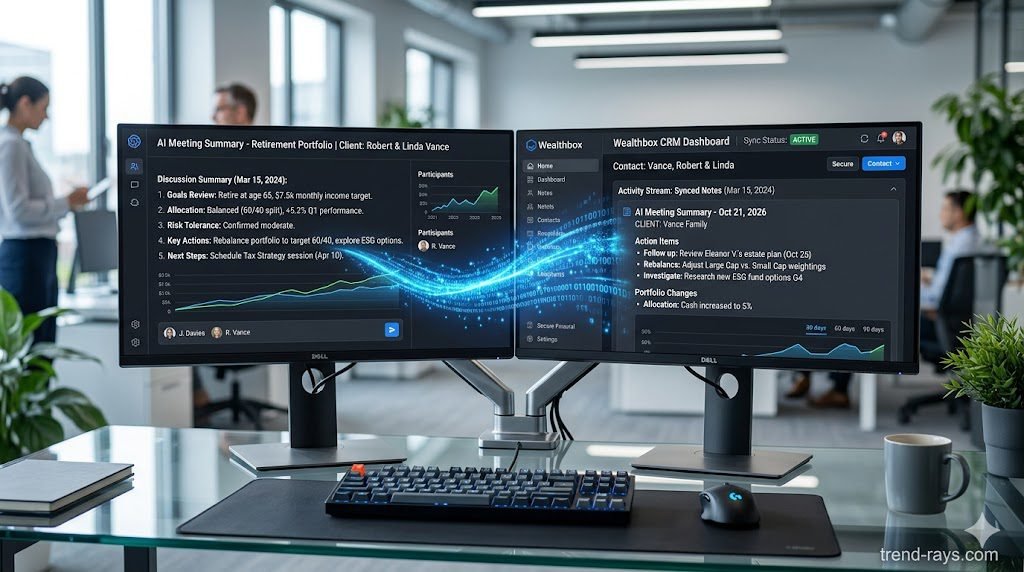
How it works: Enterprise AI note-takers integrate natively with financial-specific CRMs (like Redtail, Wealthbox, or Salesforce Financial Services Cloud) using secure API webhooks. When the meeting concludes, the AI automatically formats the notes (separating “Investment Strategies” from “Personal Life Updates”) and pushes the structured data directly into the client’s CRM profile behind your firm’s existing firewall.
Top 3 SOC-2 Compliant AI Note-Takers & How to Set Them Up
If you are upgrading your firm’s tech stack, skip the consumer tools. Here are the three best AI meeting assistants engineered specifically for strict financial compliance in 2026.
1. Focal AI (Best for Behavioral Finance & Strict Compliance)
Focal AI is uniquely built on Microsoft Azure (the most secure cloud for financial services) and is actively monitored by compliance platforms like Vanta. It goes beyond basic transcription by partnering with behavioral finance experts to help you identify client sentiment.
- Key Features: True end-to-end encryption, stateless AI models (no transcripts retained to generate summaries), and automated KYC (Know Your Customer) data extraction for rapid client onboarding.
- How to Integrate it into Your Workflow:
- Sign up for Focal AI and authenticate your firm’s Microsoft 365 or Google Workspace account under their strict enterprise Data Processing Agreement (DPA).
- Connect your calendar. Focal will automatically scan your upcoming meetings and cross-reference your CRM to generate a pre-meeting brief.
- During the meeting, Focal runs silently in the background (no visible “bot” joins the Zoom call to alarm clients).
- The Result: It extracts the financial data, drafts a compliant follow-up email, and syncs the required regulatory notes directly into Salesforce or Wealthbox.
2. Zocks (Best for “No-Recording” Firm Policies)
If your compliance department has a strict “zero recording” mandate, Zocks is the premier choice. It is heavily favored by independent RIAs who want the benefits of AI without the liability of audio storage.
- Key Features: 100% no-recording architecture. It streams the meeting, extracts the insights in real-time, and leaves zero audio footprints. It also excels at in-person meetings via its secure mobile app.
- How to Integrate it into Your Workflow:
- Install the Zocks application on your laptop or mobile device.
- Navigate to the integrations tab and authorize the connection to your specific CRM (e.g., Redtail) using a secure OAuth token.
- For in-person office meetings, simply place your phone on the desk and tap “Start.” Zocks will stream the audio locally without uploading voice files to the cloud.
- The Result: A highly structured, compliance-ready summary is instantly pushed to the client’s CRM file the moment the client walks out of your office.
3. FinMate AI (Best for HNW / UHNW Client Portfolios)
FinMate was designed by financial advisors specifically for managing High-Net-Worth (HNW) workflows. It holds both SOC-2 Type II and ISO 27001 certifications.
- Key Features: Deep integration with financial planning software. FinMate doesn’t just sync to CRMs; it can push meeting notes and portfolio action items directly into planning platforms like eMoney and MoneyGuidePro.
- How to Integrate it into Your Workflow:
- Create your FinMate Enterprise account to ensure data residency controls are active.
- In the setup dashboard, connect both your CRM (Wealthbox/Redtail) and your financial planning software (eMoney).
- Customize your meeting templates. You can instruct the AI to specifically listen for “Estate Planning Changes” or “Tax Loss Harvesting Opportunities.”
- The Result: After a quarterly review, FinMate parses the conversation, updates the CRM notes, and creates specific task tickets in eMoney for your paraplanner to execute.
3 Fatal Compliance Mistakes to Avoid When Using AI
Even with the most secure software, human error can trigger an audit. Avoid these three firm-killing mistakes:
- Mistake 1: Failing to Acquire Opt-In Consent. Depending on your state (specifically two-party consent states like California or Florida), using any transcription software without explicit, documented client permission is illegal. Always add a standard disclosure to your meeting invites and verbally confirm consent at the start of the call.
- Mistake 2: Ignoring the “Training Data” Clause. Never sign a Terms of Service agreement without verifying the AI company’s data training policy. You must ensure the contract explicitly states: “Client data will not be used to train, test, or improve our public artificial intelligence models.”
- Mistake 3: Storing Transcripts in the Wrong Place. A compliant AI tool is useless if you export the notes and save them in an unencrypted local folder. Ensure your AI note-taker is strictly mapped to push data directly into your FINRA-approved, WORM-compliant (Write Once, Read Many) CRM or archival system.

Conclusion & Next Steps
AI note-taking is no longer a luxury in wealth management; it is a necessity for scaling your practice. However, protecting your clients’ financial data must remain your ultimate priority. By implementing strict, SOC-2 compliant tools like Focal, Zocks, or FinMate, you can reclaim hours of administrative time without risking regulatory wrath.
Once your meeting documentation is securely automated, you can begin upgrading the rest of your practice’s technology stack. Be sure to check out our complete guide on the State of AI Marketing in 2026 to see how modern financial firms are leveraging secure automation to acquire new high-net-worth prospects.