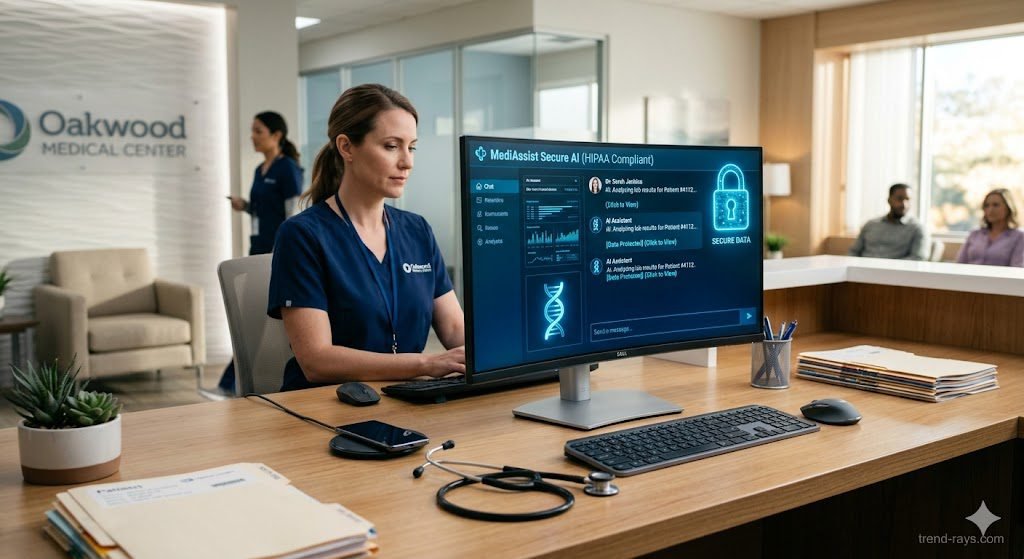
Modern medical practices are facing a difficult balancing act. On one hand, patients have become accustomed to the digital age; they expect instant, 24/7 support to book appointments, ask billing questions, and check clinic hours. On the other hand, federal regulations demand airtight protection of Protected Health Information (PHI).
To solve the front-desk bottleneck, clinics are turning to artificial intelligence. But deploying the wrong AI chatbot can lead to massive federal HIPAA fines, severe reputational damage, and compromised patient data.
In this guide, we break down the best HIPAA-compliant AI chatbots in 2026, helping your clinic automate patient scheduling while remaining strictly within the bounds of federal privacy laws.
The Importance of AI Chatbots in Modern Healthcare
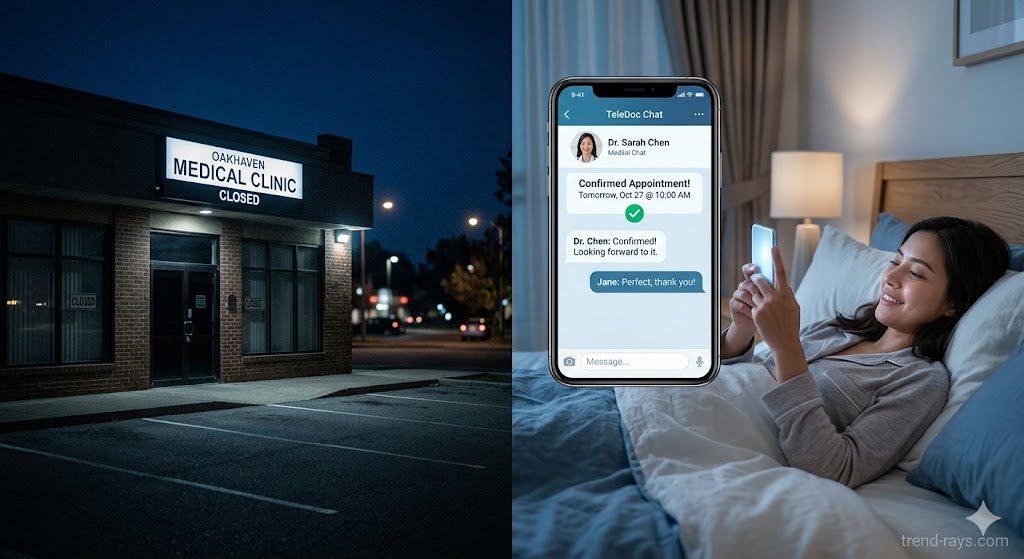
Why are medical practices rushing to adopt this technology? The traditional clinic model is breaking under the weight of administrative tasks. AI chatbots provide critical solutions to modern healthcare challenges:
- Eliminating Front-Desk Burnout: Receptionists spend hours answering the exact same questions (“Do you accept BlueCross?” or “Where are you located?”). AI intercepts these repetitive queries, allowing staff to focus on in-person patient care.
- 24/7 Patient Triage & Booking: Medical emergencies and scheduling needs do not stop at 5:00 PM. Chatbots capture late-night traffic, allowing patients to book available slots or get directed to urgent care automatically.
- Reducing No-Show Rates: Advanced chatbots handle automated appointment reminders and allow patients to easily reschedule via chat, drastically reducing costly empty time slots.
What Actually Makes an AI Chatbot “HIPAA Compliant”?
Do not let software marketing fool you. An AI chatbot is not HIPAA compliant simply because it has a password login. To legally handle patient data, the software must meet strict administrative and technical safeguards.
Understanding HIPAA and the Rules of Compliance
Before evaluating software, it is vital to understand the law itself. HIPAA (The Health Insurance Portability and Accountability Act of 1996) is a US federal law that requires the creation of national standards to protect sensitive patient health information from being disclosed without the patient’s consent or knowledge.
For an AI chatbot to be considered HIPAA compliant, it must strictly adhere to three main criteria under the law:
- The Privacy Rule: Ensuring that Protected Health Information (PHI) is only accessed by authorized individuals for specific, permitted purposes.
- The Security Rule: Implementing three layers of safeguards—Administrative (staff training and access policies), Physical (protecting the actual servers where the AI is hosted), and Technical (encryption, audit controls, and secure data transmission).
- The Breach Notification Rule: The software vendor must have a protocol to immediately notify the clinic (and federal authorities) if a data breach occurs.
The Business Associate Agreement (BAA)
This is the ultimate legal threshold. Under HIPAA rules, any third-party software vendor that touches PHI is considered a “Business Associate.” Before a single patient types their symptoms into a chat widget, the software vendor must sign a Business Associate Agreement (BAA). This legally binds the software company to protect your patients’ data and holds them liable in the event of a breach. If an AI vendor refuses to sign a BAA, using them in your clinic is strictly illegal.
End-to-End Encryption & Audit Logs

Compliant chatbots protect stored data “at rest” (typically using AES 256-bit encryption) and “in transit” (using TLS 1.2 or higher). Furthermore, the software must maintain unalterable, audit-ready access logs. If a federal auditor asks who viewed a specific patient’s chat transcript on a Tuesday three months ago, the system must be able to provide that exact data instantly.
Why Data Encryption is Non-Negotiable Encryption is the ultimate safety net. If a cybercriminal manages to intercept the data traveling between your website’s chatbot and your servers, encryption ensures that what they steal is completely unreadable. Instead of seeing “John Doe, Date of Birth 05/12/1980, experiencing chest pain,” the hacker simply sees a randomized string of gibberish. Federal regulators impose astronomical fines for breaches involving unencrypted PHI, but if encrypted data is stolen, it often doesn’t even trigger a mandatory breach notification because the patient’s privacy remains intact.
Top HIPAA-Compliant AI Chatbots for Healthcare in 2026
DearDoc (Best Overall for Practice Growth)
DearDoc stands out as the definitive leader for modern, growing medical practices. Unlike generic business chatbots, DearDoc is purpose-built specifically for the healthcare industry.
- Key Features: Its sophisticated conversational AI can handle patient inquiries and book appointments 24/7, capturing leads that would otherwise bounce after hours. It includes an automated review management system that integrates with platforms like Google, WebMD, and Vitals, actively helping doctors boost their online reputation while handling front-desk tasks.
- How to Use DearDoc: You embed the DearDoc AI widget directly onto your clinic’s homepage. You program it with your specific practice hours, accepted insurances, and intake forms. When a patient visits your site after hours, the bot greets them, answers their FAQ, and guides them through a secure booking flow. After a successful appointment, the system automatically sends the patient a text message requesting a positive review.
Comm100 (Best for Enterprise & High-Security Clinics)
For large hospitals, heavily regulated clinics, or state health agencies, Comm100 is the gold standard. It was built from the ground up to serve regulated industries, making HIPAA compliance a core architectural feature rather than a bolted-on afterthought.
- Key Features: Comm100 operates on a strict “least-access principle” with mandatory multi-factor authentication. Its AI Agent uses generative AI to resolve up to 80% of routine inquiries—from insurance verification to scheduling. For organizations requiring maximum control, Comm100 offers on-premises deployment to keep patient data entirely within the hospital’s own servers.
- How to Use Comm100: This requires a slightly more technical setup. Hospital IT administrators use Comm100’s drag-and-drop bot builder to create secure routing rules. For example, if a patient types a billing question, the bot securely authenticates their identity and routes the chat directly to the financial department’s secure dashboard. If they type symptoms, it routes them to a triage nurse.
Weave & Podium (Best for Unified Patient Communication)
While Podium made its name in general local business reputation management, its application in healthcare—alongside competitors like Weave—is incredibly powerful.
- Key Features: These platforms excel at unifying communications. They combine AI chat, VoIP phone systems, and secure SMS text messaging into a single, HIPAA-compliant inbox. This allows administrative staff to manage all patient interactions seamlessly without jumping between five different software tabs.
- How to Use Weave & Podium: These tools act as a centralized hub. The AI chatbot handles the initial website inquiry, but the conversation flows into a unified inbox that your front desk monitors. If a patient asks a complex medical question that the AI isn’t cleared to answer, a human staff member can instantly take over the chat and transition it into a secure, HIPAA-compliant SMS text message directly to the patient’s phone.
The Dangers of Using Standard AI (Like ChatGPT) for Patient Data
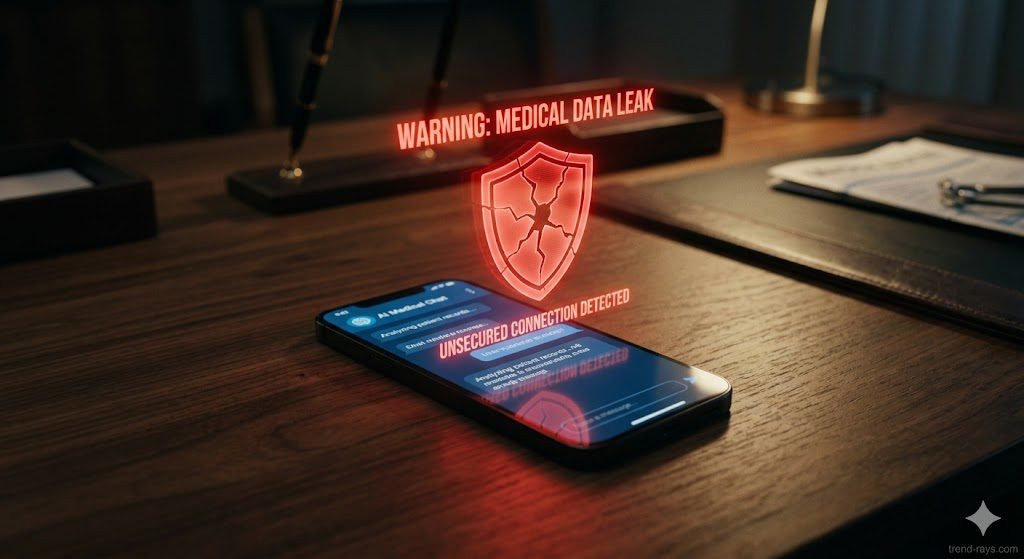
It can be tempting for a stressed medical assistant to copy and paste a patient’s complex email into a public AI tool like ChatGPT or Claude to draft a quick, polite response. Do not do this.
Standard, public versions of generative AI tools train their Large Language Models (LLMs) on user inputs. Pasting a patient’s name, symptoms, or medical history into a public AI interface is a direct HIPAA violation because that data leaves your secure environment and is absorbed by the AI’s servers.
The Solution: Enterprise Licensing & Specialized AI Scribes If your staff relies on generative AI to draft emails or summarize notes, you must purchase Enterprise-level licenses (such as ChatGPT Enterprise or Microsoft Copilot for Healthcare). Unlike the free versions, these enterprise tiers offer “Zero Data Retention” policies and will sign a BAA, guaranteeing that your inputs are not used to train future AI models. Alternatively, clinics should invest in dedicated, HIPAA-compliant AI medical scribes (like Freed or DeepCura) which are built specifically for processing clinical conversations legally.
How to Actually Integrate AI Chatbots with Your EHR System
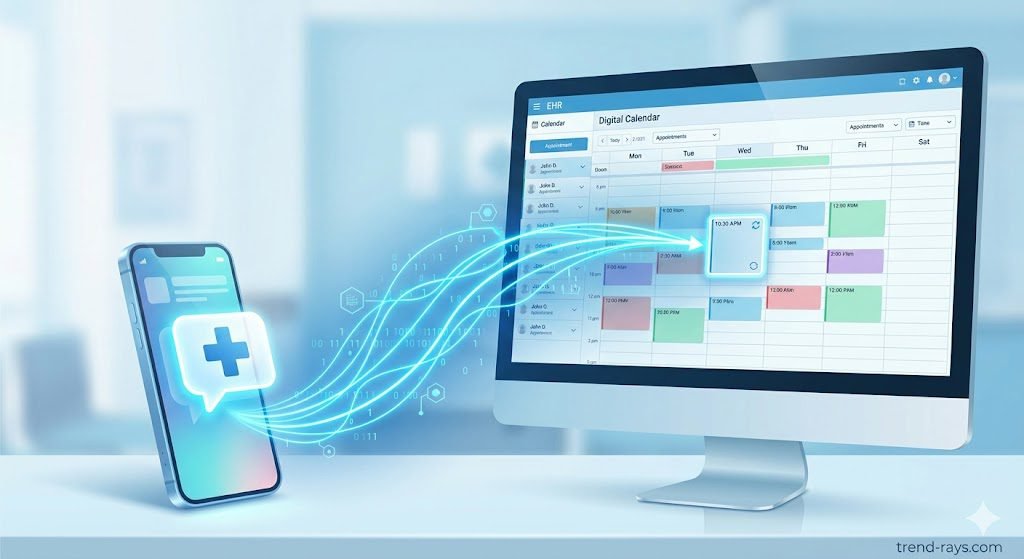
An AI chatbot must communicate with your calendar. But how do you actually connect a third-party bot to complex systems like Epic, Cerner, or Athenahealth? It comes down to Application Programming Interfaces (APIs).
- Step 1: Check the App Marketplace: The easiest method is to choose a chatbot that is already an approved partner. For example, check the “Epic Showroom” or “Athenahealth Marketplace.” If the bot is listed, integration is usually a one-click authorization process.
- Step 2: Establish API Keys: If a native integration isn’t available, your IT vendor will need to generate secure API keys from your EHR and provide them to the chatbot vendor. The industry standard for this secure data handshake in healthcare is called HL7 FHIR (Fast Healthcare Interoperability Resources).
- Step 3: Field Mapping: Once connected, you map the data fields. You tell the software: When the chatbot collects “Patient First Name,” push that data into the “First Name” field in the EHR calendar. Once mapped and tested, the chatbot can autonomously read available time slots and write new appointments without human intervention.
Conclusion: How to Choose the Right AI for Your Clinic
Implementing a secure AI chatbot yields massive ROI by saving hundreds of front-desk hours and capturing after-hours bookings. For independent clinics looking to grow their patient base and reviews, DearDoc is the superior choice. For massive hospital networks requiring enterprise-grade routing and strict data residency, Comm100 is unmatched.
Once your AI chatbot securely books the patient and manages the intake, you can further streamline your clinic’s workflow using best HIPAA-compliant AI dictation tools during the actual appointment to eliminate manual charting. And as you expand your practice’s technological footprint, be sure to explore our ultimate guide to AI for speech-language pathology to see how artificial intelligence is transforming specialized patient care.