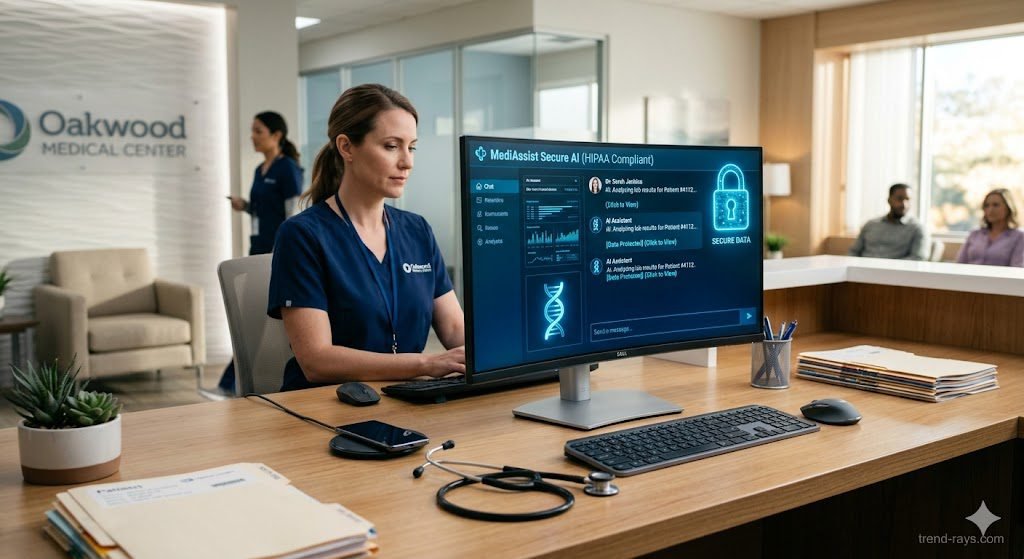
Corporate Learning & Development (L&D) is undergoing a massive operational shift. Historically, whenever a company updated its software interface or rolled out a new compliance protocol, HR teams had to spend thousands of dollars—and weeks of production time—hiring studio voice actors to re-record employee training modules.
Today, AI voice cloning solves this bottleneck, allowing teams to instantly generate studio-quality narration from a simple text script. However, the explosion of generative AI has created a dangerous blind spot for enterprise procurement. If your HR department is using a cheap, consumer-grade voice app to narrate proprietary onboarding materials, they are actively creating a cybersecurity liability.
Corporate training requires more than just realistic audio. It requires strict data governance. In this guide, we analyze the top enterprise-grade, SOC-2 compliant voice AI platforms built specifically for the security and scale of modern business, including how to deploy them, the true financial ROI, and how they enable rapid global expansion.
Why Corporate L&D Teams Cannot Use Consumer Voice AI
The fundamental difference between a consumer AI tool and an enterprise SaaS platform comes down to one phrase: Data Ingestion.
Consumer-grade voice generators subsidize their costs by using user inputs to train their public Large Language Models (LLMs). If an L&D manager uploads a training script detailing an unreleased internal product, that data can become permanently embedded in the public AI’s training weights.
To pass a corporate IT security audit in 2026, you must utilize zero-retention voice cloning. This legally binding SLA ensures your proprietary scripts are processed, synthesized into audio, and immediately purged from the provider’s servers. Furthermore, IT departments require a SAML SSO voice generator (Single Sign-On via Okta or Microsoft Entra) so that when an employee leaves the company, their access to the company’s cloned voice assets is instantly revoked.

The Hard ROI: Analyzing the True Cost of Voice AI
For a business owner or CFO, the decision to adopt enterprise AI voice cloning comes down to unit economics.
The Traditional Cost Structure: In the past, producing a 10-hour corporate onboarding curriculum meant renting a local recording studio and hiring voice talent. At an average rate of $150 to $400 per finished hour, a single audio project could easily cost $4,000. Worse, if your compliance policy changed six months later, you had to re-hire that exact same actor to record the updates, assuming their schedule allowed it.
The AI Cost Structure: Enterprise AI voice platforms flip this model from a high-variable cost to a fixed SaaS operating expense. While a true enterprise license (complete with SOC-2 SLAs and private cloud hosting) might cost $1,000 to $3,000 a month, the marginal cost of producing a new minute of audio drops to practically zero.
- Zero Studio Friction: Updates are instantaneous. If a single paragraph in an employee handbook changes, an HR manager simply edits the text file, and the AI regenerates the audio in seconds.
- The ROI Verdict: For businesses producing more than 5 hours of internal or external audio content a month, the enterprise licensing fees pay for themselves within the first fiscal quarter.
Global Scale: Using Voice Cloning for Rapid Market Expansion
The highest-ROI growth strategy in 2026 is multilingual content, but language barriers have historically been the hardest hurdle for business expansion.
If your US-based company is opening a new office in Germany, you need localized onboarding videos, localized safety training, and localized sales enablement materials.
Modern voice cloning engines (like ElevenLabs) feature Cross-Lingual Emotional Preservation. This means you can upload a training video of your American CEO speaking English, and the AI will dub the audio into fluent German. It does not just translate the words; it perfectly preserves the CEO’s unique vocal identity, pitch, and emotional delivery. Your overseas employees hear your actual leadership team speaking to them in their native dialect, building unparalleled corporate culture and trust across borders without spending a single dollar on international studio dubbing.
Top 4 Enterprise Voice AI Platforms & How to Deploy Them
1. ElevenLabs Enterprise (Best for Global Localization)
ElevenLabs is the undisputed industry leader in voice synthesis quality, but their enterprise tier is vastly different from the viral consumer app.
- Compliance & Security: SOC-2 Type II, GDPR compliant, with custom data privacy SLAs.
- The Enterprise Edge: Their aforementioned “AI Dubbing” engine is peerless for multinational expansion, allowing instant localization into 29 different languages.
- How to Implement This in Your Workflow:
- SSO Integration: Route the ElevenLabs Enterprise portal through your company’s Okta or Azure AD to ensure role-based access control (RBAC).
- Voice Authentication: To build a custom corporate voice (e.g., cloning the CEO), the executive must read a randomized, encrypted script to provide verifiable biometric consent.
- API Routing: Connect the ElevenLabs API directly to your headless CMS to automate audio generation when scripts are approved.
2. WellSaid Labs (Best for Strict Privacy & Healthcare)
WellSaid Labs was architected from the ground up exclusively for B2B enterprise use cases, making it the safest choice for strict compliance officers.
- Compliance & Security: SOC-2 Type II certified, utilizing a strictly private cloud architecture.
- The Enterprise Edge: WellSaid does not scrape the internet for voice data. Every voice avatar is built with the explicit, compensated consent of professional voice actors. Your proprietary scripts never touch public, open-source AI models.
- How to Implement This in Your Workflow:
- Workspace Setup: Create departmental “Projects” within the WellSaid Studio to compartmentalize data.
- Brand Voice Lock: Assign a specific, licensed voice avatar exclusively to your brand to ensure global consistency.
3. Murf AI (Best for Video & SCORM Compliant Workflows)
When evaluating PlayHT vs Murf AI for business, Murf AI wins decisively for HR teams who need to build visual presentations rather than just raw audio files.
- Compliance & Security: SOC 2, hosted on secure AWS Enterprise architecture.
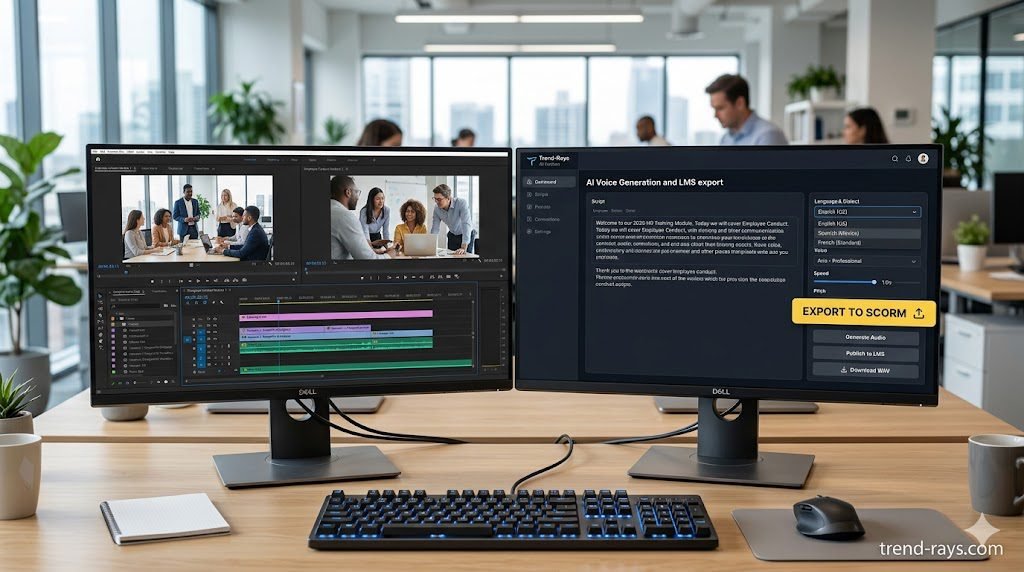
- The Enterprise Edge: Murf AI operates as a full-suite video editor. L&D managers can upload PowerPoint slides directly into Murf and align the cloned AI voice to specific slide transitions.
- How to Implement This in Your Workflow:
- Timeline Syncing: Type the script into the block editor and drag the audio blocks to match the visual slide transitions.
- LMS Export: Export the final project as a SCORM compliant voiceover package.
- Direct Deployment: Upload that SCORM package directly into your enterprise Learning Management System (LMS) like Workday or Cornerstone.
4. Cartesia / PlayHT (Best for Conversational AI Training Roleplay)
If your training requires active, real-time employee roleplay, you need platforms engineered for ultra-low latency.
- Compliance & Security: Enterprise SLAs and private endpoints available upon request.
- The Enterprise Edge: Tools leveraging Cartesia’s Sonic APIs generate voice in under 150 milliseconds. This allows companies to build custom voice avatars for L&D that employees can literally speak to for cold-call practice.
- How to Implement This in Your Workflow:
- System Integration: Your IT team will connect the Cartesia WebRTC API to your internal telephony system.
- Live Simulation: Sales reps call a dedicated internal phone number. The AI answers, listens to the rep’s pitch, and responds in real-time with human emotion, pacing, and objections.
The 3-Step IT Procurement Checklist Before Buying Voice AI
Do not let your HR department purchase voice AI on a corporate credit card without IT oversight. Use this checklist during your Request for Proposal (RFP) process.
- The Zero-Retention Clause: The vendor’s Terms of Service must explicitly state that your text inputs and generated audio will not be stored or used to train future generative models.
- SAML 2.0 / Okta Integration: You must have centralized, automated provisioning to instantly revoke an employee’s access the moment they leave the company.
- Deepfake Guardrails: The software must require active, verbal biometric consent via a randomized script read by the executive to prevent internal identity theft.
The Strategic Advantages of Strict Procurement
- Accelerated Deployment: By filtering vendors through this IT checklist first, your legal and infosec teams will approve the final contract in days rather than months.
- Brand Protection: You eliminate the catastrophic risk of a public AI model regurgitating your confidential HR restructuring plans to your competitors.
The Disadvantages & Limitations to Consider
- A Narrowed Vendor Pool: Enforcing strict SOC-2 and zero-retention rules means you cannot use 95% of the shiny, new AI startups flooding the market. You are restricted to established enterprise players.
- Higher Baseline Costs: “Enterprise-grade” is expensive. You are not paying for better-sounding voices; you are paying for private cloud hosting, dedicated account managers, and legal indemnification.
Frequently Asked Questions (Enterprise Voice AI)
What is zero-retention voice cloning?
Zero-retention voice cloning is a strict enterprise data policy where an AI software provider guarantees that your text scripts and generated audio files are immediately deleted from their servers after processing. This ensures your proprietary corporate data is never used to train public Large Language Models (LLMs).
How much does ElevenLabs enterprise pricing actually cost?
While consumer tiers start at $5 per month, true ElevenLabs enterprise pricing typically starts between $1,000 and $3,000 per month. This premium cost covers mandatory B2B features including SOC-2 compliance, custom Data Processing Agreements (DPAs), priority rendering latency, and SAML Single Sign-On (SSO) integration.
Is it legal to clone a CEO or employee’s voice for training?
Yes, but only with verifiable biometric consent. Enterprise AI voice platforms require the individual to read a specific, randomized, and encrypted script aloud into the software. This acts as a vocal signature, proving the individual actively consents to having their voice cloned, which protects the company from deepfake liability.
Which is better for LMS courses: PlayHT or Murf AI?
For Learning Management Systems (LMS), Murf AI is generally the better choice for non-technical HR teams. While PlayHT offers superior API latency for developers, Murf AI features a built-in video timeline editor that allows you to export SCORM-compliant voiceover packages directly into platforms like Workday or Cornerstone.
Can AI voice generators translate corporate videos automatically?
Yes. Premium enterprise tools feature “AI Dubbing” or “Cross-Lingual Audio.” This allows you to upload a training video in English, and the software will translate and generate the audio in dozens of other languages while perfectly preserving the original speaker’s unique vocal identity and emotional pacing.
Conclusion & Next Steps
Upgrading to an enterprise AI voice cloning SaaS allows your business to scale global operations and training materials at a fraction of the cost of traditional studio recording. However, speed and cost savings must never supersede corporate data security. By selecting platforms that natively support SOC-2 compliance, zero data retention, and SSO, you empower your teams to expand globally while satisfying your IT department’s strictest requirements.
Securing your SaaS applications is just the first step in defending your corporate network. Once your cloud tools are locked down, you must ensure your employee hardware is equally protected. Read our technical guide on How to Detect Repackaged “Flat-Pack” Malware on Corporate Endpoints to secure your perimeter against AI-generated cyber threats.