Introduction
The “Clinical Hour” is a myth. For most Speech-Language Pathologists (SLPs), a 45-minute session is followed by 15 minutes of frantic typing—or worse, an hour of documentation at home after dinner.
You didn’t get a Master’s degree to become a professional transcriptionist.
Fortunately, 2026 is the year of the “AI Scribe.” These tools listen to your session (securely), filter out the small talk, and auto-generate professional SOAP notes in seconds.
But not all AI tools understand the difference between “apraxia” and “aphasia.” We reviewed the top tools specifically for SLPs to find the ones that actually work.
Quick Comparison: Top Picks at a Glance
| Tool | Best For | Price | Free Trial? |
| 1. PatientNotes | Pediatric SLPs (Best Overall) | $29/mo | Yes (14 days) |
| 2. Freed.AI | Speed & Simplicity | $99/mo | Yes (10 visits) |
| 3. TheraPlatform | All-in-One Practice Mgt | $39+/mo | Yes (30 days) |
| 4. Noterro | Budget Conscious | Varies | Yes |
| 5. Heidi Health | The Free Option | Freemium | Yes (Forever Free plan) |
1. PatientNotes: The Pediatric Champion
If you work with children, PatientNotes is currently the gold standard.
Most AI tools just write clinical jargon. PatientNotes goes a step further: it can generate a “Story Summary” for the child and their parents. Imagine handing a parent a fun, readable story about what their child achieved in therapy today, rather than a dense clinical paragraph.
- Why SLPs Love It: It understands pediatric assessments perfectly.
- The Killer Feature: It turns clinical data into parent-friendly letters and “Home Practice” plans automatically.
- Cons: It is a standalone tool, so you still have to copy-paste the note into your main EMR (Electronic Medical Record).
2. Freed.AI: The “It Just Works” Button
Freed is designed for the SLP who hates technology. There are no complex settings. You essentially press a big button that says “Capture,” put your phone on the desk, and talk.
- Why SLPs Love It: It learns your style. If you correct it once (e.g., “Don’t use the word ‘patient’, use ‘client'”), it remembers forever.
- The Killer Feature: “One-Click Push.” It integrates with many browser-based EHRs, allowing you to paste the note directly into your official records without formatting issues.
- Cons: It is pricier ($99/mo) than some competitors, but the time saved is often worth the cost.
3. TheraPlatform: The All-in-One Powerhouse
If you are starting a new private practice and need everything—video calls, billing, scheduling, and AI notes—this is your winner.
- Why SLPs Love It: It’s built by therapists. It includes a library of interactive games and activities for teletherapy, which keeps kids engaged while the AI writes your notes in the background.
- The Killer Feature: Integrated Teletherapy. You don’t need Zoom + an AI tool. It’s all in one browser tab.
- Cons: If you already love your current EMR, switching your whole practice to TheraPlatform is a big headache.
Buying Guide: What Matters for SLPs?
Before you buy, check these three boxes:
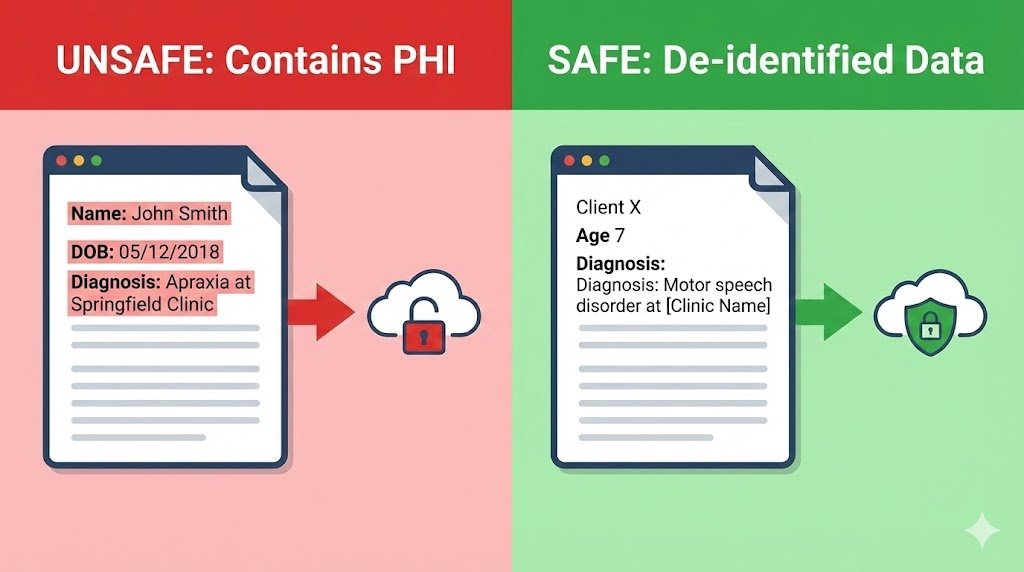
- HIPAA Compliance: Never use a tool that doesn’t sign a BAA (Business Associate Agreement). All tools listed above are HIPAA compliant.
- Pediatric Vocabulary: General medical AI often confuses “play-based therapy” with “wasting time.” Ensure the tool understands that play is the work.
- Speaker Differentiation: Can the tool tell the difference between you (the therapist) and the child? This is crucial for accurate quotes.
Conclusion: Which Should You Choose?
- Choose PatientNotes if you work with kids and want to impress parents with “Story” summaries.
- Choose Freed.AI if you want the fastest, simplest solution and have the budget.
- Choose Heidi Health if you are just starting out and need a free tier to test the waters.
Want to try writing notes with AI for free first? Check out our guide on How to Write SOAP Notes 10x Faster with ChatGPT (Free Prompts).