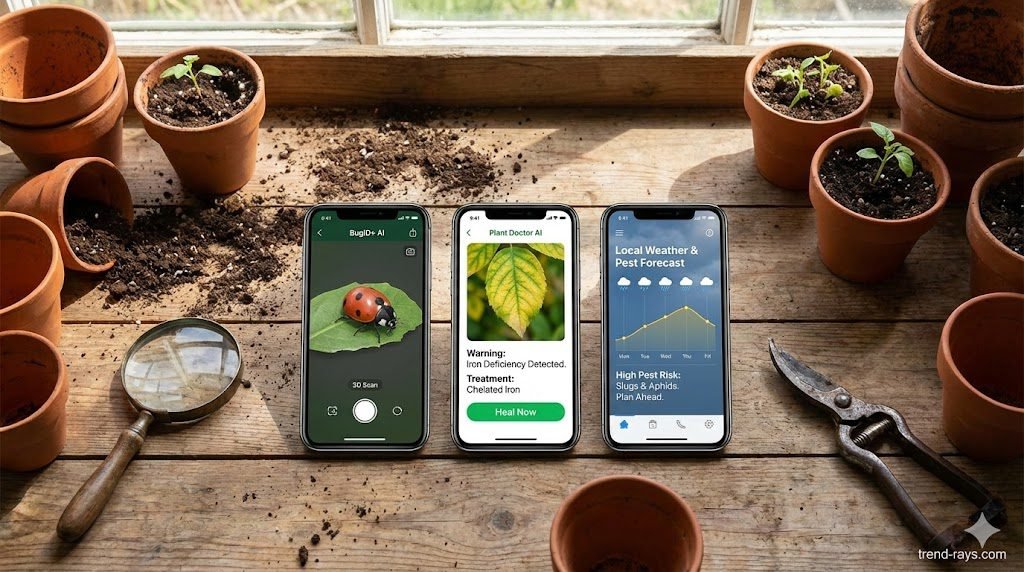
Every British gardener knows the feeling of walking out on a damp spring morning only to find their prized hostas shredded or their greenhouse tomatoes covered in sticky residue. The UK climate—famous for its wet winters and humid summers—creates the perfect breeding ground for a vast array of garden pests.
Historically, figuring out what was eating your plants meant spending hours flipping through heavy horticultural encyclopedias or taking a damaged leaf in a plastic bag to the local garden center. Today, artificial intelligence has completely revolutionized pest control.
By turning your smartphone into a pocket-sized botanist, AI plant scanners can diagnose the culprit in seconds and provide immediate, organic treatment plans. Here is how to use the best free AI apps to identify and eradicate the most destructive pests in your UK garden.
If you are completely redesigning your outdoor space to combat pests, using a free AI garden design tool for your UK terraced house can help you map out disease-resistant borders.
Why UK Gardeners Need AI Diagnostics
Generic gardening advice often fails in the UK. A solution that works for a dry California garden won’t help you fight off the damp-loving gastropods of Yorkshire. AI diagnostic tools, however, utilize deep-learning algorithms trained on millions of images.
They don’t just look at the bug; they analyze the pattern of damage—like the classic U-shaped notches a vine weevil leaves on a leaf margin—and cross-reference it with local weather data to provide highly accurate, UK-specific diagnoses.
Top Free AI Pest Identifier Apps for UK Gardens
While there are dozens of plant ID apps, only a few excel at diagnosing diseases and pests accurately.
- Agrio: This app is incredibly powerful for pest management. It uses proprietary computer vision to act as a “digital plant doctor.” It excels because it considers your geographic location and local weather to forecast potential pest outbreaks before they happen.
- Seek (by iNaturalist): Developed in partnership with the California Academy of Sciences, this app is fantastic for identifying the actual bugs. If you spot a caterpillar or beetle, Seek uses your camera to identify the exact species in real-time, completely offline.
- Plant.id / Plant.health: A highly accurate web and app-based tool that can detect over 548 different plant health conditions, including fungal diseases and insect infestations, offering a “confidence percentage” for its diagnosis.
- Picture This: PictureThis is an incredibly robust, all-in-one gardening companion. It boasts a 98% accuracy rate and is widely considered the most aggressive and accurate AI identification engine on the market.
- Plantix: If you grow your own food—particularly tomatoes, cucumbers, or courgettes—Plantix is a must-have. It is specifically designed as an agricultural crop doctor rather than an ornamental flower identifier.
- PlantNet: Originally designed purely for identifying wild plants, Pl@ntNet has become a massive collaborative citizen science project. The AI algorithm is trained by data submitted by expert botanists worldwide.
Diagnosing the Top 5 UK Garden Pests Using AI
Here is how AI recognizes the most common garden menaces and what it will tell you to do about them.
1. The Vine Weevil (Otiorhynchus sulcatus)
The black vine weevil is devastating to container plants like Heucheras and Rhododendrons.
- What the AI Sees: AI rarely sees the adult beetle, as they feed at night. Instead, if you snap a photo of a leaf, the AI recognizes the distinct, irregular notches chewed into the outer edges of the foliage. If the plant is wilting despite wet soil, the AI will warn you about the grubs eating the roots.
- The AI Solution: Apps will almost universally recommend organic biological control—specifically, watering beneficial nematodes (microscopic worms) into the soil during late summer to safely eradicate the grubs.
2. Box Tree Caterpillar (Cydalima perspectalis)
A relatively new but highly destructive pest that strips boxwood (Buxus) hedges bare in days.
- What the AI Sees: If you photograph your hedge, the AI specifically looks for white webbing spun among the twigs and skeletonized leaves. It can also easily identify the green and black striped caterpillars.
- The AI Solution: AI tools typically suggest applying Bacillus thuringiensis (Bt), a natural soil-borne bacterium, or setting up pheromone traps to break the breeding cycle.
3. Aphids (Greenfly and Blackfly)
- What the AI Sees: AI easily identifies the clusters of tiny, pear-shaped insects on the soft new shoots of roses and runner beans. Advanced AI like Agrio will also spot “sooty mold”—a black fungal growth caused by the sticky honeydew aphids excrete.
- The AI Solution: Most apps suggest an immediate, chemical-free blast from a garden hose, followed by introducing natural predators like ladybird larvae, or applying a neem oil spray.
4. Slugs and Snails
- What the AI Sees: Because slugs hide during the day, the AI diagnoses the aftermath: large, ragged holes in the center of leaves (unlike the edge-eating weevil) and the tell-tale shiny slime trails left on the foliage.
- The AI Solution: To protect local wildlife like hedgehogs, AI tools steer clear of toxic pellets, recommending copper tape barriers, beer traps, or wool pellets around the base of vulnerable seedlings.
5. Red Spider Mite
A menace for UK greenhouse growers, particularly on tomatoes and cucumbers during hot spells.
- What the AI Sees: These mites are almost microscopic. However, if you take a close-up macro photo of a leaf, the AI detects the pale mottling (stippling) on the upper surface and fine, dusty webbing underneath.
- The AI Solution: Because mites hate humidity, the first AI recommendation is usually to damp down the greenhouse floor, followed by introducing predatory mites (Phytoseiulus persimilis).
Top 5 Free AI Pest & Disease Identifier Apps for UK Gardens
While the app stores are flooded with generic plant scanners, diagnosing a sick plant requires a specialized algorithm. Here is a deep dive into the five most effective apps for UK gardeners, breaking down exactly what they excel at and how much they actually cost.
1. Agrio: Best for Predictive Weather & Disease Tracking
Agrio is less of a standard plant identifier and more of a highly advanced “digital plant doctor.” It is built heavily around Integrated Pest Management (IPM), meaning it prioritizes organic, long-term solutions over quick chemical fixes.
- How it works for the UK: Agrio’s standout feature is its hyperlocal weather integration. Because the UK climate fluctuates wildly, Agrio tracks local humidity and temperature drops to warn you before a pest outbreak (like blight or powdery mildew) happens in your specific postcode.
- Standout Feature: Voice-based crop scouting reports allow you to walk around your garden and dictate notes about pest pressure directly into the app.
- Pricing: Freemium. The core diagnosis tool is free, while advanced satellite field monitoring requires a paid subscription.
2. Seek by iNaturalist: Best for Identifying Physical Insects
If you actually see the bug crawling on your plant and need to know if it is a friend or foe, Seek is the ultimate tool. Created in partnership with the California Academy of Sciences, it taps into a massive global database of wildlife observations.
- How it works for the UK: While other apps scan leaf damage, Seek uses your camera to identify the physical insect, bird, or amphibian in real-time. You can download local UK-specific databases so the app works perfectly at the bottom of the garden, even if your Wi-Fi drops out.
- Standout Feature: It is 100% kid-safe. It requires no registration, collects no user data by default, and turns garden pest hunting into a gamified experience where users earn badges for spotting different species.
- Pricing: 100% Free.
3. PictureThis: Best for All-in-One Care and Weed Identification
PictureThis is an incredibly robust, all-in-one gardening companion. It boasts a 98% accuracy rate and is widely considered the most aggressive and accurate AI identification engine on the market.
- How it works for the UK: Beyond identifying ornamental plants, its “Auto Diagnose & Cure” feature is fantastic for pinpointing exact fungal diseases common in damp British gardens. It is also highly effective at identifying invasive UK weeds, telling you exactly how to safely remove them from your lawn or borders.
- Standout Feature: It includes a toxic plant warning, which is vital for UK households with pets or small children, instantly alerting you if a scanned plant or weed is poisonous.
- Pricing: Freemium (Soft Paywall). The app aggressively pushes its premium trial upon opening, but if you look closely for the “cancel” or “X” button on the paywall screen, you can access the basic scanning and diagnosis features for free.
4. Plantix: Best for Greenhouse and Vegetable Growers
If you grow your own food—particularly tomatoes, cucumbers, or courgettes—Plantix is a must-have. It is specifically designed as an agricultural crop doctor rather than an ornamental flower identifier.
- How it works for the UK: UK greenhouse growers constantly battle red spider mites, aphids, and nutrient deficiencies. Plantix allows you to snap a photo of a yellowing tomato leaf and instantly receive a diagnosis alongside an agricultural-grade treatment plan.
- Standout Feature: It features a massive community library. If the AI is unsure, you can submit your photo to a community of global agricultural experts for a second opinion.
- Pricing: 100% Free.
5. Pl@ntNet (PlantNet): Best for Citizen Scientists and Rare Weeds
Originally designed purely for identifying wild plants, Pl@ntNet has become a massive collaborative citizen science project. The AI algorithm is trained by data submitted by expert botanists worldwide.
- How it works for the UK: If a highly specific, rare weed is strangling your garden, Pl@ntNet is the most likely tool to identify it accurately. Furthermore, they have recently introduced a beta feature specifically for identifying plant diseases and pests based on leaf discoloration and deformations.
- Standout Feature: Multi-organ scanning. It allows you to upload several photos of the same plant at once (e.g., one of the bark, one of the leaf, one of the flower) to drastically improve the AI’s accuracy.
- Pricing: 100% Free.
Step-by-Step: How to Get an Accurate AI Diagnosis
To stop the AI from making mistakes, you must feed it good data:
- Get Close and Focus: The AI needs to see the texture. Take a sharp, well-lit macro photo of the damaged area, not just a wide shot of the whole plant.
- Capture the Underside: Pests like whitefly and spider mites live underneath the leaves. Always flip the leaf over for your photo.
- Use Multiple Angles: Apps like Plant.id allow you to upload multiple photos. Provide one of the whole plant (to show wilting), one of the leaf damage, and one of the soil surface.
By leveraging these free AI tools, you can transition from reactive, chemical-heavy pest control to a smart, organic, and highly targeted approach, ensuring your UK garden thrives year-round.
Frequently Asked Questions (FAQ)
1. What is the best free AI app for identifying plant pests? Agrio and Plant.id are top choices for diagnosing diseases from leaf damage, while Seek by iNaturalist is the best free app for identifying the physical insects crawling in your garden.
2. Can AI detect vine weevils in the soil? AI cannot see through the soil, but it can accurately diagnose a vine weevil infestation by analyzing the distinct “notched” bite marks on the edges of the leaves or by assessing the sudden wilting of a well-watered container plant.
3. How accurate are AI plant disease identifiers? Highly accurate, provided the photo is clear. Leading AI algorithms boast accuracy rates between 85% and 95% when given a well-lit, close-up image of the specific pest damage.
4. Do plant scanner apps work offline in the garden? Some do. Apps like Seek allow you to download local databases (like a UK-specific pack) so you can identify pests at the bottom of the garden even when your Wi-Fi drops out.
5. How does AI recognize aphid damage? The AI looks for curled or distorted new growth, physical clusters of the tiny insects on stems, and the presence of black sooty mold, which grows on the honeydew aphids leave behind.
6. Can AI suggest organic pest control methods? Yes. Modern AI gardening apps heavily favor Integrated Pest Management (IPM), prioritizing organic solutions like neem oil, companion planting, and beneficial nematodes over harsh chemical pesticides.
7. Why is my AI app misdiagnosing my plant? Misdiagnoses usually happen due to poor image quality. If a photo is blurry, taken from too far away, or shot in harsh, glaring sunlight, the AI cannot see the micro-textures required to tell a fungal spot from a bug bite.
8. Is there a UK-specific plant pest app? While most top apps are global, tools like Agrio use your smartphone’s location data to tailor their diagnosis and treatment advice specifically to the UK climate and current local weather conditions.
9. Can Google Lens identify garden pests? Google Lens can identify common bugs and plants, but it is not a dedicated horticultural tool. It often struggles to differentiate between complex plant diseases and lacks the specific, step-by-step treatment plans provided by dedicated apps.
10. Do I need to pay for an AI plant doctor app? No. Most major apps offer a “freemium” model. You can scan and diagnose a certain number of plants for free each month, which is usually more than enough for the average home gardener.