Introduction: The Remote Team’s Visual Crisis
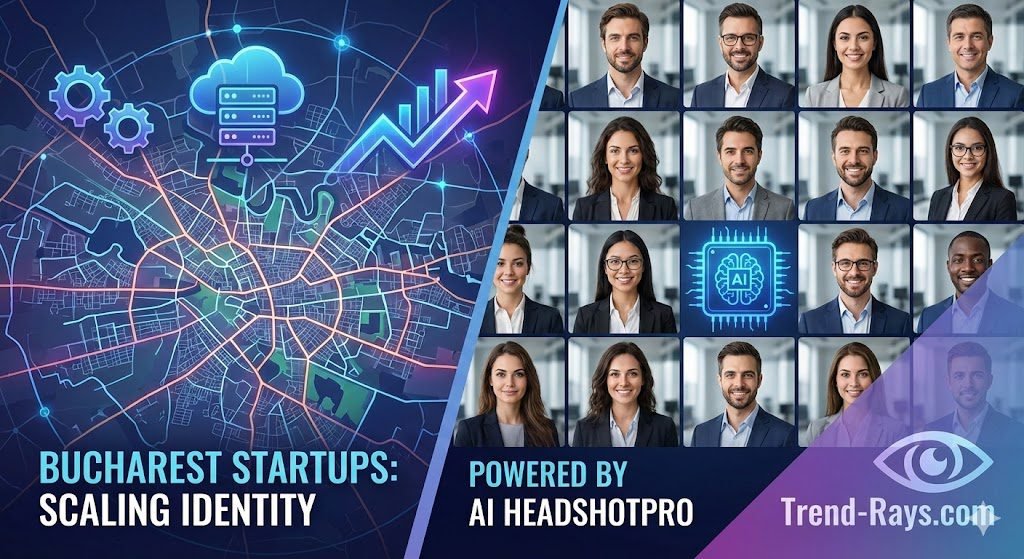
Bucharest and Cluj have cemented themselves as premier hubs for distributed tech talent. But this remote-first reality has created an unexpected branding crisis. Look at the “About Us” page of almost any newly funded Romanian startup, and you will likely see a chaotic mosaic: one co-founder has a sleek studio portrait, the lead developer uploaded a cropped wedding photo, and the marketing team is using dimly lit webcam screenshots.
For a company trying to project stability to Western European investors or enterprise clients, a disjointed team page subcommunicates a lack of organization.
Historically, fixing this meant flying a 50-person distributed team into a central headquarters, hiring a local photography studio for two days, and losing thousands of euros in billable hours. Today, that logistical nightmare is being entirely bypassed. Startups are turning to enterprise-level AI platforms like HeadshotPro and BetterPic not just as novelty photo editors, but as highly scalable corporate identity tools.
Here is exactly how Romanian HR managers and founders are using AI to fake a unified, multi-million-euro corporate presence in under 48 hours—and the hidden operational costs the software companies won’t tell you about.
How “Enterprise AI” Photography Actually Works
Most consumer tech blogs focus on the individual user experience of AI photo apps. But the real revolution is happening in the HR and Admin dashboards.
When a startup signs up for an enterprise tier, the HR manager essentially becomes a digital art director. They create a central “Brand Kit.” They select a unified background—perhaps a blurred, modern glass-walled office—and dictate the dress code, such as navy blazers for men and crisp white blouses for women.
The platform then generates a single, secure link. The HR manager slacks this link to the 50 remote employees. Each employee spends five minutes uploading 10 to 15 selfies from their smartphone, shot in their living room or home office.
The AI engine takes over, processing those selfies through the company’s Brand Kit. Within two hours, the entire company directory updates. Suddenly, a team spread across three different countries looks as though they were all photographed on the exact same afternoon in a premium Bucharest high-rise.
The Hard Math: Funding vs. Photography
For early-stage startups, runway is everything. Let’s break down the sheer financial leverage of using an enterprise AI tool for a 50-person team.
- The Traditional Route: Flying remote workers in, booking a hotel, and hiring a premium corporate photographer in a major European city will easily cost upwards of €15,000. That doesn’t even factor in the loss of two full days of product development.
- The AI Enterprise Platform: Purchasing 50 licenses on a platform like HeadshotPro costs roughly €1,500. The entire process takes each employee 10 minutes, meaning zero lost billable hours.
(If you are a freelancer or solo founder weighing the individual costs rather than team packages, check out our complete Cost Guide: AI Headshots vs. Traditional Photography in Europe for a detailed, single-user price breakdown).
The “Sorting Tax” and AI’s Unspoken Flaws
Most tech blogs treat AI headshot generators like a magic wand: you upload selfies, and out pops a flawless corporate team. That is a dangerous oversimplification.
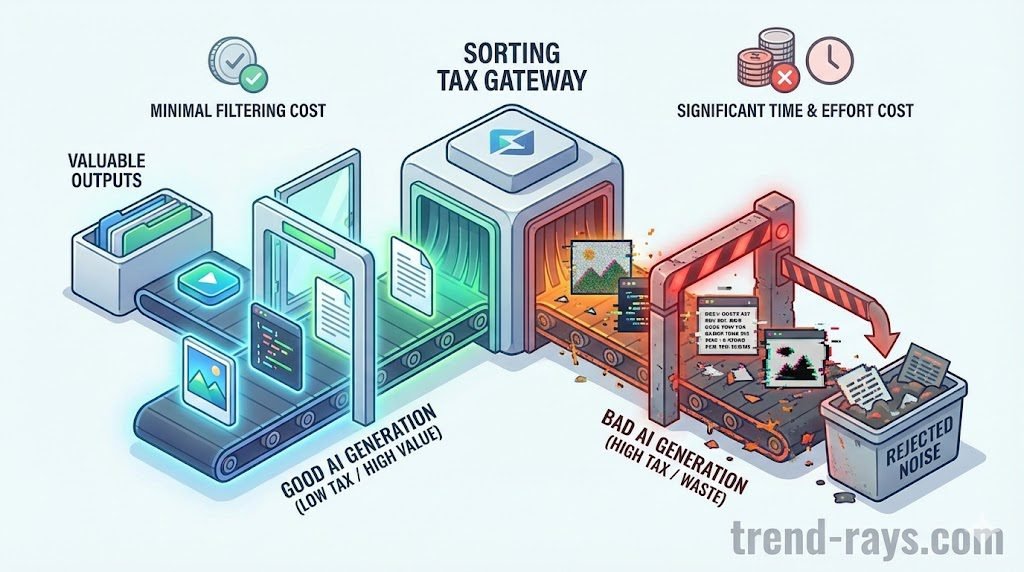
If you deploy this to a 50-person team, the AI does not just give you 50 perfect photos. It generates roughly 120 variations per employee. Out of those 6,000 total images, approximately 80% will be completely unusable.
We call this the “Sorting Tax.” While you save thousands of euros on a physical studio, you transfer that cost into administrative review time. Here is what your project manager will actually be filtering out:
- The “Glassy Eye” Stare: The AI frequently fails to render the complex reflection of light in the human pupil, resulting in team members who look slightly robotic.
- Fused Accessories: If an employee wears glasses, the AI will often melt the frames directly into their cheekbones.
- Over-Smoothing: Left to their own devices, employees will often choose the photo that makes them look 10 years younger—resulting in a team page that looks like an over-filtered Instagram feed.
The Solution: Do not let employees pick their own final headshots. Assign a single administrator to review the generations, filter past the AI hallucinations, and select the one image per person that actually looks human and professional.
The European Elephant: GDPR & Biometric Security
Here is the operational hurdle most American SaaS reviews completely ignore: European data privacy laws.
A startup cannot legally force its employees to upload their biometric data (their faces) to a random cloud server that might use those images to train public AI models. Just as a modern tech hub wouldn’t leave its physical office vulnerable without AI-powered security cameras with local storage, HR directors cannot leave their employees’ digital biometric data exposed to unsecured cloud environments.
When choosing an enterprise headshot platform, Bucharest startups must demand SOC2 compliance. You need ironclad terms of service guaranteeing that the platform utilizes a 30-Day Deletion Rule—meaning all uploaded selfies and trained AI models of your employees are permanently wiped from the servers within a month, and never used to train the company’s public algorithms.
Standardizing the Rest of Your Visual Identity
A cohesive website “Team” page is just the first step in scaling your corporate identity. As your startup grows, that newly generated, highly professional headshot needs to be deployed across other operational channels.
Whether your HR department is printing physical RFID office badges, processing international visa applications for an upcoming tech conference, or updating the internal company directory, those images need to meet exact specifications. Once you have the perfect AI headshot, you can easily adapt it for these official use cases using tools like our upcoming 4×6 Passport Photo Formatter to ensure flawless dimension compliance without needing Photoshop.
Conclusion: The Blueprint for a Cohesive Brand
Enterprise AI photography is no longer a gimmick; it is a critical scaling tool for distributed European startups. It allows companies to punch above their weight class visually, projecting the stability of a massive corporation on a seed-round budget.
If you are an HR manager or founder looking to deploy this, follow this simple blueprint:
- Pick a GDPR-compliant platform (verify the 30-day deletion rule).
- Establish a strict Brand Kit (background and attire).
- Deploy the link to your team.
- Pay the “Sorting Tax” by having one person review and select the final images for consistency.
Look at the top newly funded startups in Romania today. If their team page looks flawlessly consistent, uniformly lit, and remarkably polished despite having a fully remote workforce—chances are, you’re already looking at the power of AI.