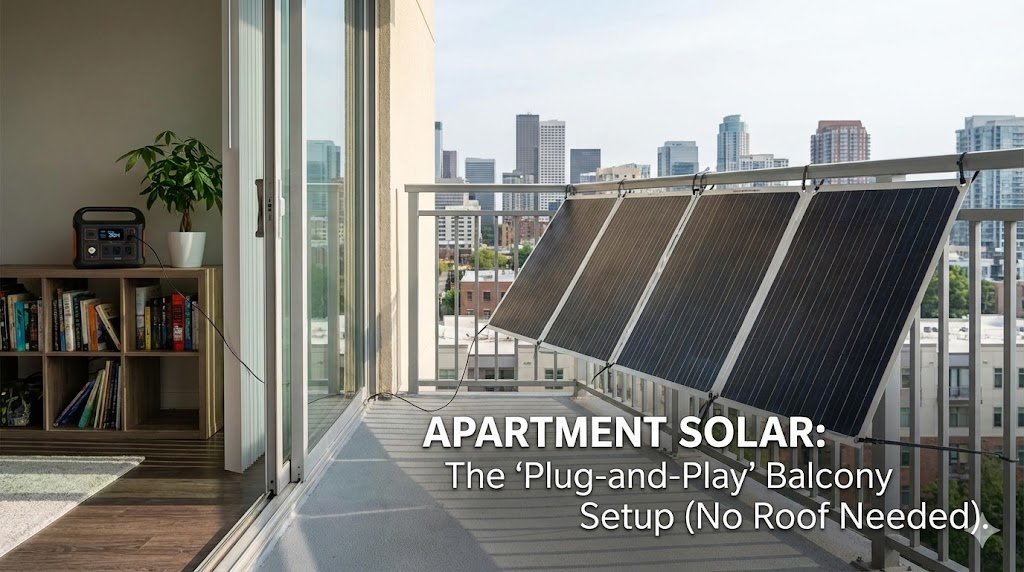
Intro: If you live in an apartment, a gas generator is a death trap (literally—Carbon Monoxide kills). But what happens when the power goes out? In 2026, the game has changed. New “Right to Plug” laws in states like California and New York are making it easier for renters to install “Balcony Solar”—small, plug-and-play panels that feed into a portable battery. Here is how to build a safe, legal backup system without a roof.
1. The “Gas Rule”: Why Batteries Are Your Only Choice
You cannot run a gas/propane generator on a balcony. It is illegal in 99% of fire codes because exhaust fumes can drift into your (or your neighbor’s) open windows.
- The Alternative: A Solar Generator (Portable Power Station) emits zero fumes. It is safe to keep under your bed or on your kitchen counter.
2. “Balcony Solar” Explained (The 800W Limit)
You don’t need a roof. You can drape Flexible Solar Panels over your balcony railing.
- The Setup: Buy 2x 100W flexible panels (like the Renogy or BougeRV ones we mentioned in our [Third-Party Solar Guide]) and zip-tie them to your railing.
- The Output: On a sunny day, this can generate ~600Wh-800Wh of power—enough to fully recharge a small generator like the EcoFlow River 2 every single day.
3. Recommended Apartment Setup
Space is tight. You don’t need a massive unit on wheels.
- Best for Studios: EcoFlow River 2 Pro. It fits on a bookshelf but runs a fridge for 6-8 hours.
- Best for Families: Anker Solix C1000. It’s the size of a toaster oven but has enough power for a microwave. (See our full Anker vs EcoFlow Comparison for size specs).
Pro Tip: If your landlord bans panels on the railing, use “portable fold-out” panels. Set them up when the sun is out, and fold them away under the couch when you’re done. No installation, no rules broken.