If you are an expat freelancer operating a Danish Enkeltmandsvirksomhed (Sole Proprietorship), you should choose Billy or Simpelt Regnskab. Both offer native English interfaces and are fully approved by the Danish Business Authority. While Dinero is a market leader in Denmark, its interface is exclusively in Danish, forcing expats to rely on risky browser translation extensions for complex tax terminology.
Denmark consistently ranks as one of the best countries in the world for digitalization and business ease. However, for a newly arrived tech contractor or digital nomad, navigating the local tax agency (Skattestyrelsen) and the newly enforced Bogføringsloven (Bookkeeping Act) in Danish is a massive hurdle.
If you ask a local accountant which software to use, they will instantly say “Dinero or e-conomic.” But those platforms assume you speak fluent Danish.
Here is exactly how to legally manage your Danish freelancer taxes in English, and why choosing the right software is more critical in 2026 than ever before.
The Expat Dictionary: Danish Tax Terms You Must Know
- Enkeltmandsvirksomhed: A Sole Proprietorship. The most common company structure for solo tech freelancers.
- CVR-nummer: Your central business registration number. It also serves as your VAT ID.
- Skattestyrelsen (Skat): The Danish Tax Agency.
- Moms: Danish VAT (Value Added Tax). The standard rate is a flat 25%.
- AM-bidrag: The Labor Market Contribution. A mandatory 8% tax deducted from your income before standard income taxes are applied.
- TastSelv Erhverv: The government’s digital portal where you actually declare your VAT and annual returns.
The 2026 Legal Trap: The New Danish Bookkeeping Act
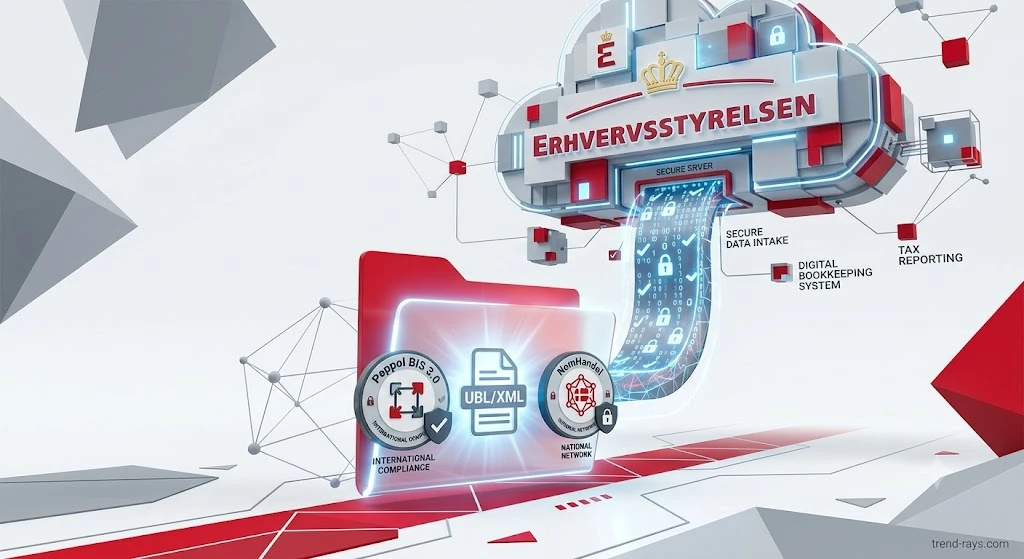
You can no longer use Excel, Microsoft Word, or a generic PDF generator to run a business in Denmark.
The New Danish Bookkeeping Act (Bogføringsloven) mandates that businesses must use a digital accounting system officially registered with the Danish Business Authority (Erhvervsstyrelsen). The rollout happened in phases, and as of January 1, 2026, the mandate officially hits small businesses and sole proprietorships earning over DKK 300,000.
If your software is not certified, you face massive fines (up to DKK 1.5 million for severe non-compliance). To be compliant, your software must:
- Generate a SAF-T File: A standardized audit file requested by the tax authorities.
- Support NemHandel & Peppol: You must be able to send and receive structured electronic e-invoices (OIOUBL or Peppol BIS 3.0).
- Offer Immutability: Once an invoice is booked, it cannot be deleted. Mistakes must be corrected with a formal credit note.
Dinero vs. Billy: The Ultimate English Showdown
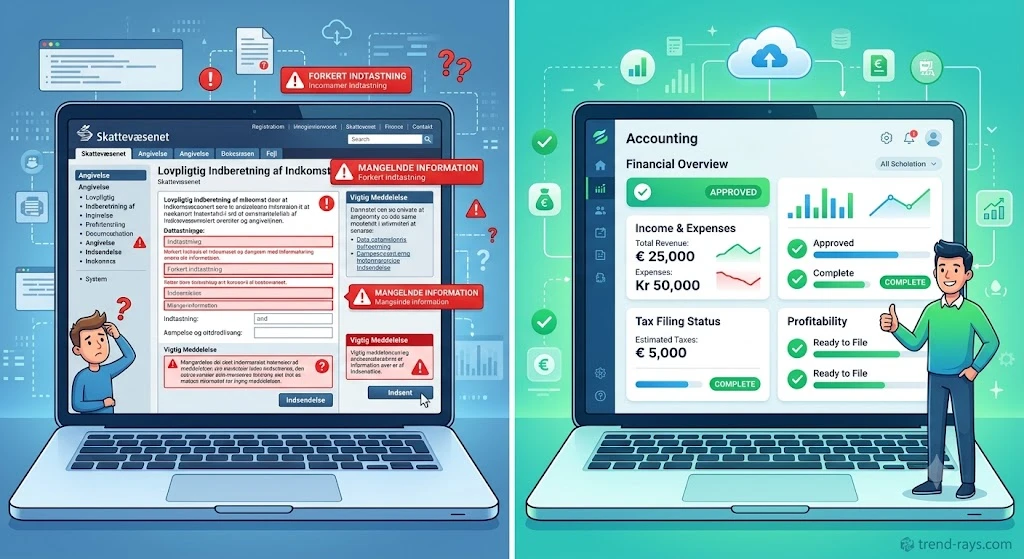
Dinero and Billy are the two giants of the Danish small-business accounting world. Both are fully certified by the government. However, their approach to the expat market is radically different.
Billy (The Clear Winner for Expats)
Owned by Ageras, Billy built its reputation on simplicity and accessibility.
- The Language Advantage: Billy runs 100% in English across all pricing tiers—even the free one. Every setting, tax report, and balance sheet is accurately translated, meaning you don’t have to guess what “Købsmoms” means when filing your taxes.
- Invoicing: It creates compliant Danish invoices and handles the 25% moms calculations automatically.
- Pricing: They offer a limited free tier, with paid plans (which include automated bank reconciliation) ranging from ~160 DKK to 345 DKK per month.
Dinero (Best for Native Danes, Terrible for Expats)
Dinero (owned by Visma) is a powerhouse of automation, but it actively ignores the non-Danish speaking market.
- The Language Barrier: Dinero confirms on its own developer and support pages that there is no English version of the platform. They suggest expats use a browser translation extension. Translating highly specific Danish tax law via Google Translate is a massive financial risk. You can issue an individual invoice in English to a client, but your actual backend dashboard remains stubbornly in Danish.
- The Verdict: Do not use Dinero unless your Danish is B2/C1 level, or you are paying a local bookkeeper to manage the dashboard for you.
Simpelt Regnskab (The Minimalist Alternative)
If you want to avoid the “Big Two” entirely, Simpelt Regnskab is an indie darling in Denmark.
- The Expat Advantage: It is fully available in English, strictly respects user privacy (no external tracking cookies), and is officially approved by the Danish Business Authority.
- Pricing: A flat DKK 139/month. There are no complex pricing tiers or aggressive upsells.
The Danish “Moms” (VAT) Trap
Most expats misunderstand how Danish VAT works. Registration for Moms becomes legally mandatory the moment your turnover exceeds DKK 50,000 within any 12-month period.
Here is the trap: Accounting software (like Billy) will calculate exactly how much Moms you owe Skattestyrelsen, but it does not pay it for you. You must log into TastSelv Erhverv, input the numbers Billy gives you, and manually trigger the bank transfer to the government.
To understand exactly how much money disappears to Danish taxes, use this interactive calculator to visualize your true take-home pay from a standard invoice.
Denmark Freelancer Tax Calculator
Danish Freelancer Salary Calculator
Estimate your Net Take-Home from a B2B Invoice
Frequently Asked Questions
Can I bill foreign clients outside of Denmark?
Yes. If you bill a B2B client inside the EU, you generally use the “Reverse Charge” mechanism and charge 0% Moms. If you bill clients in the US or UK, it is treated as an export of services (also 0% Moms). Software like Billy automatically applies the correct legal English text to the invoice to satisfy Skattestyrelsen.
Do I need a Danish business bank account?
Yes. The Danish government legally requires every business (including sole proprietorships) to designate a NemKonto (Easy Account) to receive payouts from the public sector and tax refunds. While some digital banks like Revolut Business offer Danish IBANs, traditional banks like Lunar Business or Danske Bank are much easier to register as your official NemKonto.
Should I hire an accountant?
If you use Billy or Simpelt Regnskab, daily bookkeeping is easy. However, filing your Oplysningsskema (the expanded annual tax return for business owners) is notoriously complex. Many expats do their own monthly invoicing in Billy, but pay a Danish accountant a one-time fee of roughly DKK 3,000–5,000 at the end of the year to officially submit the annual return.