Running a plumbing business in Australia is chaotic enough without wrestling with clunky software. Between chasing down apprentices for crumpled Reece receipts, managing the ATO’s Single Touch Payroll (STP) requirements, and trying to keep your margins green, you need a job management system that actually works in the trenches.
If you are tossing up between ServiceM8 and Fergus, you are already looking at two of the heavyweights in the Australian market. But standard review sites will just give both a 4.5-star rating and leave you guessing.
This is an independent, brutally honest breakdown of which software you should actually invest in based on how your business operates.
At a Glance: The 30-Second Verdict
If you don’t have time to read the deep dive, here is how the two platforms stack up on the core features that matter to Australian tradies.
| Feature | ServiceM8 | Fergus |
| Best For… | Small, fast-moving teams (1-5 vans) | Growing/Larger teams tracking tight margins |
| Device Ecosystem | Strictly Apple/iOS only | Works on Android, iOS, and Web |
| Accounting Integration | Excellent (Xero, MYOB) | Excellent (Xero, MYOB) |
| Standout Feature | Two-way SMS & automated dispatch | Deep financial reporting & compliance |
| Starting Price (AUD) | ~$39/month (per job model) | ~$45/user/month (per user model) |
Deep Dive: Why Plumbers Choose ServiceM8
ServiceM8 is built entirely around speed, dispatch, and making your business look incredibly professional to the end customer.
Where it Shines: Dispatch and Customer Comms
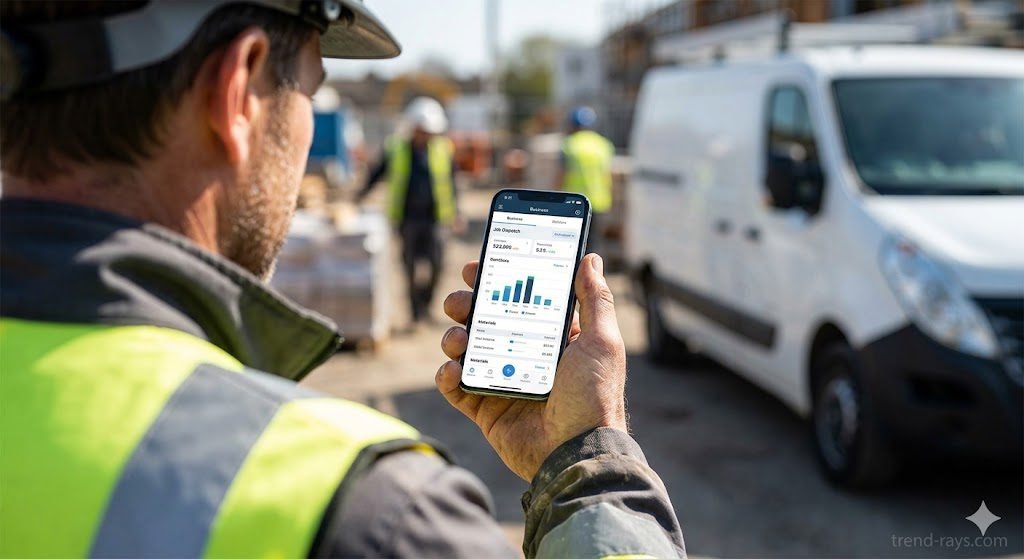
ServiceM8 operates a bit like Uber. When you dispatch a plumber to a job, the customer receives an automated text message with a tracking link showing the van’s arrival time. The drag-and-drop dispatch board is visually intuitive, making it incredibly easy for an admin to juggle emergency call-outs. Quoting on-site is fast, and the integration with Xero means invoices are pushed through instantly once the job is marked complete.
The Fatal Flaw: The “Apple Tax”
This is the detail most software aggregators hide: ServiceM8 is an Apple-only platform. You can run the dispatch board on a PC web browser, but the field app requires an iPhone or iPad. If you hire a new apprentice who uses an Android phone, you will have to buy them an Apple device just so they can log their hours and read job cards.
Deep Dive: Why Plumbers Choose Fergus
Unlike many tech companies built by Silicon Valley developers, Fergus was founded by Dan Pollard, a veteran plumber who actually understands the brutal realities of cash flow and material markups.
Where it Shines: Margin Tracking & Supplier Invoices
Fergus is built for the tradie who wants to know exactly where every dollar goes. Its biggest advantage is how it handles supplier price books (like Reece, Tradelink, or Samios). You can import supplier invoices directly into the software, and Fergus will automatically match the materials to the specific job. This means before you even send the final invoice to the client, you can see your exact profit margin on that specific site.
The Fatal Flaw: The Learning Curve
Because Fergus is such a financially robust tool, it can feel like overkill for a one-man-band. If you just want to do a quick tap-and-go invoice for a leaky tap, Fergus’s mandatory workflow stages (Quote -> Job -> Invoice) can feel tedious compared to ServiceM8’s fast-and-loose style.
The Australian Context: Xero, MYOB, and the ATO
For Australian businesses, generic global software rarely cuts it. Both ServiceM8 and Fergus have deep roots in the Australia/New Zealand market, meaning they are built to handle the headaches of the ATO.
Both platforms offer flawless two-way sync with Xero and MYOB. This means:
- BAS is a breeze: GST is calculated correctly on your quotes and invoices before they hit your accounting software.
- STP Compliance: While neither software is a payroll system, both track timesheets meticulously. Your staff clock in and out on the app, and those hours are pushed directly to Xero Payroll, ensuring your Single Touch Payroll (STP) obligations are met without manual data entry.
Use Cases: Which Software Fits Your Specific Business Model?
It is easy to look at features, but how does the software perform based on who you are and how you operate? Let’s break down the three most common business models in the Australian plumbing sector.
1. The Solo Freelancer (The “One-Man Band”)
If you are a freelance plumber or sole trader, your biggest enemy is admin time. You don’t have a receptionist to chase invoices or dispatch jobs.
- The ServiceM8 Advantage: For the solo freelancer, ServiceM8 is often the winner. The ability to quote, complete the job, take credit card payment on your iPhone via Stripe, and push the invoice to Xero all before you back out of the customer’s driveway is unmatched.
- The Fergus Alternative: Fergus does offer a “Basic” tier tailored for sole traders. It strips away the complex team management features, but it is generally better suited if your freelance work involves long, multi-week renovations rather than quick, two-hour emergency fixes.
2. The Agency & Contractor (Managing “Subbies”)
If you run an agency model where you win the big contracts and farm the work out to subcontractors (“subbies”), your needs change entirely. You need a system that protects your client data while still giving subbies enough information to do the job.
- The Fergus Advantage: Fergus absolutely dominates here. It has incredibly granular permission settings. You can assign a job to a subcontractor, allowing them to see the site address and job requirements, but completely block them from seeing the financial markup or the final invoice to the client.
- The ServiceM8 Flaw: ServiceM8 struggles slightly with the subbie model because its pricing is “per job.” If you are managing dozens of tiny jobs and pushing them to subbies, you will burn through your monthly job allowance incredibly fast, eating into your agency margins.

Australia relies heavily on skilled migrant workers, and a massive portion of the trade sector is driven by NRI (Non-Resident Indian) contractors and business owners. If you are an NRI navigating the Australian business landscape, your biggest hurdle isn’t the plumbing—it’s the Australian Taxation Office (ATO).
- The Compliance Safety Net: Navigating BAS (Business Activity Statements), GST, and STP (Single Touch Payroll) in a foreign country can be a nightmare. Both ServiceM8 and Fergus act as a digital safety net. By forcing you to input data correctly on the job site, they ensure your Xero or MYOB accounts are perfectly reconciled, keeping you compliant with Australian visa and business regulations.
- Remote Management: For NRI business owners who frequently travel back to India to visit family, cloud-based software is non-negotiable. With Fergus, an owner sitting in Delhi can log in via their laptop, check the GPS status of their vans in Melbourne, review supplier invoices from Reece, and approve payroll—all in real-time.
Pricing Breakdown (AUD)
It is critical to understand that these two companies use entirely different pricing models.
- ServiceM8 charges per job. Their base plans start around $39/month for 50 jobs. This is incredible value if you have a larger team doing long, multi-day projects (fewer jobs, more staff). However, if you do dozens of quick, cheap maintenance call-outs a day, you will burn through your job allowance rapidly.
- Fergus charges per user. Their basic tier starts around $45 per user, per month. You can do as many jobs as you want, but you pay a premium for every new head you add to the business.
Final Verdict: Which should you choose?
Your choice comes down to the size of your team and your preferred phone ecosystem.
Choose ServiceM8 if: You run a small team (1-5 vans), you exclusively use Apple devices, you handle a lot of fast emergency call-outs, and you want to blow your customers away with slick, Uber-style communication.
Choose Fergus if: You have a mixed bag of Android and Apple devices, you are running larger projects or maintenance contracts, and you are bleeding money on uncharged materials because you can’t easily track supplier invoices to specific jobs.
Frequently Asked Questions (FAQ)
What are the best alternatives to ServiceM8 and Fergus?
If neither of these fits your business, the closest competitors in the Australian market are simPRO (best for very large, complex enterprise businesses) and AroFlo (excellent for highly specialized, compliance-heavy trades). Jobber is also popular but leans more heavily toward the North American market.
Does ServiceM8 work on Android?
No. The ServiceM8 field app is strictly available on iOS (iPhone and iPad). Only the office/dispatch dashboard can be accessed via a standard web browser on a PC or Mac.
Do both ServiceM8 and Fergus offer a free trial?
Yes, both platforms offer a 14-day free trial, allowing you to test their quoting and dispatch features before committing a credit card.
Is Fergus good for a sole trader?
Yes, Fergus offers a “Basic” tier specifically designed for sole traders that strips away the complex team-management features, allowing a one-man-band to focus strictly on quoting, invoicing, and Xero integration.